This post was originally published on here
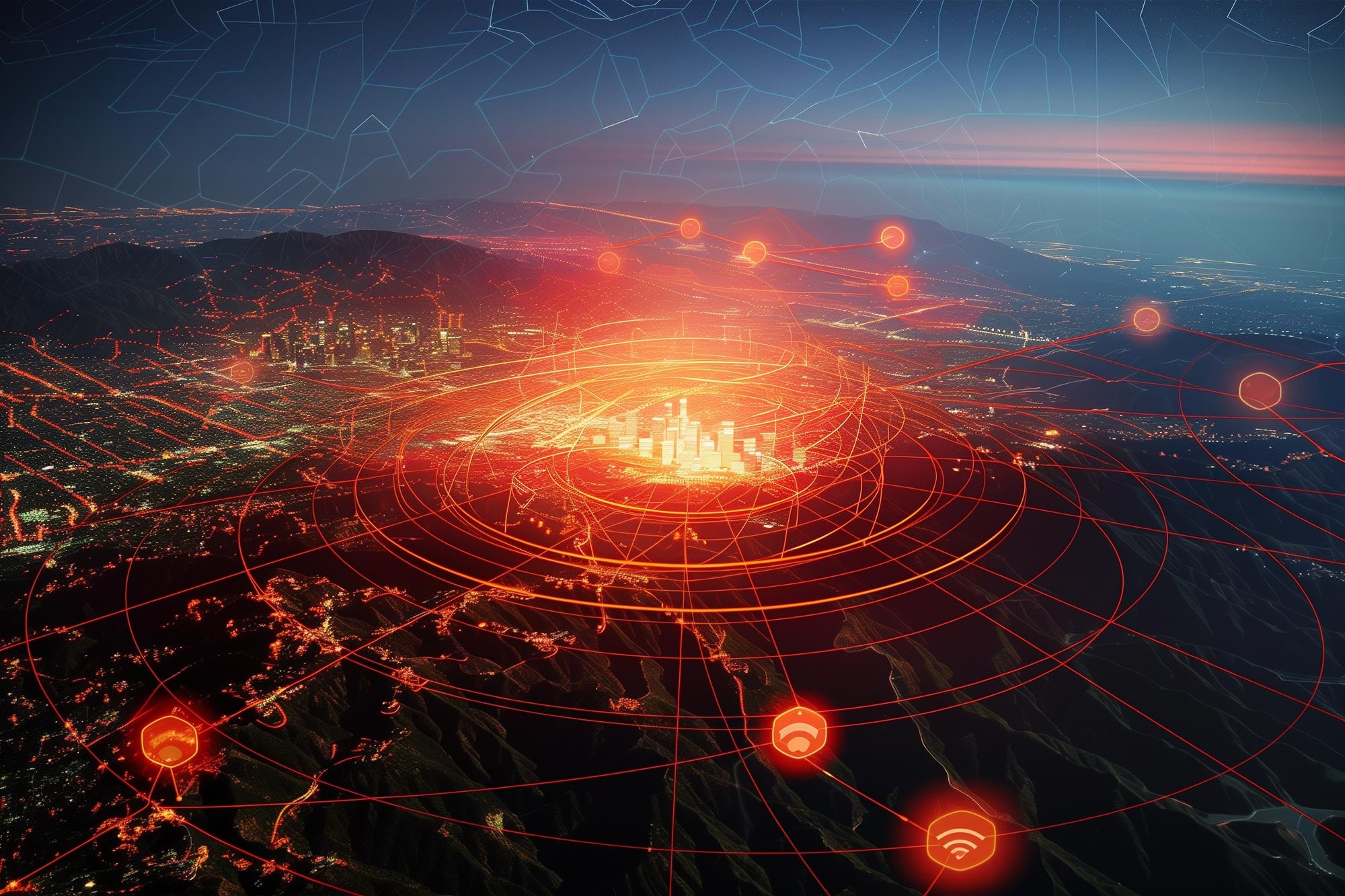
Invisible earthquakes are revealing a hidden tectonic puzzle beneath California’s most dangerous fault zone.
By closely monitoring clusters of extremely small earthquakes, scientists are uncovering new details about a dangerous and complex region off Northern California. This area marks the meeting point of the San Andreas fault and the Cascadia subduction zone, a place capable of producing powerful and destructive earthquakes. The research was conducted by scientists from the U.S. Geological Survey, the University of California, Davis and the University of Colorado Boulder, and was published today (January 15) in Science.
“If we don’t understand the underlying tectonic processes, it’s hard to predict the seismic hazard,” said coauthor Amanda Thomas, professor of earth and planetary sciences at UC Davis.
Where Major Tectonic Plates Collide
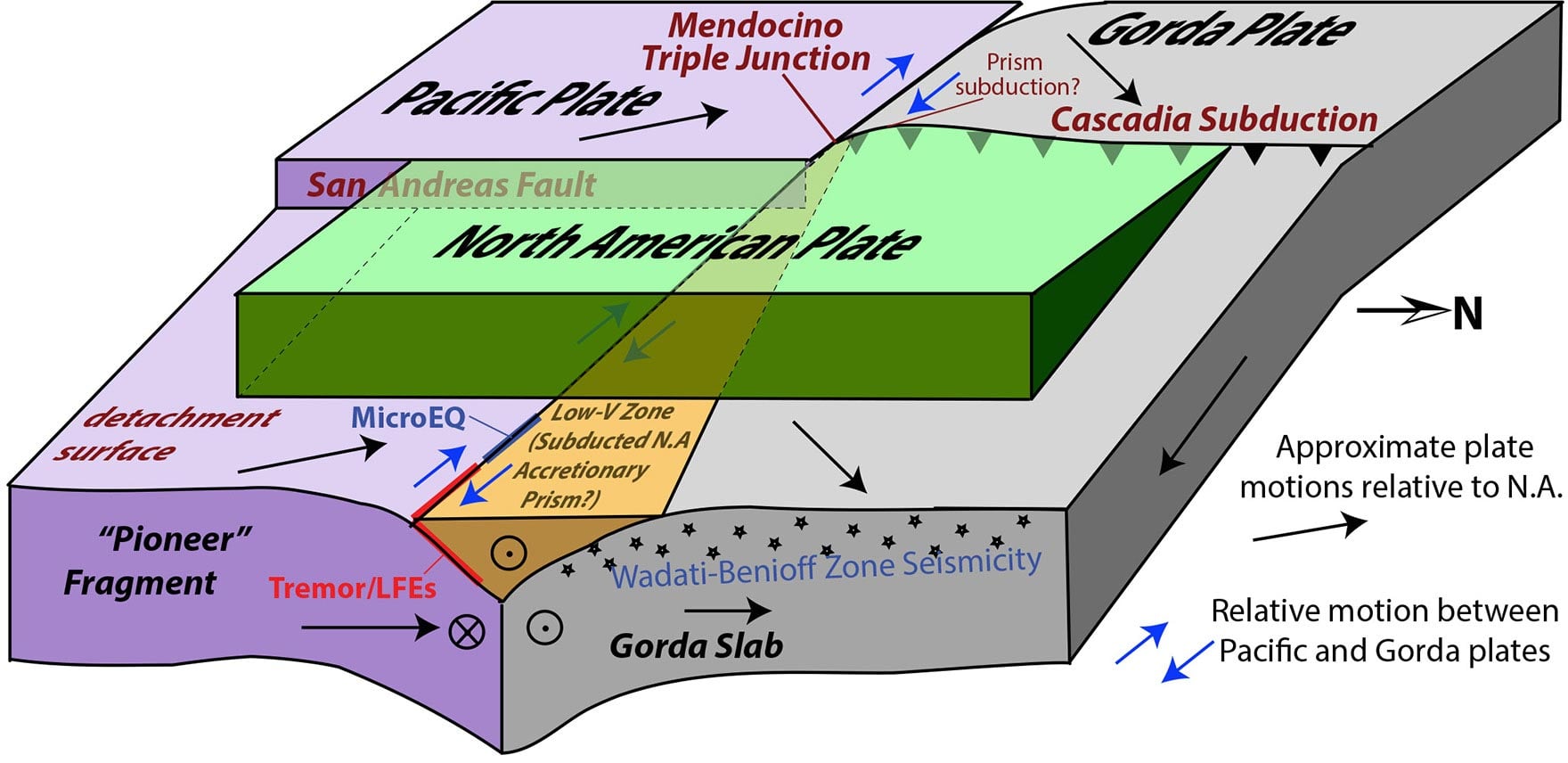
Off the coast of Humboldt County lies the Mendocino Triple Junction, where three of Earth’s major tectonic plates come together. South of this point, the Pacific plate moves northwest alongside the North American plate, forming the San Andreas fault. North of the junction, the Gorda (or Juan de Fuca) plate pushes northeast and slides beneath the North American plate, sinking into the Earth’s mantle in a process known as subduction.
While this arrangement may look straightforward on a map, researchers say the reality beneath the surface is far more complicated. One clue came from a large (magnitude 7.2) earthquake in 1992 that occurred much closer to the surface than scientists expected.
Seeing Beneath the Surface
First author David Shelly of the USGS Geologic Hazards Center in Golden, Colorado, likened the challenge to examining an iceberg.
“You can see a bit at the surface, but you have to figure out what is the configuration underneath,” Shelly said.
To do that, Shelly and his colleagues analyzed data from a dense network of seismometers across the Pacific Northwest. The team focused on extremely small “low-frequency” earthquakes that happen where tectonic plates slowly slide past or over one another. These events are thousands of times weaker than earthquakes people can feel.
Using Tides to Test the Model
The researchers tested their underground model by examining how these tiny earthquakes respond to tidal forces. Just as the Sun and Moon influence ocean tides, their gravity also exerts subtle pulls on tectonic plates. When those forces line up with the natural direction of plate movement, the number of small earthquakes increases, Thomas said.
Five Moving Pieces Beneath California
The updated model shows that the region contains five moving pieces rather than just three major plates. Two of these pieces are completely hidden below the surface.
At the southern end of the Cascadia subduction zone, the researchers found that a section of the North American plate has broken off and is being pulled downward along with the Gorda plate as it sinks beneath North America.
South of the triple junction, the Pacific plate is dragging a mass of rock known as the Pioneer fragment beneath the North American plate as it moves north. The fault separating the Pioneer fragment from the North American plate lies nearly flat and cannot be seen from the surface.
The Pioneer fragment was once part of the Farallon plate, an ancient tectonic plate that previously ran along California’s coastline and has since largely disappeared.
Rethinking Earthquake Depth and Risk
This newly identified structure helps explain why the 1992 earthquake occurred at such a shallow depth. According to Materna, the surface being pushed beneath North America is not as deep as scientists previously believed.
“It had been assumed that faults follow the leading edge of the subducting slab, but this example deviates from that,” Materna said. “The plate boundary seems not to be where we thought it was.”
Reference: “Low-frequency earthquakes track the motion of a captured slab fragment” 15 January 2026, Science.
DOI: 10.1126/science.aeb2407
The work was supported by a grant from the National Science Foundation.
Never miss a breakthrough: Join the SciTechDaily newsletter.
Follow us on Google and Google News.