This post was originally published on here
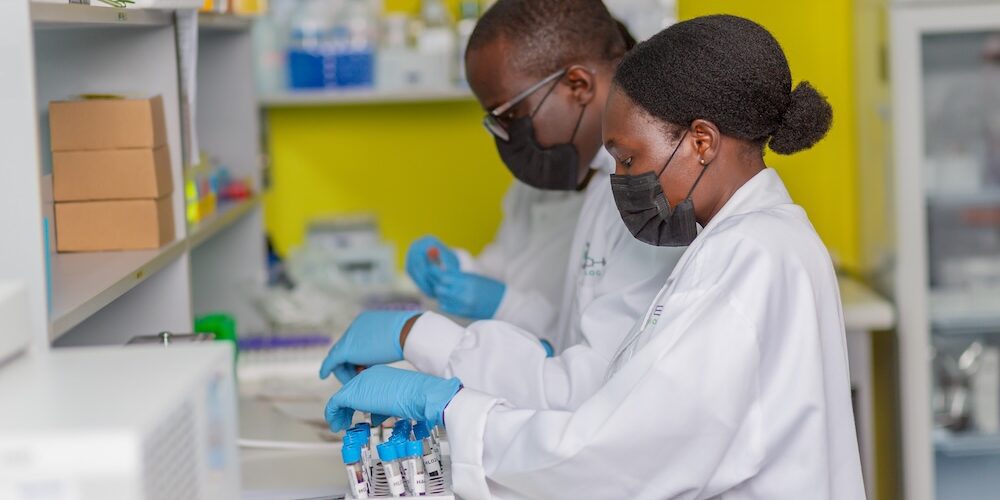
While many of the barriers facing health researchers are complex, a significant number are operational and solvable through context-specific interventions aligned to local needs and realities. PHOTO | SFA FOUNDATION
As global health funding faces major disruptions, scientists from Cameroon, Ghana, Kenya, Mali, Nigeria, South Africa, Uganda, and Zimbabwe are stepping forward with practical, Africa-led solutions to protect and strengthen health research on the continent.
The scientists say the funding crisis threatens access to healthcare across Africa and could weaken research and development (R&D) for health. In response, 14 Calestous Juma Science Leadership Fellows have outlined clear and workable steps to unlock Africa’s health research potential.
While African countries already have national and regional policies to support research, many challenges remain, especially at the operational level. The Fellows are calling on researchers, policymakers, implementers, funders, and governments to work together to reshape and strengthen Africa’s R&D system.
A commentary published on January 15, 2025, in Nature Health, the authors explain that the changing global funding environment makes local action more urgent than ever. The authors said the current rapidly changing international funding environment challenges call for relevant actions to address the situation.
“The challenges we face as Africans in the current rapidly changing international funding environment underscore the importance of engaging in relevant actions to collectively shape a bright future for African R&D.”
The lead author, who is also the Deputy Director of the South African National Bioinformatics Institute at the University of the Western Cape, Prof. Nicki Tiffin, said many of the barriers facing health researchers are difficult, but many can still be solved.
She noted that several challenges are operational and can be addressed through solutions that fit local needs and realities.
To reduce long-standing barriers to health research and development, the Fellows identified six priority areas for urgent action. These include building a sustainable, private sector-led R&D ecosystem that supports innovation and commercialization through collaboration, strong policies, and access to capital.
They also called for the creation of a diversified and sustainable R&D financing system, supported by domestic public funding, private investment, and philanthropy.
Other priorities include developing a strong and diverse R&D workforce, supported by clear career pathways and wider access to science, technology, engineering, and mathematics (STEM) education. The Fellows also stressed the need to build strong health data systems and digital infrastructure, alongside digital skills development.
They further highlighted the importance of efficient and resilient R&D supply chains to ensure timely access to quality research materials and support local production. Promoting an inclusive research culture based on mentorship, collaboration, ethics, and excellence was also emphasized.
Speaking on supply chain challenges, Prof. Iruka Okeke of the University of Ibadan, Nigeria, said current systems often do not support the realities of research work. However, she noted that improvement is possible.
“While procurement and logistical processes in many African countries fail to align with the realities of R&D, these same systems worked efficiently during the COVID-19 pandemic, demonstrating that current challenges can be addressed with collaborative and combined interventions.”
From Ghana, CEO of Yemaachi Biotech and Dean of Research and Innovation at Ashesi University, Dr. Yaw Bediako, pointed to Africa’s growing youth population and scientific talent as a major opportunity.
“Strategic investment in product development can transform youth potential, biodiversity, and scientific ingenuity into innovation, real-world impact, and prosperity for future generations.”
The Fellows’ message aligns with a growing movement within Africa’s scientific community that is demanding practical, locally driven reforms rather than symbolic change. Many researchers are now calling for action that delivers real results.
“This is not a wish list,” said Prof. Tom Kariuki, Chief Executive Officer of the Science for Africa Foundation, which supports the Fellowship’s communications.
“It is an invitation to act together, using approaches that are already within reach. Africa’s health challenges are urgent, but so are the solutions.”
DISCLAIMER: The Views, Comments, Opinions, Contributions and Statements made by Readers and Contributors on this platform do not necessarily represent the views or policy of Multimedia Group Limited.
DISCLAIMER: The Views, Comments, Opinions, Contributions and Statements made by Readers and Contributors on this platform do not necessarily represent the views or policy of Multimedia Group Limited.