This post was originally published on here
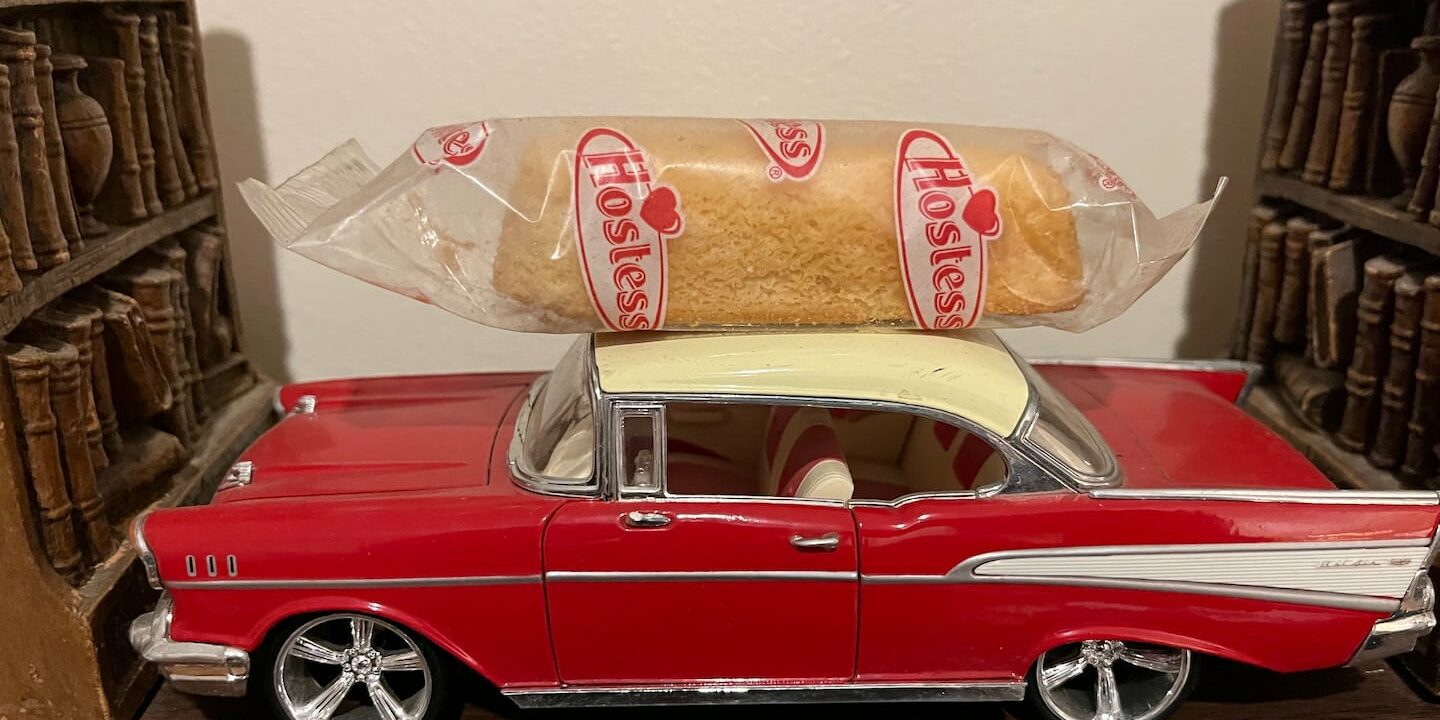
Two things will survive the apocalypse, as the myth goes: cockroaches and Twinkies. In Maine, one of those famous snack cakes is turning 50 this year after a high school chemistry teacher decided to put its shelf life to the test in an experiment that continues to this day.
During a class discussion on food additives in 1976, a student asked teacher Roger Bennatti how long a Twinkie would last. Bennatti sent a student down to the store to pick up a couple.
“I ate one and put the other one up on top of the chalkboard,” he recalled in a phone interview.
According to Hostess, the company that makes Twinkies, the golden sponge cake has a shelf life of about 45 days. But the George Stevens Academy in Blue Hill, Maine, is now celebrating the Twinkie’s 50th birthday, and it remains structurally sound.
When he retired in 2004, Bennatti recalled, his students only had one question. “What will happen to the Twinkie?” The snack had been sitting untouched in the classroom for nearly 30 years, but seemed no worse for the wear.
Libby Rosemeier, assistant head of the George Stevens Academy and one of his former students, carried on his legacy. The Twinkie is now stored in an airtight glass box in a school office, brought out occasionally for curious visitors.
The Bangor Daily News wrote about the long-running experiment when Bennatti retired, and the sturdy snack became a sensation.
But Bennatti says Hostess never got in touch with him.
”Are you kidding me? They want me dead,“ he quipped. “No food company wants their claim to fame to be, hey this lasts 50 years.”
Maine’s famous Twinkie is celebrating its birthday amid the recent release of updated U.S. dietary guidelines by Health Secretary Robert F. Kennedy Jr., which disapprove of highly processed foods.
“American households must prioritize whole, nutrient-dense foods — protein, dairy, vegetables, fruits, healthy fats, and whole grains — and dramatically reduce highly processed foods,“ Kennedy wrote on X. ”This is how we Make America Healthy Again.”
To last so long, Twinkies contain few of Kennedy’s recommendations, replacing dairy and a real cream filling with a mix of sugar and shortening, corn syrup, water, salt, and cellulose gum.
The snack is mainly made of flour, sugar, eggs and over 30 other ingredients, according to Steve Ettlinger, the author of “Twinkie Deconstructed.”
While the original Twinkie recipe had fresh ingredients, the cakes spoiled too quickly during delivery to stores, Ettlinger said. The manufacturer started looking for substitutes.
Ettlinger began studying Twinkies to learn more about additives and asked Hostess headquarters and bakeries to find out what the filling contained.
“I asked one in particular in Biddeford, Maine, they said if I told you I’d have to kill you,” Ettlinger said. “Let’s not be freaked out about [ways of] preserving food, it isn’t any more so than thousands of other food products out there.”
Ettlinger preserved a Twinkie in its original packaging in his home for 21 years.
“I got fascinated with them so I kinda find them cute and that’s why I didn’t want to throw them away.” he said. “I’m about to turn 77. I’m gonna write in my will that that Twinkie is gonna go to either my daughter or my son.”
While the jokes about the Twinkie write themselves, its durability teaches us a larger lessons about science and patience. According to Bennatti, much of science is a detective story.
“In a chemistry class we’re doing an experiment and it’s over in 45 minutes. That’s not the way it is in real life,“ Bennatti said. “I try to hammer home that we consider ourselves to be lifelong learners.”
Hannah Goeke can be reached at [email protected].