
This post was originally published on here
Science fiction shows often emphasize fiction over fidelity to science. Doctor Who famously popularized the pseudoscientific nonsense phrase “reverse the polarity of the neutron flow” in the 1970s, and many shows that utilize devices such as time travel or life on other planets make things up out of whole cloth instead of worrying about whether scenarios are plausible given what science has demonstrated about such things.
Videos by ComicBook.com
Thus, it is refreshing when a sci-fi show focuses equally on the science part. Some shows draw on actual scientific knowledge when worldbuilding, which makes for stories and set-ups that are as plausible as they are entertaining.
7) Battlestar Galactica Understands That Sound Can’t Travel in Outer Space
Outer space is a vacuum, which means there is nothing for sound waves to bounce off of to travel. Thus, the epic space battles that are generally part of the genre are unrealistic because nobody should be able to hear explosions or weapons hitting an enemy spacecraft.
When Battlestar Galactica premiered 20 years ago, it stayed far more grounded in science than is typical for the genre. Its epic battles were silent, with ships blowing up without a sound. This choice was not only more scientifically accurate but also resulted in compelling cinematography that enhanced the epic feel of the battle scenes.
6) The Expanse Relies on Newtonian Physics for Space Movement
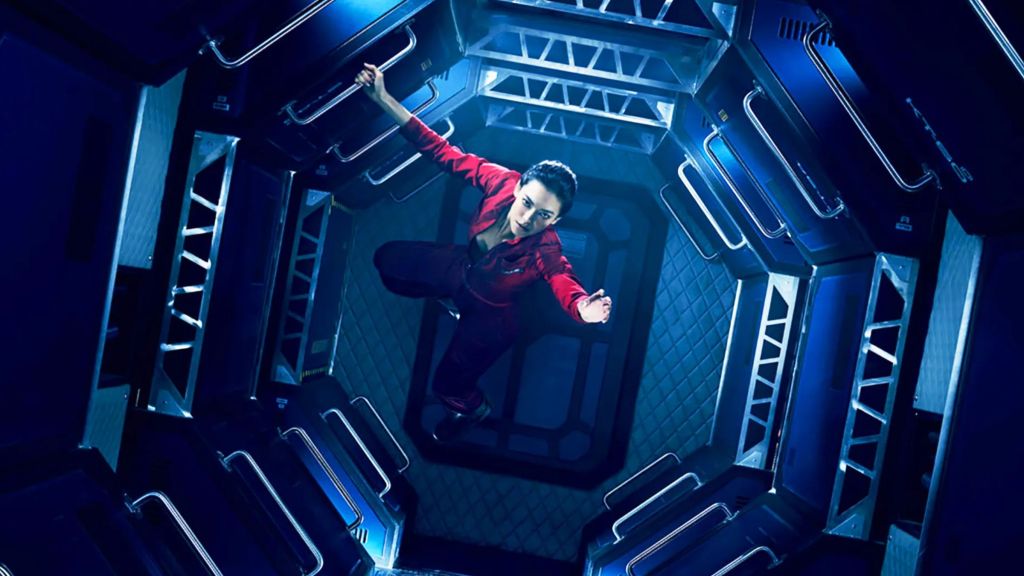
Many series use elaborate, fictional, and often impossible explanations for how their characters’ spaceships travel throughout space. Again, space is a vacuum and gravity does not exist there, so spacecraft can’t move using the same rules that govern airplanes or ships that float on water on Earth.
The Expanse is an amazing science fiction series that, among other things, takes care to make spacecraft movement scientifically plausible. Spaceships in this series use thrusters to change direction, relying on the Newtonian idea of “every action has an equal and opposite reaction,” and ship movement collects heat, which must be managed appropriately to avoid the ship overheating or disintegrating. This series also properly approaches the idea of there being no gravity in space and the toll that space travel takes on the human body.
5) The Orville Uses Planetary Science as Part of its Space Exploration Stories

One of the biggest problems with science fiction stories is that they often treat other planets like carbon copies of Earth. When explorers land on the surface, the planet may have the same gravity and atmosphere, making it easy for the characters to survive (unless they are captured by hostile natives.)
The Orville turns this trope on its head. The writers meticulously research different planetary environments before writing stories involving interstellar travel, and different planets thus present different, and realistic, challenges to the characters’ physical health and ability to move and breathe. As a bonus, The Orville examines the physical limitations of space exploration rather than pretending that human bodies can tolerate any type of space travel.
4) Silo Uses Science and Engineering Principles to Build an Underground World

Silo is a fascinating science fiction series based on a series of books about a society that has moved underground because of the toxic environment all around the characters and a protagonist who is looking for the truth about the outside world. The premise is not original — many science fiction shows involve domes or underground cities because of toxic pollution or nuclear war — but the way the series approaches it is novel.
The underground world in Silo is built using real-life engineering principles, making it seem much more believable. These principles are used to explain everything from how air circulates to how waste is disposed of, and the rules governing the management of the city are often integrated into the plot.
3) Star Trek: The Original Series‘ Communicators Used Scientifically Plausible Tech that Predicted Mobile Phones
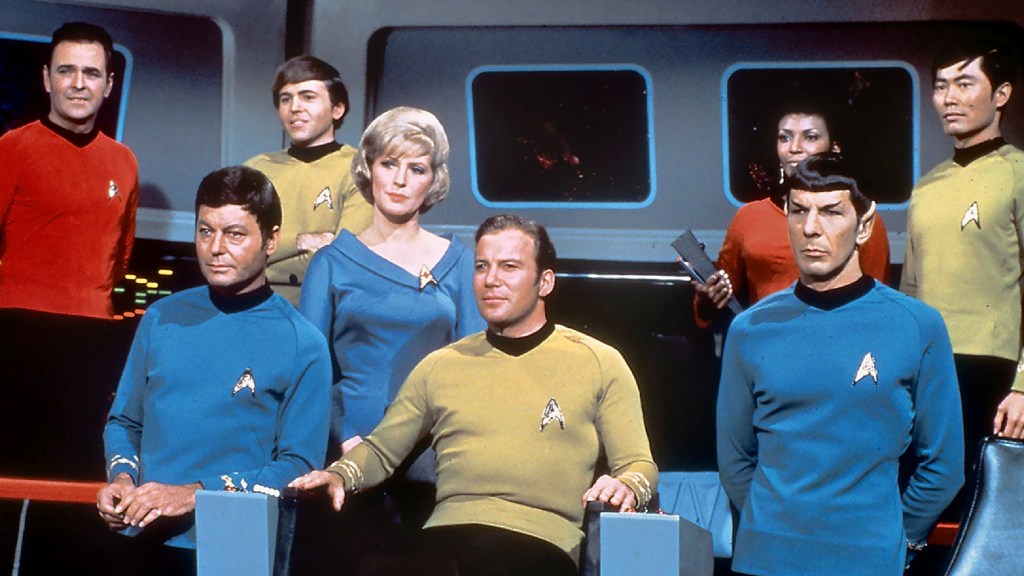
The two-way communicators that allowed Kirk and his crew to talk to each other from different parts of a planet were science fiction when Star Trek: The Original Series premiered in 1966, but the science behind them was so sound that it was unsurprising that the devices predicted the invention of mobile phones.
The communicators looked like the flip phones that were popular in the 1990s, but the similarity goes beyond that. Mobile phones work using the same radio-wave technology as the two-way communicator. The science behind the fictional devices also predicted GPS and location tracking.
2) Doctor Who Gets the Effects of Black Holes Right

Although Doctor Who is often campy and sometimes engages in pseudoscientific nonsense, especially around time travel, modern episodes have gotten the science behind how black holes work completely right.
Black holes cause distortions in time as well as changes in gravitational pull, and episodes like “The Satan Pit” explore these effects. The scientific backing for these stories make them more realistic and effective, which is especially important for episodes that are meant to be scary.
1) Severance‘s Fictional Brain Split Procedure is Based on Neuroscientific Principles

Severance is terrifying because of the procedure characters undergo that splits their memories about work from their personal memories, creating a condition similar to Dissociative Identity Disorder in which everyone has two personalities that don’t have any knowledge or memories of what the other one does.
The terror in this series is magnified by the fact that the brain procedure, though fictional, is based on real neuroscience. Brain mapping has shown that people compartmentalize memories, storing recollections of different types of situations in different areas of the brain. Thus, it is only a short step from what we know today about the human brain to the fictional procedure that wreaks havoc with people’s lives and makes them easier to control.
What real science have you learned from science fiction shows? Leave a comment and join the conversation in the ComicBook Forum.