This post was originally published on here
In 1978, the USS Stein, a U.S. Navy frigate, returned to port with sonar equipment mysteriously shredded during a routine voyage off the coast of California. What the crew found in the ship’s damaged sonar dome baffled even marine scientists, an enigma that still fuels speculation nearly fifty years later. As first recounted in an interview archived by the U.S. Naval Institute, the incident has become one of the most intriguing encounters between man and the unknown deep.
The Attack That Left Sailors Speechless
The USS Stein was on its maiden voyage when its sonar systems suddenly went offline, forcing the ship back to San Diego for emergency inspection. Upon entering dry dock, Petty Officer Ira Carpenter was assigned to examine the sonar dome, expecting a mechanical fault. Instead, he discovered deep slashes along the rubber coating, marks unlike anything he had ever seen.
“I’d never seen anything like this before, and this type of damage was brand new to me,” Carpenter said in an old interview shared by the U.S. Naval Institute. “I used my knife to pick out this foreign object out of the […] coating, and it looked to me like a claw,” he added. “I quipped to my SW Officer, at the time: ‘Look here, it looks like we’ve been attacked by a bunch of small alligators.’”
The cuts were jagged and embedded with tiny organic fragments, resembling hooks or barbs. The crew had no rational explanation for the bizarre damage. The notion that a giant sea creature had physically attacked a military warship seemed almost impossible, and yet, the evidence suggested precisely that.
The Scientist Who Faced The Unexplainable
To make sense of the event, the Navy consulted Dr. Forrest Glenn Wood, a marine biologist experienced in deep-sea species. After careful analysis, Wood concluded that the strange hooks could belong to a massive squid.
“Squids do have claws similar to this. Nothing else that is known in the ocean has structures of this kind,” Wood commented.
The finding was extraordinary, suggesting that a colossal squid, a creature typically confined to Antarctic waters, might have ventured thousands of miles north into warmer seas. “This doesn’t rule out something that we haven’t found yet,” Wood added cautiously, leaving open the possibility that an unknown species could have been responsible.
His remarks, preserved by the U.S. Naval Institute, sparked decades of debate among naval historians, oceanographers, and cryptozoologists. If true, the USS Stein incident represented the first known case of a deep-sea predator physically damaging modern naval equipment and surviving to tell the tale.
The Legend That Lingers Beneath The Waves
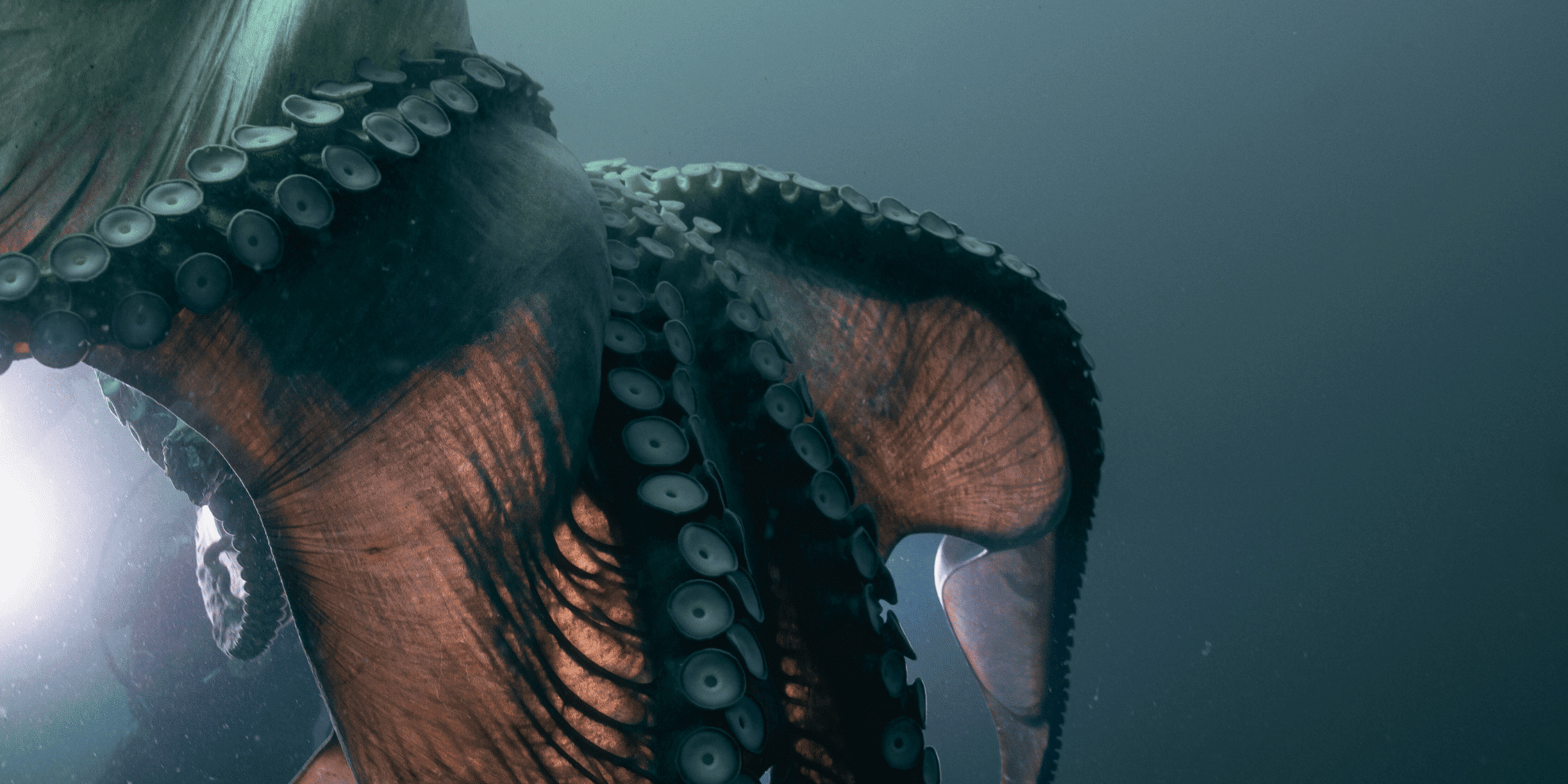
To this day, no one has fully explained why a colossal squid, or any creature large enough to attack a warship, would surface near Southern California, far from its natural habitat. Scientists know that colossal squids, Mesonychoteuthis hamiltoni, can reach lengths of over 23 feet and weigh more than 1,000 pounds. Their tentacles are lined with rotating hooks designed to grip prey, or perhaps, unwittingly, a U.S. frigate’s sonar dome.
But that only deepens the mystery. The colossal squid is known to dwell in the frigid depths of the Southern Ocean, not in subtropical waters. Was this a lost or dying specimen that strayed into warmer regions? Or did it represent something entirely different, an undocumented species living far closer to human civilization than we imagine?
Even today, the USS Stein incident is cited as evidence that the ocean still conceals creatures beyond our comprehension. While scientists remain skeptical, the story stands as a reminder that for all our technological advancement, the deep sea remains the planet’s last great frontier, and perhaps, its most unpredictable.
Beneath The Surface Of A Cold Case
Nearly half a century later, the USS Stein’s encounter endures as a maritime legend. The ship was repaired, its sonar restored, and the story quietly archived, but the questions it raised never truly sank. The fragments found embedded in the damaged dome disappeared into Navy files, fueling rumors of secrecy and classified research.
For those who believe the world’s oceans still hold ancient mysteries, the Stein case is a symbol of our ignorance, proof that Earth’s largest ecosystem continues to surprise even the most advanced fleets. Whether it was a known giant squid or a yet-undiscovered creature, one thing is certain: something powerful enough to rip military sonar equipment apart lurked just beneath the waves that day in 1978.