This post was originally published on here
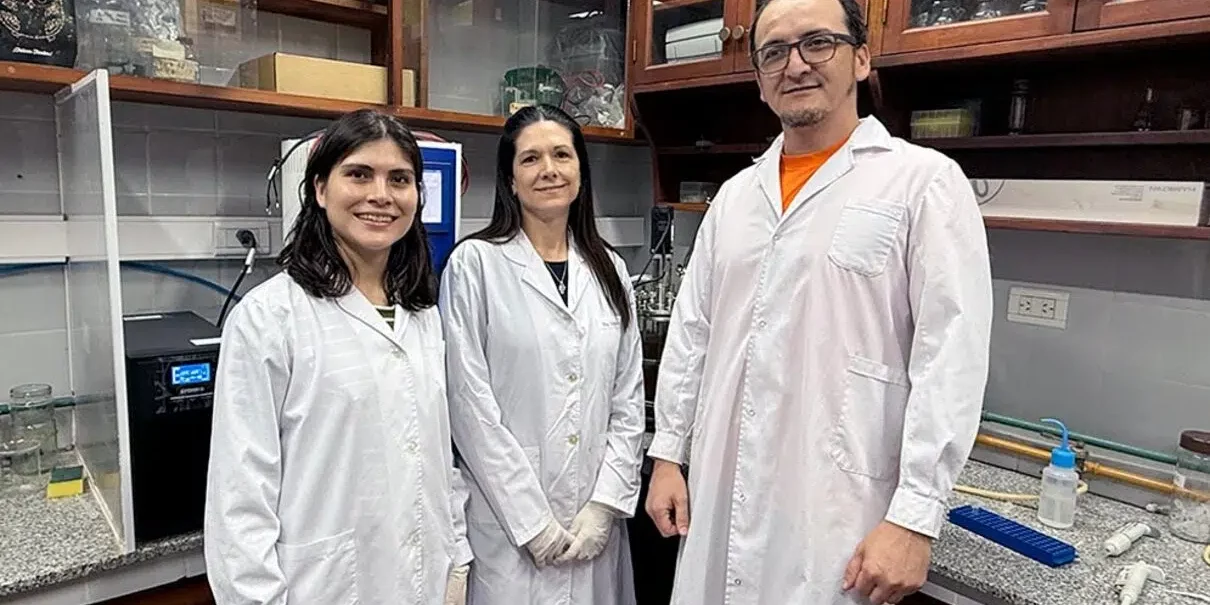
In the Water and Soil Laboratory of the Institute for Chemical Industry Research (INIQUI, CONICET-UNSa), a team led by scientists Verónica Irazusta and Verónica Rajal is working on optimizing the production of biosurfactants, natural compounds with high added value that offer an ecological alternative to transform waste.
Biosurfactants are biologically derived surfactant substances, biodegradable and with multiple industrial applications. “Their main disadvantage is the production cost compared to synthetic ones, which is why we are working on more economical methods using industrial by-products,” explains Irazusta, the project’s technical lead.
The Agreement with Ledesma
The work is part of an agreement signed in 2024 between the CONICET, the National University of Salta, and the company Ledesma, with participation from the Technology Linkage areas of Salta and Jujuy. The objective is to optimize the production of biosurfactants from bacteria isolated from industrial effluents, utilizing available resources and reducing environmental impact.
“We use effluents or industrial by-products from Ledesma as a culture medium for microorganisms. Thus, we not only produce these molecules economically but also give utility to waste that could otherwise contaminate,” notes Irazusta.
Applications of Biosurfactants
These compounds reduce the surface tension of water, making them useful in sectors such as:
- Pharmaceutical: formulation of medicines and treatments.
- Agro-industrial: improvement of cultivation processes and plant protection.
- Food: stabilization of emulsions and processed products.
- Cosmetic: production of creams, shampoos, and hygiene products.
- Detergents and cleaning: replacement of polluting synthetic surfactants.
Their ability to naturally degrade makes them key allies for the development of a more sustainable industry.
Technological Advances
The collaboration with Ledesma originated years ago, after exploratory visits in search of useful by-products for biosurfactant-producing bacteria. The current agreement allowed for the incorporation of a seven-liter bioreactor, a significant advancement for the laboratory and the university.
From the company, Adriana Rodríguez, the project’s technical representative, highlighted: “The agreement we signed with the National University of Salta and CONICET for the development of a new product from sugarcane has great potential. We are constantly seeking more sustainable alternatives to improve our production processes and advance in the development of new products.”
By-products Under Evaluation
Currently, the group is evaluating different by-products such as molasses and vinasse to optimize production processes. The goal is to reduce industrial waste and offer ecological alternatives for various applications.
“This development benefits society from different angles: on one hand, we generate less industrial waste; on the other, we offer more ecological alternatives for different applications,” concludes Irazusta.
The alliance between CONICET, the National University of Salta, and Ledesma demonstrates how science and industry can work together to drive the circular economy, transform waste into strategic inputs, and pave the way for more sustainable production.
Biosurfactants represent a concrete opportunity to reduce pollution and diversify the product offering in key sectors of the economy.