This post was originally published on here
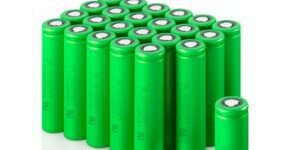
Researchers from the N. S. Kurnakov Institute of General and Inorganic Chemistry of the Russian Academy of Sciences have developed a new technique to recover valuable metals from used lithium-ion batteries. In this way, science advances towards cleaner processes.
The proposal is based on a generation of extractants that allows separation of strategic components without generating hazardous waste. Thus, recycling is consolidated as a key tool in the face of the growth of technological waste.
Moreover, the technology aims to reduce environmental risks associated with more aggressive traditional methods.
Solvents with low environmental impact
The procedure uses deep eutectic solvents, known for their efficiency and lower toxicity. Thanks to this combination, the method achieves high selectivity in the extraction of metals.
Scientists developed an extractant from triisobutylphosphine sulfide and thymol. This facilitates the separation of copper and iron from acidic solutions derived from battery leaching.
As a result, metals are obtained with a purity above 99%, compatible with conventional industrial equipment.
Towards sustainable lithium recovery
The research team plans to scale the process and optimize each stage. The goal is to recover strategic lithium and other critical metals safely.
In this context, battery recycling becomes central to the energy transition. As electric mobility grows, so does the demand for materials. Therefore, closing the usage cycle reduces pressure on mining and ecosystems.
Ecological innovation in BRICS countries
In parallel, China has advanced in the development of ecological pigments based on rare earth elements. These materials replace toxic heavy metals historically used in the industry.
At the same time, the combination with aluminosilicates allowed cost reduction and facilitated large-scale production. Thus, safer alternatives for health and the environment are strengthened.
India, on the other hand, identified semiconductor properties in a natural bacterial protein. This material functions without metals or high-energy processes.
Deep science and understanding of the planet
Additionally, Russian scientists identified a rare carbonate mineral containing phosphorus within a diamond formed at great depth. This finding provides new clues about the dynamics of the Earth’s mantle.
By revealing the role of light elements in deep processes, the research expands the understanding of the planet’s geochemical cycles. In this way, science connects surface sustainability and deep knowledge of the Earth.
What are the advantages of battery recycling?
The recycling of batteries reduces soil and water pollution, preventing the release of heavy metals. Additionally, it decreases the need to extract new natural resources.
It also allows for the recovery of strategic materials such as lithium, cobalt, and nickel, essential for clean energy. This strengthens energy security and the circular economy.
Finally, it promotes green jobs and encourages more responsible production models, aligned with environmental protection and sustainable technological development.