This post was originally published on here
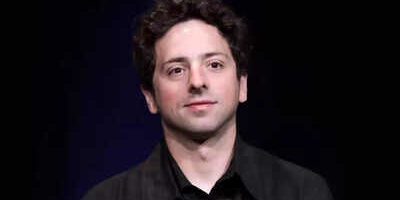
Google co-founder Sergey Brin recently offered a peek into one of his life’s decisions and how the value of higher education is changing in the age of artificial intelligence (AI). Speaking to a new generation of engineers at Stanford University recently, Brin said that while the “Stanford-to-Silicon-Valley” pipeline remains legendary, his own path to becoming a tech leader was defined by curiosity rather than a strategic pursuit of credentials.“I chose computer science because I had a passion for it,” he told the student gathering, while adding, “It was kind of a no-brainer for me. I guess you could say I was also lucky because I was also in such a transformative field.”
AI is changing education but Sergey Brin says don’t abandon fields
Brin’s comments came at a time when there’s a narrative that the rise of AI is challenging long-held assumptions about the value of higher education. For example, AI models like Gemini and ChatGPT are becoming increasingly capable of writing code, many students have questioned whether a computer science degree remains a viable investment. Brin cautioned against fleeing the field out of automation fears.“I wouldn’t go off and switch to comparative literature because you think the AI is good at coding. The AI is probably even better at comparative literature, just to be perfectly honest anyway,” Brin quipped.
Google is changing how they hire
Despite his academic push, Brin acknowledged that Google’s hiring philosophy has evolved significantly. The tech giant is increasingly looking past the four-year degree in favour of “self-taught stars”.“In as much as we’ve hired a lot of academic stars, we’ve hired tons of people who don’t have bachelor’s degrees,” Brin noted, adding, “They just figure things out on their own in some weird corner.”The numbers back up this shift. Citing data from the Burning Glass Institute, a report by Fortune said that the share of Google job postings requiring a degree plummeted from 93% in 2017 to 77% in 2022. Notably, Brin’s comments align with CEOs like JPMorgan’s Jamie Dimon and Palantir’s Alex Karp. Both of the leaders have supported that high-paying roles should be for those who have proven skills and should not depend of their formal education.