This post was originally published on here
The oxygen on the planet does not come solely from trees. A large part originates in the sea, thanks to phytoplankton, microscopic algae that float near the surface and, although tiny, perform an essential function: transforming sunlight into energy, releasing oxygen, and feeding everything from krill to whales.
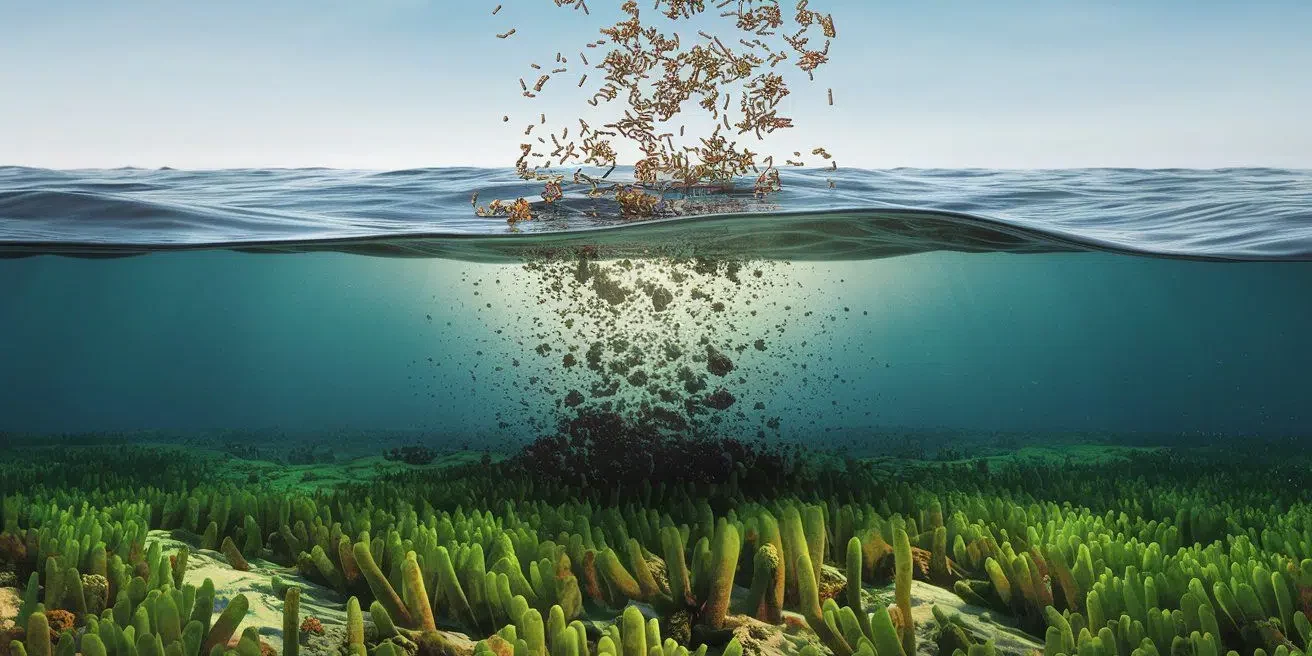
However, this process depends on a very specific ingredient: iron. Although required in minimal amounts, its presence is crucial for photosynthesis to function correctly. Iron reaches the ocean mainly through desert dust and water from glacier melt.
The Scientific Discovery
Researchers from Rutgers University demonstrated that when iron is scarce, phytoplankton begins to waste energy, photosynthesis fails, and the side effects extend throughout the food chain.
The study, led by Heshani Pupulewatte, included 37 days of fieldwork between 2023 and 2024 in the South Atlantic and the Antarctic Ocean. Using customized fluorometers, scientists measured the fluorescence emitted by phytoplankton under iron stress, that is, the energy wasted when photosynthesis does not work correctly.
The results showed that up to 25% of the light-harvesting proteins decouple from the systems that convert that energy into useful chemical energy. In other words, they capture sunlight but cannot utilize it, releasing more energy in the form of fluorescence.
Ecological Consequences
Iron is a key micronutrient, and vast regions of the ocean naturally present low levels. According to researcher Paul G. Falkowski, “iron is a limiting factor in the ability of phytoplankton to produce oxygen in vast regions of the ocean.”
Climate change can exacerbate the problem by altering ocean circulation, reducing the supply of iron in some areas. This does not mean humanity will run out of oxygen immediately, but it does mean that the ocean’s productivity quietly decreases, affecting the species that depend on that food base.
Phytoplankton is the primary food source for krill, which in turn sustains penguins, seals, walruses, and whales in the Southern Ocean. Less iron means less phytoplankton, less krill, and consequently, fewer of these majestic creatures.
A Fragile Engine
The study highlights that the Earth’s oxygen engine depends on a tiny yet critical ingredient. The lack of iron does not stop human respiration, but it does threaten the marine trophic chain and ocean biodiversity.
The research shows that the planet’s balance may depend on invisible micronutrients, reminding us that the health of the ocean is inseparable from global health.
Iron, although microscopic in quantity, is the gear that keeps phytoplankton photosynthesis running and, with it, the planet’s oxygen engine. Its scarcity reveals the fragility of natural systems and the need to understand how climate change and the alteration of ocean cycles can silently affect life on the planet.