This post was originally published on here
MOBILE, Ala. (WALA) – Every Mardi Gras season, thousands of pounds of brightly-colored beads rain down from floats onto the crowds—but when the music stops and the streets clear, many of those beads are left behind, washed into storm drains or tossed into the trash.
Now, one New Orleans professor is offering a greener way to celebrate.
Innovation Takes Center Stage
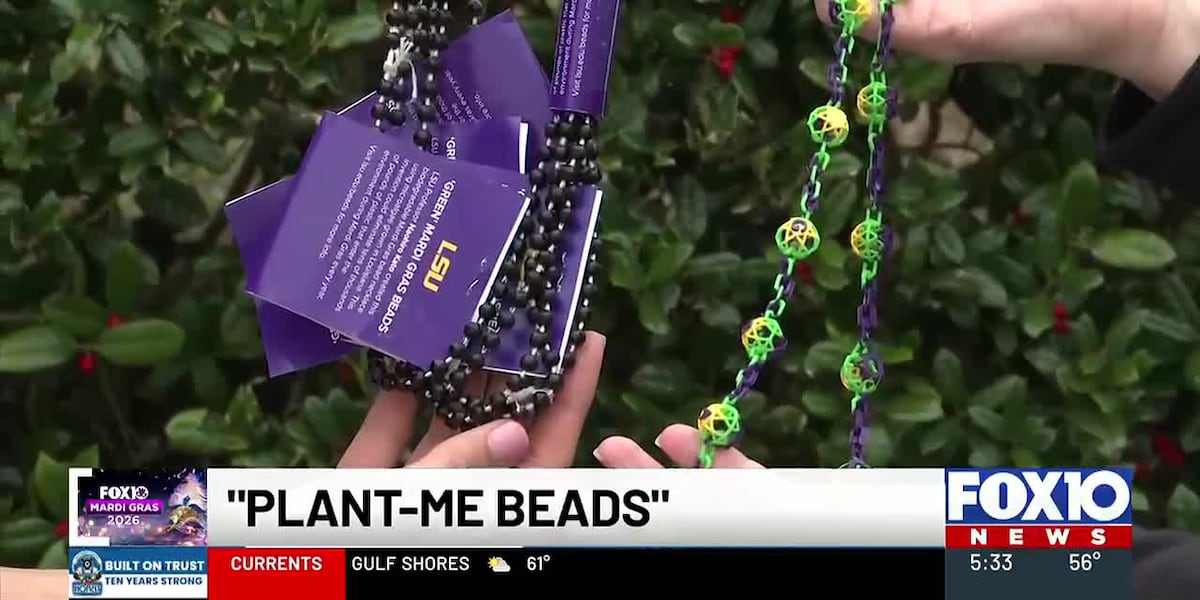
Dr. Nahiro Kato, a biology professor at LSU, has created “Plant-Me Beads”—3-D printed from a starch-based material called polylactic acid. The innovative beads represent a significant shift in how the city can celebrate its most iconic tradition while protecting the environment.
Last year, New Orleans’ Krewe of Freret banned plastic beads entirely. This season, Freret is one of three krewes throwing the biodegradable beads during parades, setting an example for other parade organizations to follow.
Scientific Support for the Solution
Dr. Ruth Carmichael, a senior marine scientist at the Dauphin Island Sea Lab, has studied the harmful effects of traditional Mardi Gras beads for years. She met Dr. Kato during that research and says this innovation is a step in the right direction.
“These actually have okra seeds inside,” Dr. Carmichael explains. “Having the plant seeds aids in the biodegrading process. We are super excited about it and I say ‘we’ because my son and I did this project where we looked at the potential for harmful metals in the paint…and that’s how we met Dr. Kato and found out about his Mardi Gras beads.”
A Call for Responsibility
Dr. Carmichael urges paradegoers to be responsible stewards of the environment—picking up beads and other throws, and reusing or recycling when possible. As more krewes consider making the switch to biodegradable alternatives, even small actions from revelers can make a significant difference.
Copyright 2026 WALA. All rights reserved.