This post was originally published on here
-
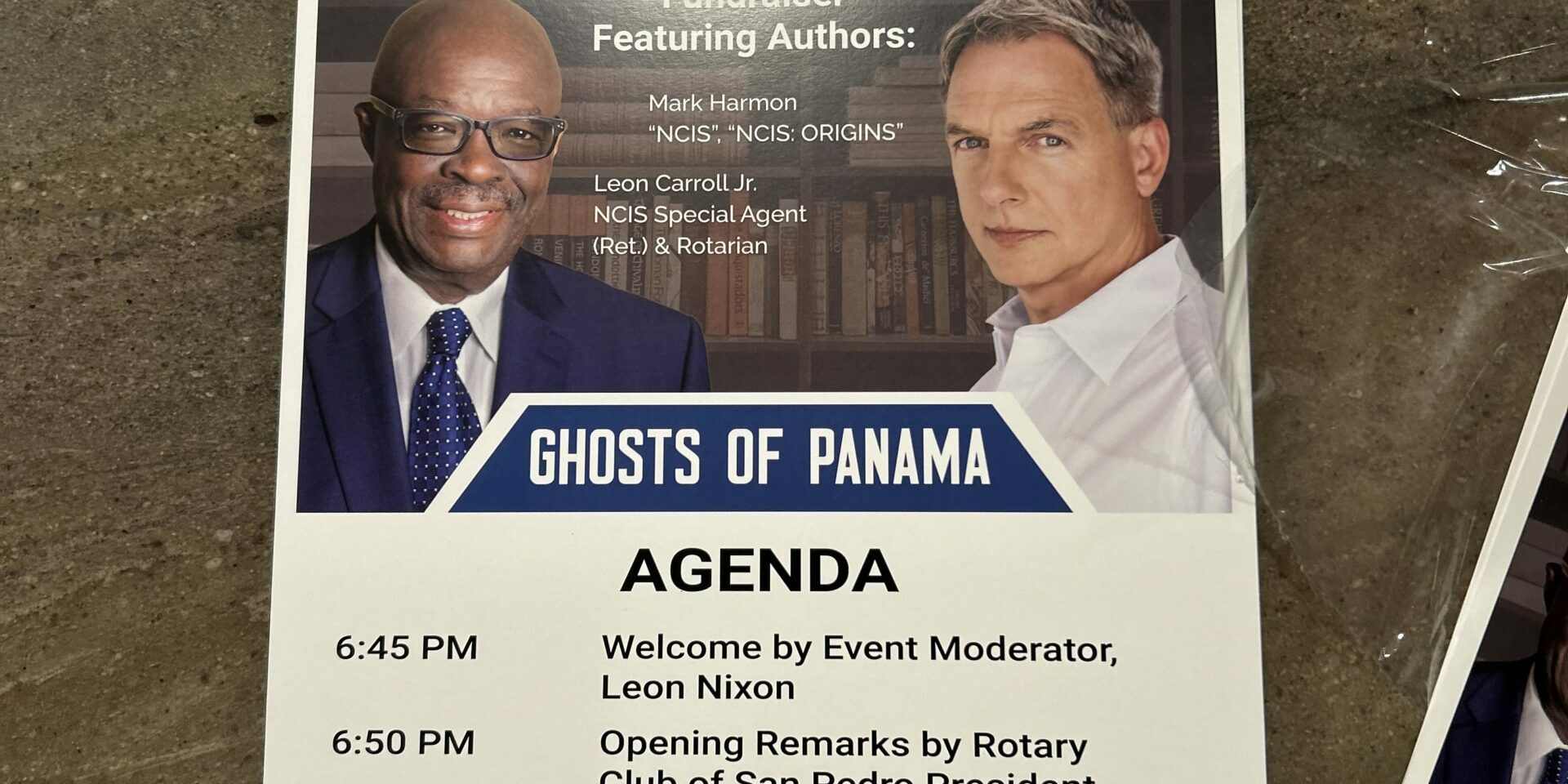
Poster promoting one of a series of books being written by NCIS actor and now executive producer Mark Harmon and former NCIS special agent Leon Carroll, Jr. (Courtesy Photo)
1 of 3
Poster promoting one of a series of books being written by NCIS actor and now executive producer Mark Harmon and former NCIS special agent Leon Carroll, Jr. (Courtesy Photo)
When one of television’s most enduring and popular shows, “NCIS,” launched in 2003, actor Mark Harmon — in the show’s lead role of Leroy Jethro Gibbs and now its executive producer — was always intrigued by the “real” cases that the mostly anonymous agency handled.
Enter Leon Carroll Jr., then a Naval Criminal Investigative Service special agent and San Pedro resident, who soon became a valued consultant on the show.
Since meeting early on during an “NCIS” cast visit, the two have built a close friendship and are gaining attention for their growing joint endeavor — researching and writing nonfiction, historical accounts of little known events in NCIS history.
Their first book in 2023, “Ghosts of Honolulu,” tells the “untold story of Pearl Harbor,” and a Japanese spy and the spy hunter, highlighting the tale of Douglas Wada, a Japanese American NCIS special agent.
Next came “Ghosts of Panama” in 2024, the story of Panama in 1989 when the once-warm relationship between United States and Gen. Manuel Noriega began to erode. NCIS special agent Rick Yell is highlighted in that real-life tale.
And now, the co-authors have released their third book, “Ghosts of Sicily,” going back to World War II. It was released on Tuesday, April 14.
“It’s 1942, and New York City is at war,” the description from Amazon says. “German U-boats are sinking ships just miles offshore, and Washington, DC, is convinced that waterfront spies are providing intelligence targeting the ships. To thwart the threat, the Office of Naval Intelligence reaches out to those with the most sway along the waterfronts of Brooklyn and Manhattan – the mob.”
That tale includes historic figures such as Gen. George Patton and Meyer Lansky, a Russian-born, American organized crime figure.
“What appealed to me in the beginning,” Harmon said about “NCIS” in a Zoom interview with both authors, “was basically that we were talking about this agency I’d never heard of. If you’d gone online (in a search for NCIS) you would come up with zero. There was no information about this agency and that was by intent. I learned that as I started doing the show. These are individuals who do this very rare work that they do and they don’t care that you don’t know about them.”
Years later, when Harmon was approached to do a book about the show, he said only if the focus would be not on the show, but on highlighting original NCIS cases — a curiosity and interest he never lost.
“And I would not touch this (book endeavor) without Leon Carroll,” he said.
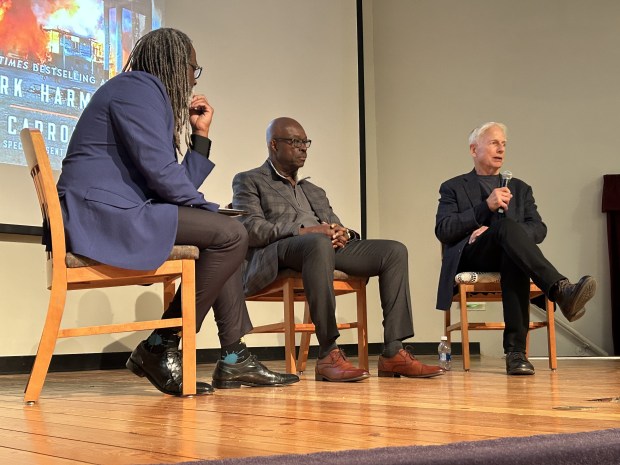
This weekend, Harmon and Carroll will be among authors at the Los Angeles Times Festival of Books, where they will be featured in “Mobsters, Misfits and Mayhem: Untold Heroic Stories of WWII” at 10 a.m. Sunday, April 19, at the Norris Theatre. Advance tickets ($8.26) are required for the moderated discussion. A podcast with the two and some “NCIS” cast members was also scheduled for the Saturday session.
In the early seasons of “NCIS” — which is the civilian federal law enforcement agency responsible for major criminal investigations involving Navy and U.S. Marine Corps interests, service members and affiliated civilian personnel — actual cases were often the subject of the show’s plots, Harmon said.
The book-writing mission with Carroll, who also served in the Marine Corps, has proven to be an outlet to delve more deeply into those unsung and often unknown cases.
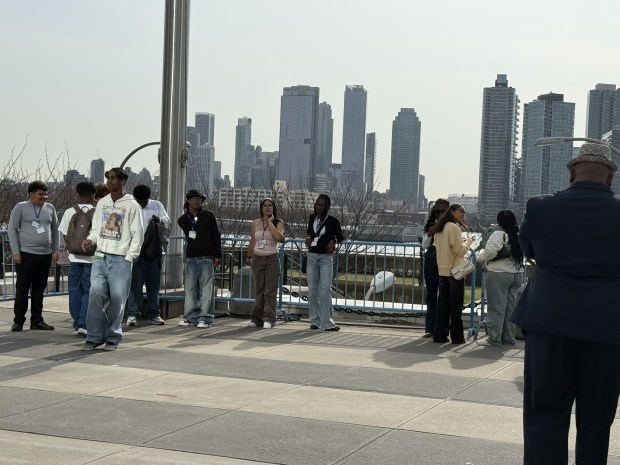
The two soon began making the rounds to promote the books. In November 2024, with their second book being published, the authors joined in a fundraiser at the Cabrillo Marine Aquarium sponsored by the San Pedro Rotary (Carroll is a past president and active member of the service club). That event raised money to send a group of Dana Middle School students to visit the United Nations Headquarters in New York, a trip Carroll led two weeks ago. The trip was important, he said, to expose young people to a world beyond their hometown.
When Carroll joined the “NCIS” TV production as an advisor to help keep storylines and scripts authentic, Harmon said, he would often ask him: “Are these things NCIS would do?” Often, he said, the response was “no.”
How would an agent hold their credentials, he once asked, among many other questions. Carroll advised him he was doing that wrong from real-world agency practices.
The two quickly bonded — Harmon noted that his character, Jethro Gibbs, included many traits he’d observed in NCIS agents, including Carroll, and incorporated them as part of his acting process — spending hours sitting together on location sites, including those in San Pedro. Carroll recalls how Harmon, driving a pickup truck on his way to Cabrillo Beach for a day of filming, offered a lift to Carroll, who was walking to the site from his Shepard Street neighborhood.
“The set was like 600 feet in front of me,” Carroll said, but Harmon insisted he get in the truck.
“NCIS” crews and actors film often in San Pedro, taking advantage of the ocean and cargo-rich settings. San Pedro is a natural for the series, Carroll said.
“The Naval Criminal Investigative Service needs water and it needs ships and we have both down here in San Pedro,” Carroll said. “All of the (“NCIS”) franchise shows have been in San Pedro quite often.”
The Battleship Iowa and the S.S. Lane Victory are often used, as is Cabrillo Beach and the old Fort MacArthur military site, now often seen — portraying what is supposed to be Camp Pendleton — for the new “NCIS Origins” franchise.
Asked about how the friendship between them began, Carroll recalled one of the early days some 20 years ago when they sat together on location for “NCIS.” The talk turned to Chicago, Carroll’s hometown. “Are you a Cubs or Sox fan?” Harmon asked him.
“Mark, I’m a south sider, of course I’m a Sox fan,” Carroll responded.
The next day Harmon presented him with an original brick from Comiskey Park, the former home of the White Sox.
With that, Carroll said, “I knew he was the real deal and we’ve been committed friends ever since.”
There was plenty of time in those days to solidify the camaraderie. Before the truncated seasons in the streaming era of television, the days were long — and often, filming would last 18 or even 20 hours at a stretch.
Carroll recalled television seasons in the past calling for 13 shows in the first half and nine or more on the back end.
“You were working 10 months on an episodic television show,” Harmon said.
But streaming has changed much of that.
Now their book writing success is again bringing them together for long hours. Much of the effort’s success, Harmon said, is because of their “great research team.”
“And Leon won’t tell you this, but he’s a gold mine,” Harmon said. “This has been a fun dive, so to speak, a dig. And (done) always with respect. As a partnership, this has been, I’d say, a surprise to both of us.”
Developing the stories is time-consuming, the authors said, but rewarding.
“You’re bringing these individuals out of the shadows who didn’t plan to be out of the shadows,” Harmon said. “They didn’t plan to be talked about.”
For “Ghosts of Honolulu,” the pair could never connect in advance with Douglas Wada, the NCIS agent at the book’s heart, ahead of its publication. But the Wada family connected with them later, expressing their gratitude for shining a light on Wada’s role in World War II history.
Another perk: The books are shining a light on some of the nation’s history that had been obscured.
“All of the three books include things that weren’t (previously) known,” Carroll said.
The latest “Sicily” volume, he said, originated from information the authors found on the NCIS history site.
“We thought, this is good, it’s talking about the mob and naval intelligence,” Carroll said. “Who’d ever think those two would get together and partner on anything?”