This post was originally published on here
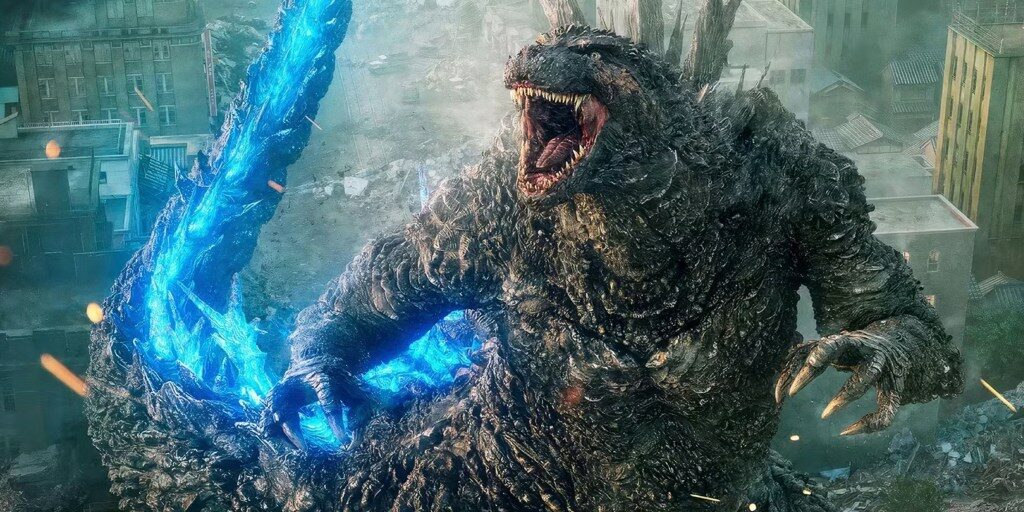
Produced for between $10 and $15 million by Toho, Takashi Yamazaki’s Godzilla Minus One became a critical and commercial phenomenon, grossing over $116 million globally against a modest budget. The Academy subsequently awarded the film the Oscar for Best Visual Effects at the 96th ceremony, making Yamazaki the first director since Stanley Kubrick to claim that honor. The recognition confirmed that Yamazaki had executed a structural overhaul of a franchise that had grown increasingly dependent on scale at the expense of human stakes. He is now building on that achievement with a direct sequel, Godzilla Minus Zero, arriving in North American theaters in 2026, while simultaneously developing his first English-language feature, Grandgear.
Videos by ComicBook.com
Sony Pictures brought Grandgear to this year’s CinemaCon, confirming a 2028 theatrical release and screening a brief teaser that revealed giant robots engaging in combat within a city environment. J.J. Abrams’ Bad Robot teamed with Yamazaki on the project, which sparked a major bidding war in late 2024, before Sony ultimately secured it. The footage showed a Gundam-type robot in the middle of the street facing off against another robot with a more alien look. Yamazaki writes, directs, and produces the project, a degree of creative authority over a studio production that reflects how substantially Godzilla Minus One repositioned him within the industry. It’s great news that Yamazaki is getting complete creative control over Grandgear, and he is exactly the right filmmaker to make giant robots work.
Yamazaki’s Grandgear Can Do to Mechas What Godzilla Minus One Did for Kaiju
Godzilla Minus One was a glorious return to form for the atomic lizard. The American MonsterVerse, while commercially successful, prioritizes crossover logistics and escalating creature sizes over the psychological consequences of mass destruction, a far departure from the franchise’s roots. Meanwhile, Toho’s own Reiwa-era entries, including Hideaki Anno’s Shin Godzilla in 2016, achieved sustained critical praise in Japan but failed to charm Western audiences. Yamazaki stood apart by positioning his film within the wreckage of postwar Japan, where a society already dismantled by atomic devastation encountered a new extinction-level force with no institutional infrastructure left to resist it. In addition, Godzilla Minus One keeps the focus on Koichi Shikishima (Ryunosuke Kamiki), a disgraced kamikaze pilot carrying the guilt of having survived by refusing his duty. That emotional depth is why the film earned the highest certified critical rating of any Godzilla film on Rotten Tomatoes, and why it crossed $116 million globally on a budget most Hollywood studios allocate to marketing alone.
When it comes to mechas, Western attempts at the classic Japanese genre are also flawed. Guillermo del Toro’s Pacific Rim remains the most earnest attempt at emotional depth, built on del Toro’s genuine reverence for the kaiju and mecha anime that shaped his sensibility as a filmmaker. It found a devoted international audience but underperformed domestically against its $190 million budget, and the 2018 sequel under a different director confirmed that the franchise’s success was inseparable from del Toro’s personal investment in the material. The Transformers franchise also used mecha combat on a blockbuster scale to generate enormous revenue, but those films operated as spectacle delivery systems, which is why their cultural footprint proved limited relative to their commercial scale. What the genre has yet to produce is an English-language film that combines technical excellence with the character-driven stakes that generate both critical longevity and emotional impact.
That specific combination is what Yamazaki built his reputation on. His approach to Godzilla Minus One prioritized the human consequences of the monster’s destruction over the destruction itself, and the VFX work existed in direct service of the plot. Applying the same logic to Grandgear results in the perfect conditions for the mecha genre’s most ambitious attempt at that balance in an English-language production. Plus, the CinemaCon footage, brief as it was, displayed the same precision in scale and visual impact of Godzilla Minus One, another reason to be excited for Grandgear.
Godzilla Minus Zero opens in North American theaters on November 6, 2026. Grandgear is set for release on February 18, 2028.
Which Yamazaki project are you most excited for, Godzilla Minus Zero or Grandgear? Leave a comment below and join the conversation now in the ComicBook Forum!