This post was originally published on here
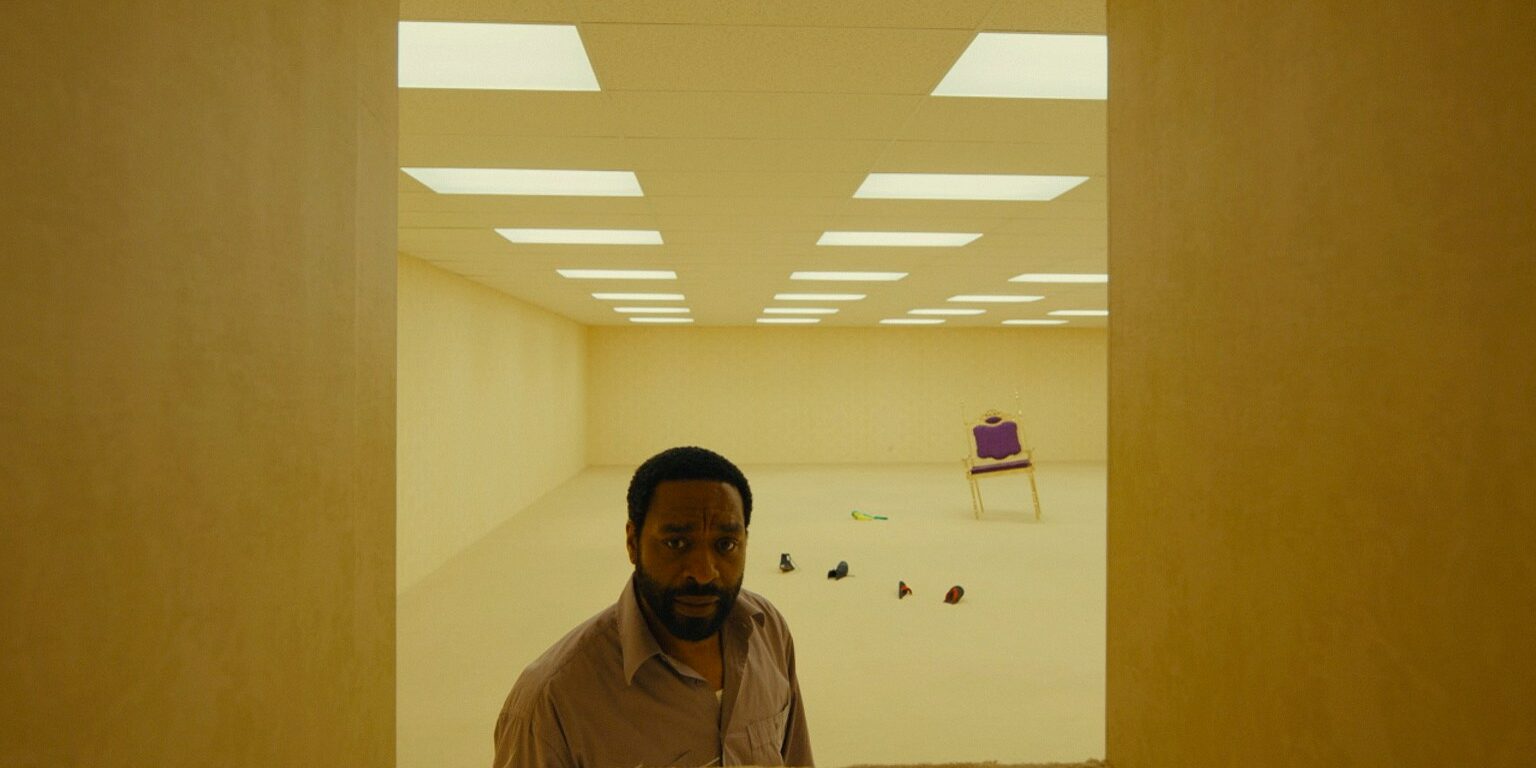
It’s just an empty room — a literal blank space. Ok, well, there is that pile of furniture, arranged in a jumbled, haphazard way that suggests either a makeshift sanctuary or an arcane, sacred ritual. And a cardboard cutout of what looks like an ancient Nazarean, playing an echoing recording of various languages. And a random stop sign, with its central command curiously rendered backwards as if glimpsed in a mirror. And yes, if you venture past that first opening and keep moving down an endless series of hallways, all of which are fluorescently lit for maximum migraine potential and rendered in a color described as “mono-yellow,” you may encounter items like chairs and shoes and mannequins poking out of the walls and floors, as if they’d been phasing through a surface and then got stuck halfway through. I mean, what’s so creepy and disturbing about that?
A lot. When a Bay Area teenager named Kane Parsons began posting shorts on his YouTube channel about a series of liminal spaces titled The Backrooms, he ended up turning the fodder for a 4chan thread into a viral online-horror sensation. Presented largely as found footage and involving an elliptical mythology around an organization known as the Async Research Institute, these clips had a way of burrowing under your skin and into your psyche. The question wasn’t whether Parsons would attract the attention of producer-directors like James Wan and Osgood Perkins, or the good people at A24 so much as when he’d level up into a larger hipster-horror platform.
His feature debut, Backrooms, takes the premise of those shorts and runs with them; it’s the carbonara of creepypasta cinema, adding savory Kubrickian elements to its source material’s heavily salted Blair Witch Project videocam style and displaying an inventiveness that makes up for any sense of derivativeness. The fact that the concept not only made the leap to longform but sustains its nightmare-logic narrative with such unsettling effectiveness is impressive enough. That it milks so much out of a minimalistic idea revolving around an MC-Escher-playing-Minecraft aesthetic feels like a mild evolutionary blip within the genre. Less isn’t just more here. It’s evocative in a way that suggests a whole other strain of 21st century existentialist horror.
Venture forth, ye viewers of strong will, into a seemingly anodyne furniture store in San Jose, California, circa 1990. You’ve probably stepped foot into a million retail spaces like this before, even if they weren’t as oddly pirate-themed as Cap’n Clark’s Ottoman Empire. It’s manager is named Clark (Chiwetel Ejiofor). Clark is in a bit of a transitional period in his life. His dreams of being an architect have been dashed. He’s been kicked out of house by his wife, and given the volatility and anger issues he displays in his sessions with his therapist, Mary (Renate Reinsve), it’s not surprising. Clark has been reduced to shooting commercials in full Long John Silver cosplay and drinking himself to sleep after hours in the store.
Strange things begin occurring. Lights flicker on and off. Clark and a maintenance man come across two electrical switches that connect to nowhere. A clip of surveillance footage of a mysterious doorway flashes during a late-night movie on TV, right before the power goes out. When he goes into the store’s basement showroom, he spots a weird sliver of light emanating in a crack behind the walls. Even weirder: Clark can walk right through one of those walls. That’s when he spots the first of the film’s “backrooms,” the one with all those chairs and divans stacked upon a each other. There will be more he’ll come across as he starts exploring this previously unknown subterranean lair. Infinitely, infinitely more.
Soon, Clark mentions this discovery to his therapist — after manically inquiring if she’s ever issued a 5150 — and shows her a map he’s drawn of this underworld’s many passageways and peripheral enclosures. “I’m not saying I don’t believe you,” Mary carefully replies, her voice dripping with disbelief. Clark eventually conscripts two young videographers (Finn Bennett and Lukita Maxwell) to help him film further explorations into the bowels of these backrooms. Some time later, Mary gets a cryptic voicemail from her client. Concerned for his safety, she shows up at Cap’n Clark’s and finds it virtually abandoned, the muzak still piping away on the P.A. system. Mary also discovers the taped outline of a door on a wall downstairs. And then she, too, enters the backrooms….
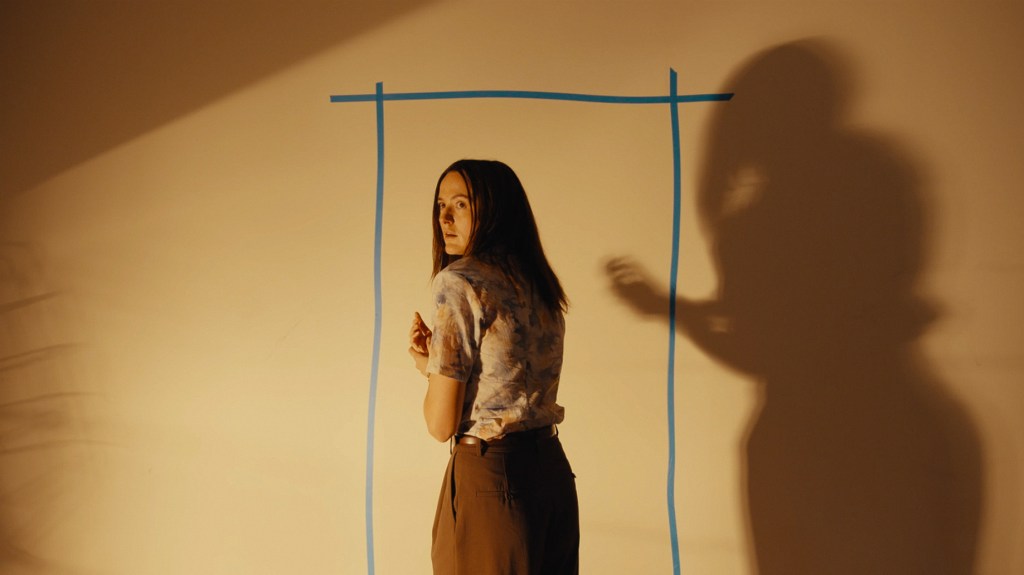
Renate Reinsve in ‘Backrooms.’
Production design is an easy thing to take for granted when it comes to postmortem sifting through elements of moviemaking, horror or otherwise, but it’s impossible to overestimate how crucial Danny Vermette’s take on the terrifying limbo of the film’s title. A sort of generic industrial office space that’s unnervingly barren yet suggests Salvador Dali had a second career as an interior decorator — so many askew openings, interrupted stairways, and entrances leading to dead ends and a sense of no-exit dread — it’s described by Clark as “every place that ever was.” It’s really the last stop on the road to nowhere, however, and exactly the sort of place that suggests a permanent state of being lost. Loss, unsurprisingly, is revealed to be a key factor in the story Parsons is trying to tell, though storytelling often takes a back seat to atmospherics and bad-mojo vibe. You can tell that Parsons grew up on internet videos and worldbuilding videogames. The movie sometimes works better as an effect than, say, a metaphor for being stuck in a rut or finding yourself unable to leave destabilizing, bone-deep trauma behind.
But Jesus, Mary, and John Carpenter, what an effect! Backrooms is so good at providing a showcase for Parsons & co.’s free-floating terror that you can almost overlook (or more appropriately, Overlook) the fact that it’s not saying much beyond: Be careful regarding those demons that roam around inside your skull. They have a nasty way of becoming a real-world problem. But sometimes that’s enough to thoroughly ping some collective primal fears. Like its game-based brethren in existential fright Exit 8, it’s a movie that revels in the sensation of wandering around in perpetual circles. It may also point the way forward for the genre that’s exciting and petrifying in its own uniquely upsetting ways.