This post was originally published on here
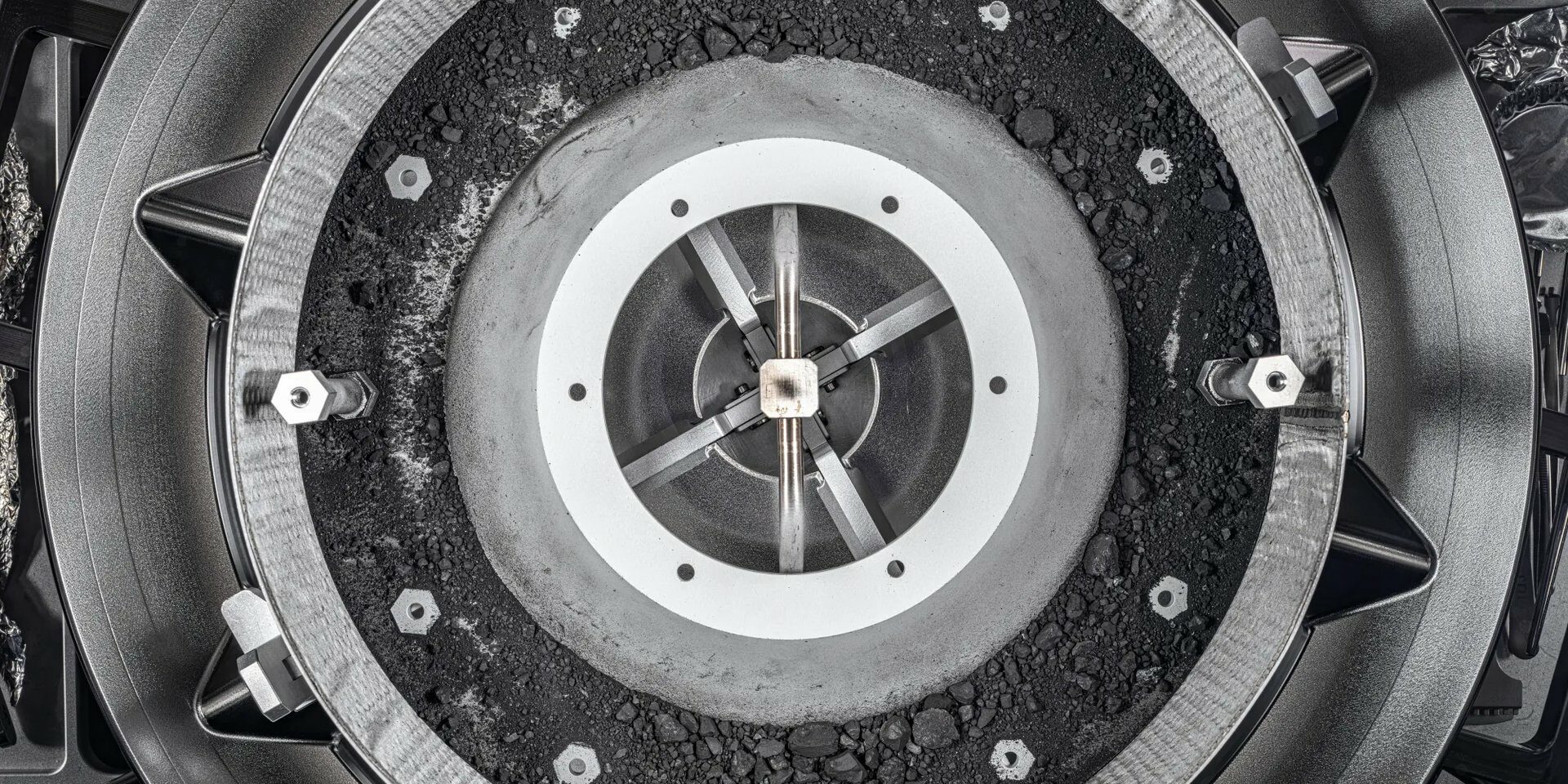
It’s been over two years since the samples from Bennu gathered by OSIRIS-REx were returned to Earth. But there’s still plenty of novel science coming out of that 121.6 g of material. Three new papers were released recently that describe different aspects of that sample. One in particular, from Yoshihiro Furukawa of Tohoku University in Japan and their co-authors, has already attracted plenty of attention, including from US Senator (and former astronaut) Mark Kelly. It shows that all of the building blocks for early life were available on the asteroid – raising the chances that planets throughout the galaxy could be seeded with the abiotic precursors for life.
To be clear, the most recent paper itself didn’t first discover all of the necessary ingredients for life. Two of the parts of the “molecular trifecta” required for the origin of life were already discovered on Bennu. Nucleobases – the molecules that make up the sequence of DNA – and amino acids – the building blocks of proteins – were previously discovered and disclosed in other papers on the asteroid.
After subjecting a 600 mg sample of the pristine surface material of Bennu to gas chromatography-mass spectrometry, the researchers found two additional types of “sugars” for the first time. But don’t think of these sugars as equivalent to the high fructose corn syrup used to sweeten Twinkies. These sugars are basic organic molecules integral to the functioning of all biological systems known on Earth.
[embedded content]
Fraser disucsses the discovery of the building blocks of DNA in the OSIRIS-REx samples.
One new sugar they found was ribose, the molecule that serves as the backbone of RNA. RNA is a critical component of modern life, and perhaps most famously recently served as the base for many of COVID-19 vaccines. Granted, the total concentration of ribose was very small, with a concentration of only .097 nanomoles per gram of asteroid material. But the most important thing about this finding is that it was there at all.
There’s an ongoing debate about the origin of life, where some scientists suggest that, instead of having complex DNA in the beginning, early life was based on RNA instead as its information transfer mechanism. This study adds some more evidence for that hypothesis, showing that all the components of RNA are available on an asteroid, and can be protected from the destructive radiation of outer space by being trapped in rocky aggregates – until they land on a receptive planet’s surface at least. This also undermines the argument that ribose is too unstable to have accumulated on early Earth, when life would have first started.
An important corollary to this argument is something the scientists didn’t find in the Bennu sample – 2-deoxyribose – the backbone of DNA. Most likely, its absence was due to its increased reactivity. 2-deoxyribose is much more reactive than even ribose, so while it was likely formed on the asteroid, subsequent reactions have all but eliminated it. Since the asteroids that impacted early Earth likely lacked this key component of DNA, it further bolsters the argument that RNA was the original information carrying mechanism of early life, with DNA developing later, in the more stable environment of early Earth.
[embedded content]
Fraser interviews Dr. Jamie Molaro about the OSIRIS-REx mission.
Another sugar discovered in the Bennu sample would have helped life along no matter its information processing system – glucose. This is a standard “energy” molecule for life even today, and familiar to diabetics everywhere as something they need to continually monitor. While this has been found in meteorites before – particularly in the Murchison meteorite – its presence in the pristine environment of space proves that this critical molecule is available even in asteroids that weren’t subjected to Earth’s climate for any period of time.
Admittedly, Bennu has a lower sugar content than Murchison, but that’s most likely because Bennu has a higher level of ammonia. Ammonia reacts with sugars to form other nitrogen-rich compounds, so its overall sugar content would be lower since so many of its sugars would be tied up in those nitrogen-rich compounds. The other famous asteroid sample collected – from Ryugu – has a very different pH level than Bennu. A more acidic surface makes the Formose reaction that likely created the sugars less likely.
In the Formose reaction, formaldehyde condenses into sugars while in the presence of water and mineral catalysts, such as phyllosilicates and carbonates that provide the calcium and magnesium needed to catalyze that reaction. Bennu is rich in both the precursor, formaldehyde, and the necessary minerals to supply the catalysts, making it an ideal laboratory for this sugar-producing reaction.
Importantly, the researchers made sure to compare their results received from the Bennu samples to a “blank” sample of regular silicate rock. By testing against this “null”, they were able to prove that the sugars were definitely actually from the rock, and not introduced accidentally as part of the work done by the lab. It would have been absolutely heart-breaking to spend all the time and effort to ensure a pristine sample, only to have it be ruined by accidental contamination when sent to a spectroscopy lab.
These discoveries certainly warrant the attention they are receiving from the wider public. At its core, this paper confirms that the potential basic building blocks of life are all present on asteroids. And more importantly on only the second asteroid we’ve ever sampled – which implies that they are likely abundant not only throughout our solar system, but throughout our galaxy. That has major implications for the study of life on other worlds, and while we still haven’t found definitive evidence of that yet, the more we learn about the evolution of life in our own backyard, the more exciting the prospect of eventually finding it elsewhere seems to be.
Learn More:
NASA / Phys.org – Sugars, ‘gum,’ stardust found in NASA’s asteroid Bennu samples
Y. Furukawa et al. – Bio-essential sugars in samples from asteroid Bennu
UT – OSIRIS-Rex Asteroid Mission Seeks to Search for Origin of Life Chemistry
UT – OSIRIS-REx’s Final Haul: 121.6 Grams from Asteroid Bennu