
This post was originally published on here
It’s a scene every dog owner knows: you scold your pup, she lowers her head, eyes wide and mournful, and you think, she feels guilty. But new research suggests that what you’re seeing may have more to do with you than with your dog.
A study published by Arizona State University psychologists Holly Molinaro and Clive Wynne reveals that people routinely misread dogs’ emotions, relying more on the context of a scene — like whether a treat or a vacuum cleaner is in view — than on the dog’s actual behavior.
In fact, the research shows that when people try to understand their dog’s emotions, they are often getting it “completely backwards.”
Humans, it turns out, are terrible at reading their canine companions. The reason is simple, and it has nothing to do with the dog: we judge the dog’s mood by everything except the dog itself.
“Our dogs are trying to communicate with us,” said Wynne, an ASU psychology professor who studies the human–dog bond, “but we humans seem determined to look at everything except the poor pooch himself.”
Why We Misread Our Best Friends
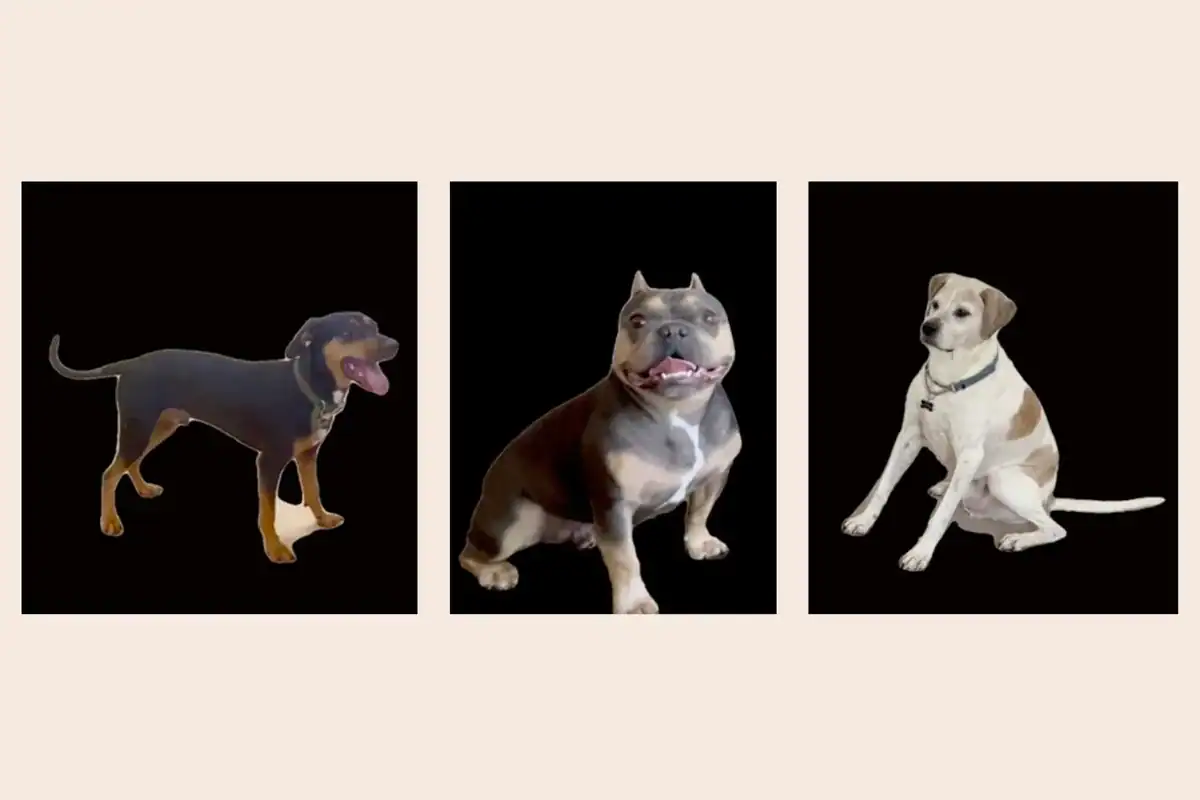
In the experiments, hundreds of volunteers watched short videos of dogs — most notably Oliver, a 14-year-old pointer-beagle mix who also happens to be the Molinaro family dog — reacting to positive and negative events. Sometimes the context was visible: a hand offering a leash or wielding a vacuum. Other times, the dog appeared alone against a black background. The idea for the latter setup was born during the Covid-19 pandemic and was inspired by Zoom’s background blur feature, which Molinaro thought could be applied to remove contextual cues.
When people viewed the original, full-context videos, they rated the dog’s emotions as clearly more positive in the happy scenarios than in the negative ones. But once the context was removed, and the viewers were forced to judge the dog’s behavior alone, a dramatic shift occurred. Viewers suddenly rated the dog’s emotions as equally positive across both positive and negative situations. The dog’s actual behavior was far less distinctive than the human interpretation of the situation.
“You see a dog getting a treat, you assume he must be feeling good. You see a dog getting yelled at, you assume he’s feeling bad,” Molinaro explained in an Arizona State University press release. “These assumptions… have nothing to do with the dog’s behavior or emotional cues, which is very striking.”
“There’s no evidence at all that people actually see the dog,” Wynne told The New York Times. “They seem to have a sort of a big blind spot around the dog himself.”
Mood Swings and Misreadings
The second experiment hammered the point home. The researchers spliced the footage to create “mismatched contexts.” For example, the dog’s actual reaction to a negative stimulus (like a reprimand) was shown while the video depicted the human doing something positive (like presenting a treat).
The context always won. Viewers were swayed more by the situation than by the dog’s behavior. For instance, in one example, people viewed the exact same footage of a dog. When it appeared to be reacting to a vacuum cleaner, they reported the dog was “feeling bad and agitated.” But when the context was edited to show the dog appearing to react to seeing his leash, the dog was suddenly “feeling happy and calm.”
They were, as Wynne put it, “barking up the wrong tree.”
The researchers also found that our own moods shape how we interpret canine emotions. The study nudged some participants into a positive mood and others into a negative one by having them view images before watching the dog videos.
The result was the reverse of what happens when humans typically read other humans: When people were put in a good mood, they were more likely to think the dog looked sad. When they felt a bit down, they tended to decide the same dog looked happy.
Wynne found the reversal deeply puzzling. “In this domain of how people understand dogs’ emotions, I’m continuously surprised,” he told BBC Science Focus. “We’re just scratching the surface of what is turning out to be quite a big mystery.”
We Have Some Work to Do
The effect was remarkably robust across nearly 900 participants. Age and experience mattered, too. Younger viewers tended to rate dogs as more emotional, and those most familiar with dogs often viewed negative scenarios more positively. This means that even seasoned owners may project goodwill where it doesn’t belong.
So if you thought you’re fluent in “dog” just because of a long history of cohabitation with a canine, maybe think again. While thousands of years of domestication have honed dogs’ ability to read human cues, the reverse may not be true.
This misunderstanding isn’t harmless. If owners misinterpret fear as guilt, or anxiety as obedience, they risk punishing or ignoring dogs in distress. “When you yell at your dog for doing something bad and she makes that guilty face, is it really because she is guilty, or is it because she is scared you are going to reprimand her more?” Molinaro asked.
Molinaro adds that we must become “humbler in our understanding of our dogs” and realize that “Every dog’s personality, and thus her emotional expressions, are unique to that dog.”
“Take a second or two to actually focus on the dog rather than everything else that’s going on,” Molinaro advised.
That means tuning out the props — the leash, the cookie, the scolding voice — and learning instead to see subtle cues: ear position, posture, pacing, tail tension.
Wynne, who recently adopted a retired racing greyhound, is already taking the research to heart: “If I know what makes her happy and unhappy, then I can guide her life toward greater happiness.”
The findings appeared in the journal Anthrozoös.