This post was originally published on here
Inspired by the feathers of a bird species whose plumage absorbs nearly all light, researchers at Cornell University have created a fabric that does the same. Their new material reflects only 0.13% of visible light, making it the darkest fabric ever made. And unlike other ultrablack coatings developed for science and industry, this one is simple, safe, and wearable.
The study, published in Nature Communications, describes how the team replicated the bird’s light-trapping feather structure on ordinary wool using a two-step process involving a melanin-based dye and plasma etching.
How They Made It
The fabric was developed at Cornell’s Responsive Apparel Design Lab, led by materials scientist and designer Larissa Shepherd. “From a design perspective, I think it’s exciting because a lot of the ultrablack that exists isn’t really as wearable as ours. And it stays ultrablack even from wider angles,” Shepherd said in a Cornell statement.
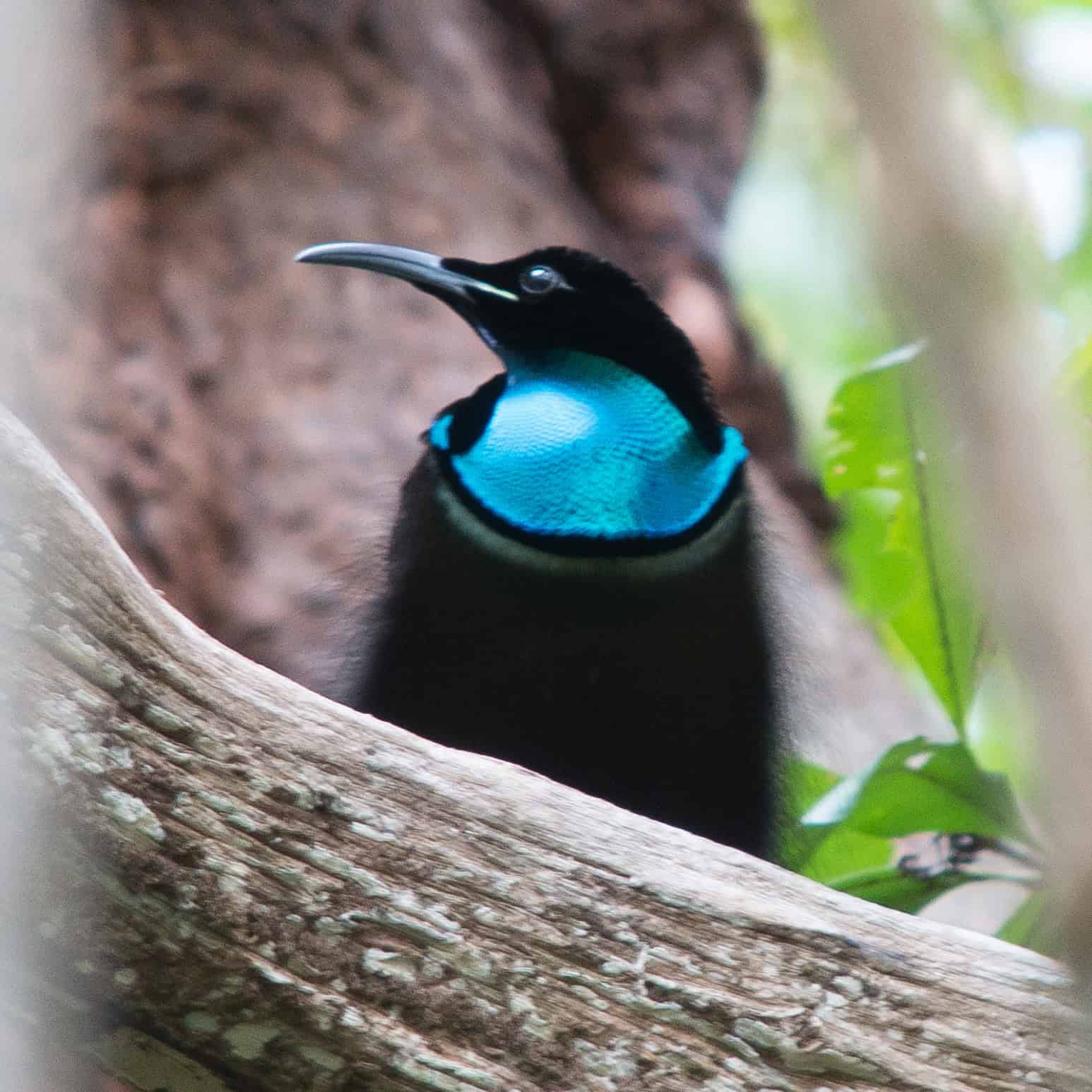
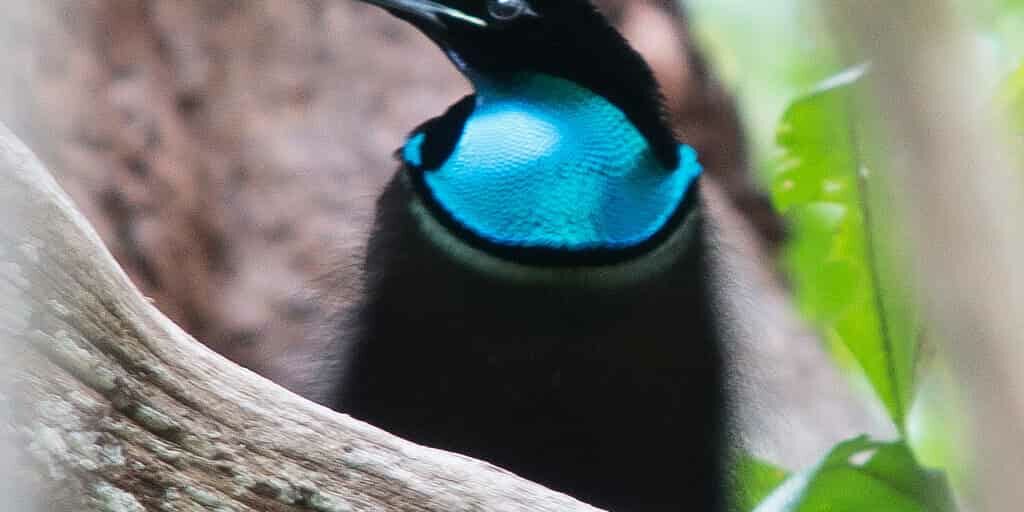
The team’s inspiration was the Ptiloris magnificus, the magnificent riflebird, a member of the bird-of-paradise family. Under magnification, the riflebird’s feathers reveal a forest of tiny barbules—intricate ridges and grooves that bend and trap light. These structures, combined with melanin, create a black so profound that it looks flat, as if color itself has been erased.
In their study, Shepherd and co-authors Hansadi Jayamaha and Kyuin Park describe how they mimicked this structure on a piece of merino wool. They began by dyeing the fabric in polydopamine, a synthetic version of melanin—the same pigment responsible for dark feathers and human skin. Then they placed the dyed wool into a plasma chamber, where it was bombarded with ions. The process etched the surface into a landscape of nanofibrils, or spiky structures thousands of times thinner than a human hair.
“The light basically bounces back and forth between the fibrils, instead of reflecting back out—that’s what creates the ultrablack effect,” said Jayamaha in the Cornell release.
This two-step process—dye and etch—turned the wool into what the researchers call ultrablack wool (UBW). Previous similar materials relied on fragile nanotube structures or harsh chemicals; Cornell’s version works with everyday fibers instead.
Darker Than The Bird
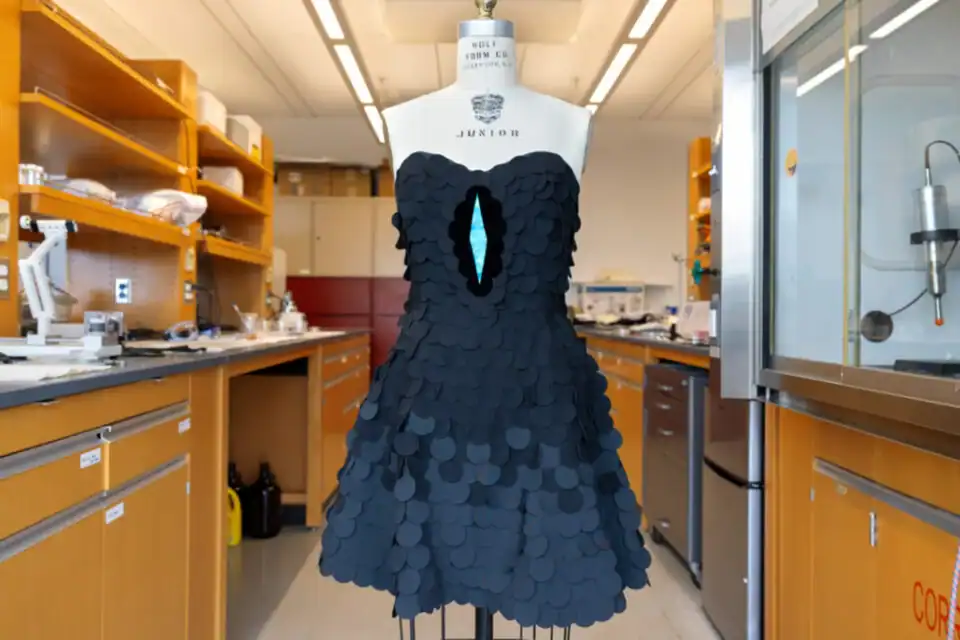
To demonstrate their creation, the Cornell team turned to fashion design major Zoe Alvarez, who crafted a strapless black dress with a band of ultrablack wool at its center. Inspired by the bird’s dark wings and flash of blue, she added a shimmer of iridescent fabric near the neckline. When digital editors adjusted the image’s brightness, contrast, or hue, every shade in the picture shifted—except the ultrablack patch.
To appreciate how black this fabric is, consider that the human eye perceives color based on reflected light. Even the deepest conventional blacks—like those used in stage curtains or camera interiors—still bounce a small percentage of photons back to the observer. The Cornell team’s textile, by contrast, returns almost none.
In technical terms, its L value—a measure of lightness on the CIELAB color scale—was just 0.5 under optimal conditions. The researchers compared it to the darkest flock fabric available, which scored 1.06, and to the bird’s own feathers, which average around 0.97.
Put simply, this makes the ultrablack wool darker than the riflebird’s display plumage, even if the bird inspired it.
Yet unlike the fragile nanotube arrays once hailed as the blackest man-made material, this wool remains resilient. Tests showed it retained its darkness after washing and stretching, and it maintained its texture and tensile strength comparable to untreated wool. In short, it’s both soft enough for clothing and strong enough for engineering.
A New Frontier for Soft Materials
By combining biological insight with accessible textile manufacturing, Shepherd’s team offers a new approach to optical materials. The ultrablack wool could coat telescope interiors to block stray light, line solar collectors to maximize absorption, or even serve as thermoregulating camouflage.
Such multifunctional textiles point to a future where clothing interacts in interesting ways with light and heat. The authors see their method as a foundation for developing soft materials that could be used in a wide range of optical applications—from design and decoration to camouflage and light-sensitive technologies.
“We could actually use the ultrablack fabric for thermo-regulating camouflage,” Park said.
Their approach works because it’s simple. They used standard materials—merino wool, polydopamine dye, and a benchtop plasma etcher—to achieve what once required billion-dollar nanotech labs. Shepherd and her colleagues have applied for a provisional patent through Cornell’s Center for Technology Licensing, with hopes of commercializing their method.