This post was originally published on here
Scientists question Death Valley’s 134°F world temperature record from 1913, with new research suggesting the famous reading was inflated by 14 degrees
The record-breaking temperatures at the infamous Death Valley might not be as scorching as previously believed, a new study suggests.
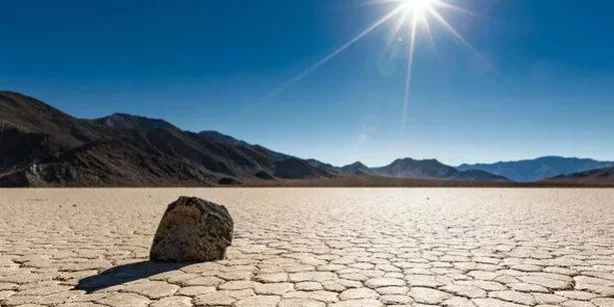
Researchers are growing increasingly doubtful about the record-setting air temperatures documented in the blistering valley, which stretches across portions of California and Nevada, where the benchmark for the hottest air temperature ever recorded near Earth’s surface has remained unbroken for 112 years.
Based on U.S. Weather Bureau records, the air temperature at Greenland Ranch in Death Valley hit a blistering 134 degrees Fahrenheit on July 10, 1913.
READ MORE: Trump openly calls for expulsion of Somalis from US as ICE targets migrants in MinneapolisREAD MORE: Trump calls ‘Affordability’ a Democrat scam just days after crowning himself the ‘Affordability president’
While it continues to hold the title as the highest air temperature on record, weather experts and climate scientists are now questioning its validity since temperatures in the area have seldom surpassed 130°F since 1913, despite historically elevated temperatures linked to climate change.
Roy Spencer, a principal research scientist at the University of Alabama in Huntsville, recently spearheaded a study examining Death Valley’s status as the world’s record holder.
Click here to follow the Mirror US on Google News to stay up to date with all the latest news, sports and entertainment stories.
Spencer revealed to Live Science that he, along with numerous weather experts and climate scientists, has been “quietly skeptical of the Death Valley world record our entire careers.”
During the research period, Spencer and his team examined July temperatures documented at weather stations within 155 miles of Greenland Ranch, covering the timeframe from 1923 to 2024. The monitoring stations sat between 3,000 to 3,700 feet above sea level, whereas Greenland Ranch sits 178 feet below sea level; consequently, scientists made elevation adjustments to the data.
The research team then cross-referenced these figures and analyzed high-altitude July readings from 1913 to calculate what the temperature would have been at Greenland Ranch that particular day.
Their findings revealed that the actual temperature at Greenland Ranch on July 10, 1913, was 14 degrees cooler than originally documented, hitting 120 degrees Fahrenheit rather than the claimed 134 degrees Fahrenheit.
“The unusually hot temperatures measured at Greenland Ranch in early July 1913 are shown to be inconsistent with temperatures at surrounding stations,” they wrote in the study, published Sept. 24 in the journal “Bulletin of the American Meteorological Society.”
Spencer explained that numerous scientists harbored doubts about Death Valley’s temperature claim, yet refrained from challenging it since the World Meteorological Organization (WMO) had given it their stamp of approval.
Additionally, historical observations from the 1900s that could have been utilized to examine the Greenland Ranch information were limited, Spencer noted.
“All deserts are hot in the summer, but Death Valley is especially hot because it is below sea level,” he said.
Spencer suggested that the Death Valley record might be better suited for tourism marketing than legitimate climate science.
“The Death Valley record has more entertainment than climatological value, with an element of ‘bragging rights’ from the standpoint of tourism.”
The research also discovered that a U.S. Weather Bureau temperature gauge, initially set up on the fringe of an alfalfa field at Greenland Ranch in 1911, may have been moved to a hotter location by ranch foreman Oscar Denton.
According to the study, Denton likely relocated the station without any official authorization or record, thereby “deviating from proper observing protocol.”
In essence, the study’s findings suggest that Death Valley may not be deserving of its world record status. However, Spencer noted that temperature readings from 2020 and 2021 could potentially allow the valley to keep its title.
The researchers pointed out in the study that the stretch from July 2 to 18, 1913, along with other years in the record, exhibit unusually high temperatures that warrant further examination.