This post was originally published on here
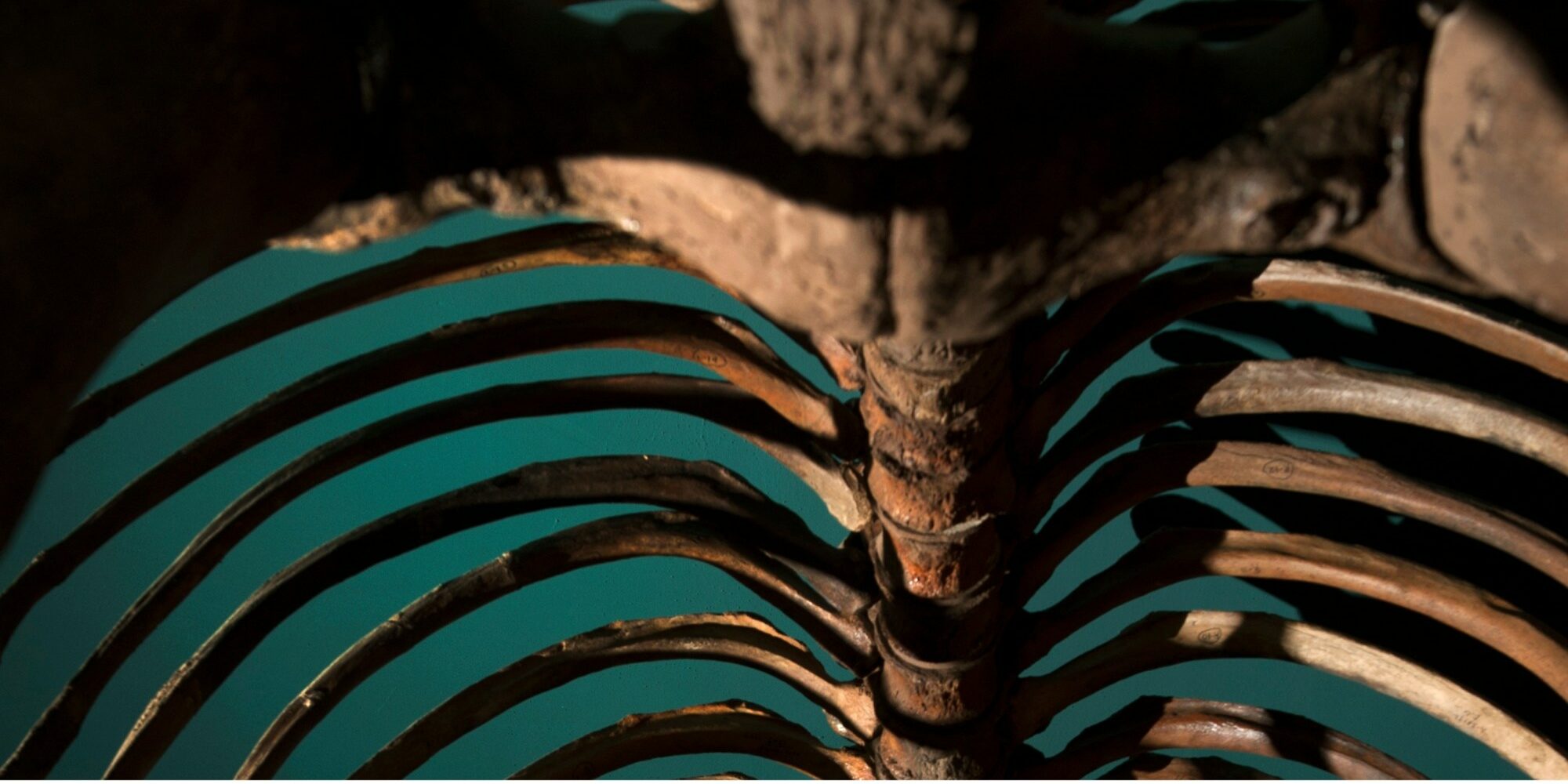
For seventy years, two sets of bones in a University of Alaska museum were believed to be the last remains of the woolly mammoth. And not just any woolly mammoth, either. A young one.
It was living, well, actually, quite dead proof that a few of these behemoths were still hanging around central Alaska as recently as 2000 years ago. Well, it turns out that they weren’t mammoth remains at all, and what they presented was a whole new mystery altogether.
Videos by VICE
According to research published in the Journal of Quaternary Science, the bones were originally dug up in the early 1950s near Fairbanks by German explorer Otto Geist, who handed them over, thinking they were mammoth vertebrae, and no one questioned it.
Then, in 2022, researchers ran radiocarbon tests, which spit out dates between 1,900 and 2,700 years old. That’s way too recent for local mammoths, which died out around 13,000 years ago.
There are two options: one, this discovery was about to rewrite everything we knew about mammoths, or two, the bones were lying to us. They interrogated the bones one last time using isotopic analysis, which showed nitrogen levels far higher than anything a land-loving aunt mammoth would have had. The plot thickened.
After some DNA tests, the researchers say that the bones, it turned out, didn’t belong to a giant shaggy ancient elephant but rather to see creatures: a common minke whale and a Northern Pacific right whale. Great! Mystery solved!
‘Mammoth’ Fossils Found 400 KM From the Alaska Coast Turn Out to Be Whale Bones
But wait… how did two sea giant creatures get so far inland as to be mistaken for mammoth bones? Specifically, 400 kilometers inland, near a creek too small to fit so much as a salmon?
The researchers did what they do: using their vast knowledge and experience in the field to make a series of educated guesses. The whales couldn’t have swum there because the waterways in the area didn’t lend themselves to that kind of travel. There’s no way scavengers could have dragged them because they were way too heavy.
The theory they like best is the simplest, and it has nothing to do with some currently unaccounted-for feat of nature: Geist messed up.
Geist collected bones from coastal Norton Bay during the same era, and the researchers found hints that the whale bones might have been mixed into his inland batch at some point in the museum’s long history.
While the researchers admit there is no real way ever to know the true story, a classic mix-up is the most likely culprit, and paleontological history narrowly dodged a bullet that would have unnecessarily upended decades of research.