This post was originally published on here
A giant structure hidden deep beneath the Atlantic Ocean is giving scientists a new reason to look past the legends of the Bermuda Triangle and focus instead on what lies below the seafloor.
Researchers have identified an unusually thick layer of rock buried beneath the oceanic crust under Bermuda. The layer measures about 12.4 miles (20 kilometers) in thickness. Scientists say no other known rock layer of this type has ever been found at such a scale anywhere in the world.
The discovery sets the Bermuda region apart from other parts of the ocean with similar geology. Researchers describe the layer as unprecedented and unlike anything previously documented beneath the Atlantic seafloor.
An unexpected layer beneath the ocean crust
Under normal conditions, the oceanic crust sits directly on top of Earth’s mantle. Beneath Bermuda, however, researchers found something different.
“Typically, you have the bottom of the oceanic crust, and then it would be expected to be the mantle,” said William Frazer, the study’s lead author and a seismologist at Carnegie Science in Washington, D.C. “But in Bermuda, there is this other layer that is emplaced beneath the crust, within the tectonic plate that Bermuda sits on.”
Scientists have not yet determined how or when this layer formed. Frazer said it may help explain another long-standing geological mystery linked to Bermuda.
A swell without active volcanism
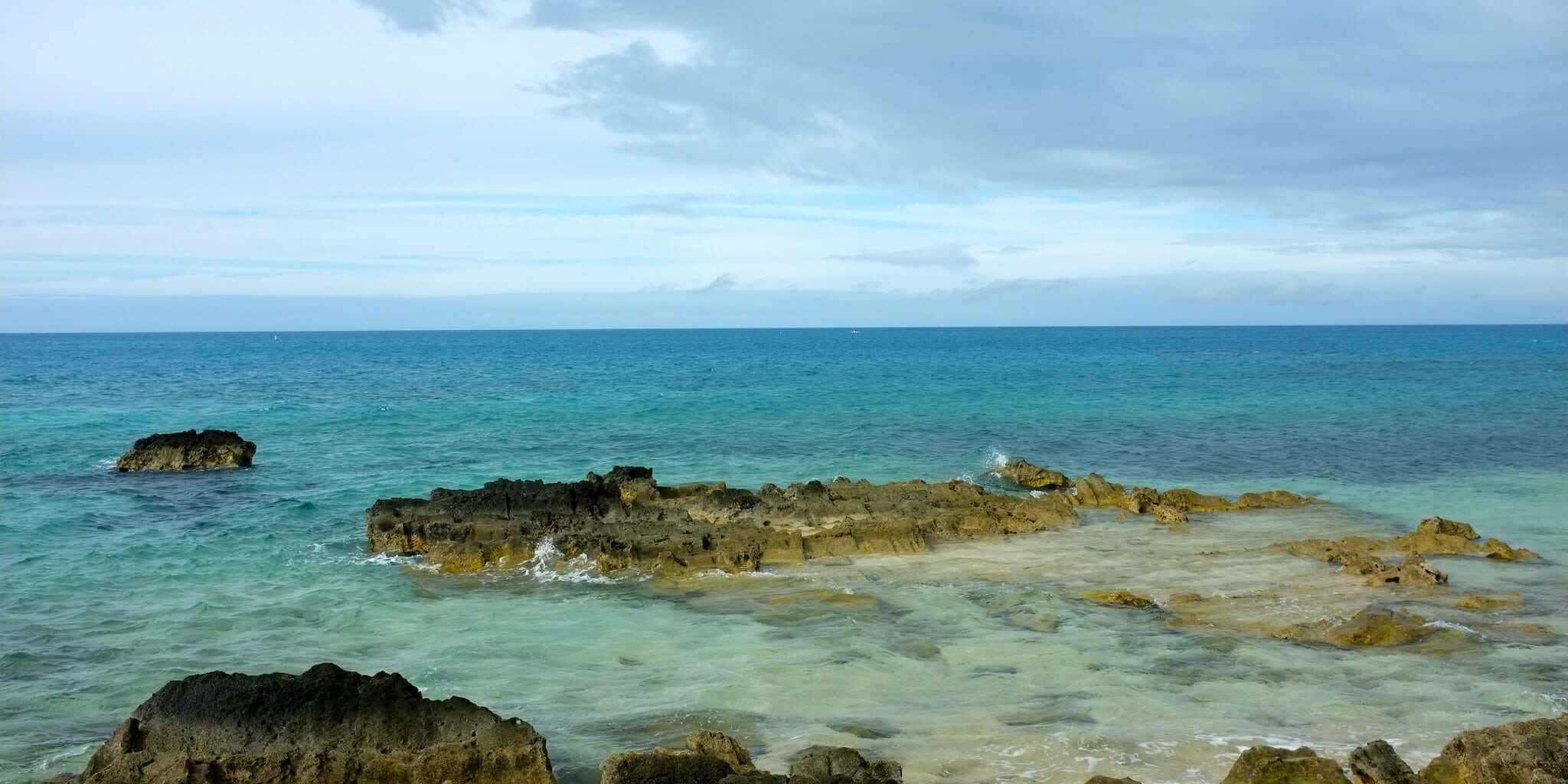
Bermuda sits on an oceanic swell, a broad rise in the seafloor where the crust stands higher than surrounding areas. In many regions, such swells form above mantle hotspots, where hot material rises, fueling volcanic activity. Island chains such as Hawaii developed through this process. Once tectonic plates move away from a hotspot, volcanic activity usually ends, and the uplifted seafloor gradually sinks.
Bermuda does not follow that pattern. The island shows no signs of ongoing volcanism, and its last known eruption occurred about 31 million years ago. Despite that long period of inactivity, the oceanic swell beneath the island has not subsided.
Scientists continue to debate what is happening deep beneath the region. No volcanic eruptions are occurring at the surface, and there is no clear evidence of an active hotspot today.
Earthquake waves reveal what lies below
To investigate the structure beneath Bermuda, Frazer and co-author Jeffrey Park turned to seismic data. Park is a professor of Earth and planetary sciences at Yale University.
The researchers analyzed recordings from a seismic station on Bermuda that detected waves from large earthquakes worldwide. As these waves traveled through Earth’s interior, they changed speed and direction when they passed through different types of rock. By tracking those changes, the team created an image of Earth’s structure down to about 31 miles, or 50 kilometers, beneath Bermuda. The data revealed the massive, unusually thick rock layer beneath the oceanic crust.
Researchers found that the layer is less dense than the surrounding rock, a property that may help support the elevated seafloor above it. The findings were published Nov. 28 in the journal Geophysical Research Letters.
Clues from Bermuda’s volcanic past
Independent research suggests Bermuda’s geological history differs from that of classic volcanic islands. “There is still this material that is left over from the days of active volcanism under Bermuda that is helping to potentially hold it up as this area of high relief in the Atlantic Ocean,” said Sarah Mazza, a geologist at Smith College in Massachusetts who was not involved in the study.
Mazza’s research shows that Bermuda’s lava is low in silica, a chemical signature linked to carbon-rich rock. That points to a deep mantle source rather than shallow volcanic processes. In a separate study published in September in the journal Geology, Mazza analyzed zinc isotope patterns in Bermuda rock samples. The results suggest the carbon originated deep within the mantle.
Mazza said this material was likely pushed into the mantle hundreds of millions of years ago during the formation of the supercontinent Pangea, between about 900 million and 300 million years ago.
Why Bermuda may be different
This deep history may explain why Bermuda does not resemble islands formed above hotspots in the Pacific or Indian oceans. The Atlantic Ocean opened when Pangea split apart and is geologically younger than the older ocean basins. “The fact that we are in an area that was previously the heart of the last supercontinent is, I think, part of the story of why this is unique,” Mazza said.
Frazer is now examining seismic data from other islands to see whether similar structures exist elsewhere or whether Bermuda is truly one of a kind. He said studying extreme cases like Bermuda helps scientists better understand which geological processes are rare and which shape Earth more broadly.