This post was originally published on here
Scientists studying polar bears were greeted with a most unexpected surprise during a recent tracking expedition in northeastern Manitoba.
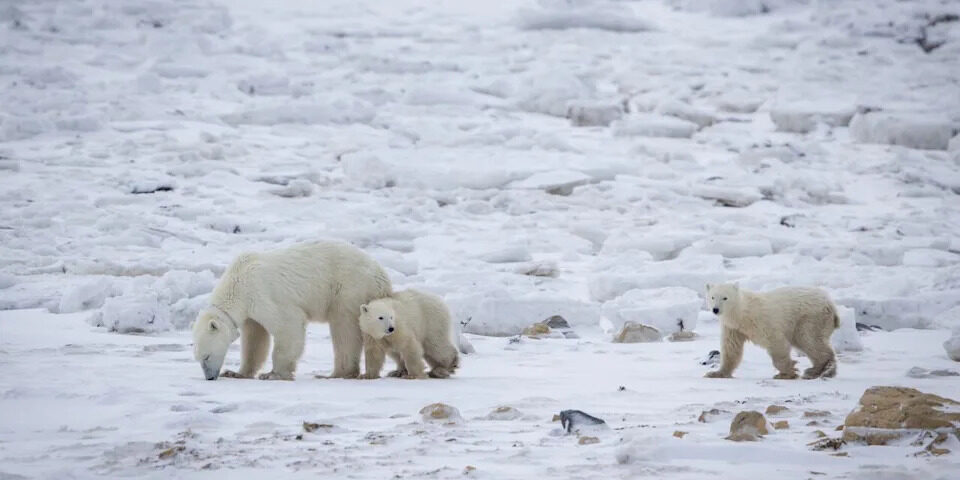
A polar bear mother and her cub were walking near Churchill in mid-November when scientists saw her with a second cub, which they were able to verify was not her own. It marks just the 13th such case of cub adoption within the western Hudson Bay subpopulation.
“When we got confirmation that this was an adoption, I had a lot of mixed feelings, but mostly good,” Alysa McCall, director of conservation outreach and a staff scientist with Polar Bears International, said in a video provided to media.
Advertisement
Advertisement
“It’s just another reason why this species is so incredible, why they’re so fascinating and interesting, and it gives you a lot of hope when you realize that polar bears may be looking out for each other out there.”
Dr. Evan Richardson, a polar bear research scientist with Environment and Climate Change Canada, was in the field back in March. His team of researchers caught up with the mother coming out of the denning area in Wapusk National Park, south of Churchill.
When they were photographed in November, two of the bears had GPS tracking collars, whereas the new addition did not. (Dave Sandford Photography)
During that sighting, the mother only had one cub with her, Richardson said on a separate video provided to media.
Fast forward to the fall and Richardson was taken aback seeing the family of two having become a family of three. Two of the bears had been previously tagged with GPS-tracking collars and the newly adopted cub didn’t have one.
Advertisement
Advertisement
“It’s not that frequent though because in our long-term study we have over 4,600 individual bears that we’ve known over the last 45 years, and literally hundreds and hundreds of litters [of cubs],” he said of the adoption.
Evan Richardson, a polar bear research scientist with Environment and Climate Change Canada, suspects a strong maternal instinct led the mother bear to adopt the lone cub. (Submitted by Samantha Bayard)
Researchers estimate the mother is about five years old, while the cubs are both around 10-11 months.
Richardson doesn’t know for certain why the mother adopted the lone-roaming cub, but he has a hypothesis.
“We really think it’s just because [polar bears are] so maternally charged and such good mothers, and they just can’t leave a cub crying on the tundra. So they pick them up and take them along with them,” he said.
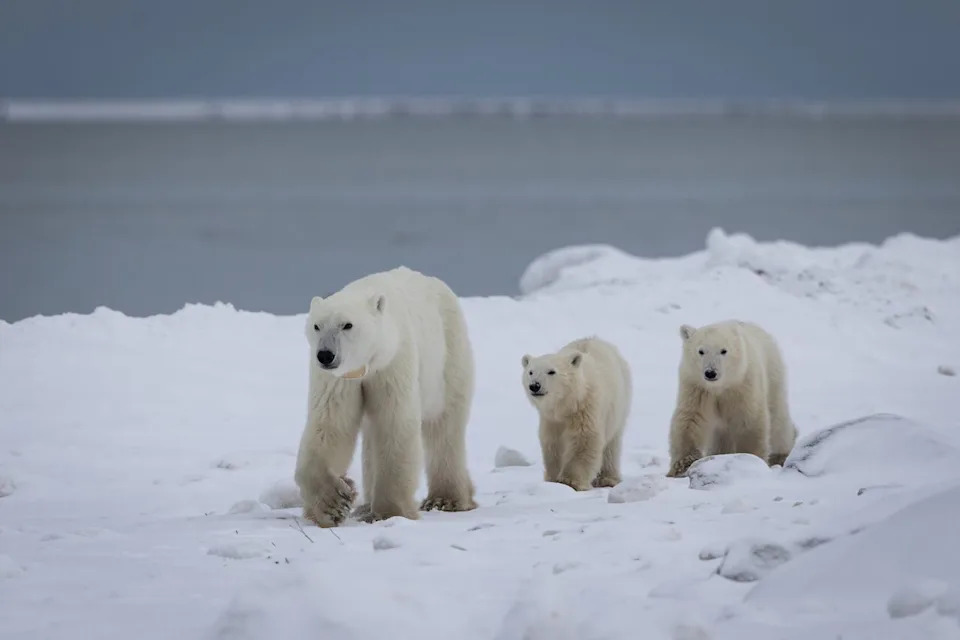
After being seen in March with only one cub, the female polar bear was spotted in November with two, after adopting a lone-roaming bear. (Dave Sandford Photography)
Polar bear cubs typically stay with their mothers for between two and two-and-a-half years.
Advertisement
Advertisement
“It’s not a lot of time to learn how to be a polar bear, but they do soak up a lot of lessons during that time. The survival rate for cubs to make it to adulthood is around 50 per cent … but if we learn a cub has no mom, it has almost no chance,” McCall said.
The adopted cub now has a good chance to reach adulthood, she said.
It’s unknown what happened to the adopted cub’s biological mother, but Richardson hopes the genetic data sample his team was able to get from the cub will be able to provide some insight.
The national weather agency partners with both Polar Bears International and the University of Alberta’s polar bear science program to collect data on the bears through GPS collars. The movements of tagged bears can also be tracked online.
Advertisement
Advertisement
Female polar bears in the western Hudson Bay area have been collared for decades, though it only happens to about 10 of them annually, McCall said.
Less frequent is a polar bear cub being adopted, rarer still is seeing it in person.
“The bears need all the help they can get these days with climate change,” Richardson said. “Females have the opportunity to pick up another cub and care for it, and successfully wean it. That’s a good thing for bears in Churchill.”