This post was originally published on here
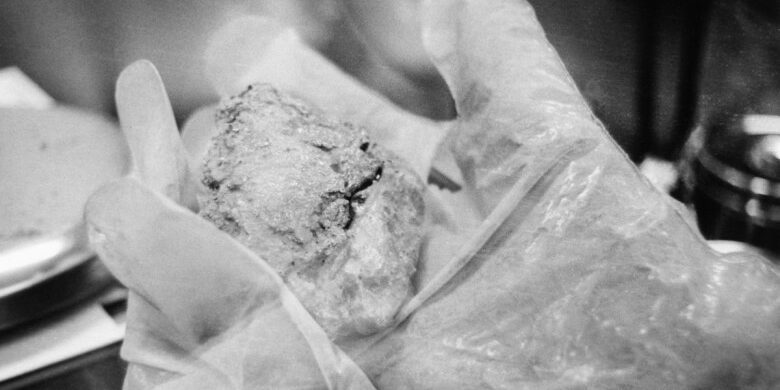
Is this heaven? No, but there are pieces of the heavens in Iowa — and 135 countries, all U.S. states and the United Nations. Specifically, four rice-grain-sized pieces of moon rock from the Apollo 11 mission, the first to land on the Moon.
In total, the mission returned to Earth with 47.5 pounds of lunar material; five subsequent Apollo missions would add another 800 pounds of rock, sand and dust to the supply. While around 400 samples are stored (and regularly loaned out for research) at the Johnson Space Center, much of America’s lunar loot was divvied up as “goodwill” gifts to other nations, by order of President Nixon — though in consideration of the whole freshly won Space Race thing, it also smacks as a bit of a victory lap.
About 180 out of the 277 gifted rocks from Apollo 11 and 17 are currently “unaccounted for,” including New Jersey’s. The Garden State has samples from Apollo 11 but are “not sure” if they’d ever gotten the Apollo 17 rocks.
It’s no surprise that they tend to go missing — they’re quite valuable. One rock that was stolen from Honduras was offered to FBI sting agents for over $5 million in 1998. In 2022, a NASA intern stole $21 million worth of moon rocks — approximately 17 pounds — and later put them inside his mattress so that he and his accomplice/girlfriend of three weeks could “have sex on the moon.”

If you’re tempted to attempt a little lunar bed-rocking of your own here in Iowa, good luck. Iowa’s are rarely put on display and spend most of their time under lock and key in the State Historical Museum of Iowa’s archives in Des Moines. The only time the rocks have come out of storage since they were entrusted to the SHMI was in 2019, for the 50th anniversary of the moon landing.
“One of the highlights of my geology classes as an undergraduate in the UK in the early 1980s was the day when we had a set of lunar rocks to study using petrographic microscopes,” University of Iowa Geoscience Professor David W. Peate told the Gazette. He successfully secured loans of lunar samples from NASA on multiple occasions, abiding by their strict security requirements to give his students the opportunity observe “pristine” moon minerals for themselves.
“Carrying it across to Trowbridge Hall … I always wondered whether anyone would guess that I was actually carrying pieces of the moon in the case,” Peate said.
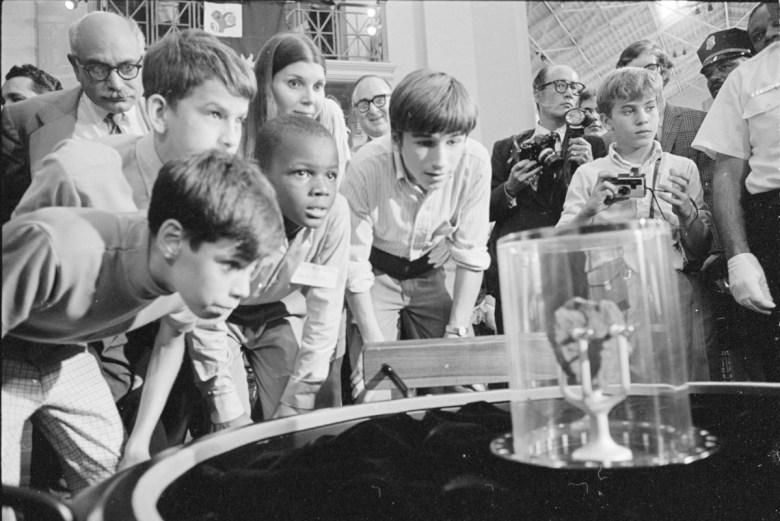
“It’s been 50 years since these were collected, and it’s not clear how soon it will be before we get any more.”
It’s worth mentioning an Iowa connection to the Apollo 11 landing: Steve Bales was a University of Iowa graduate and served as the guidance officer for the 1969 mission. In the last few minutes of the landing, the onboard computers shot up alarms due to too many inputs overloading their processing power. Bales approved the lander to continue as planned, and the rest was history.
-

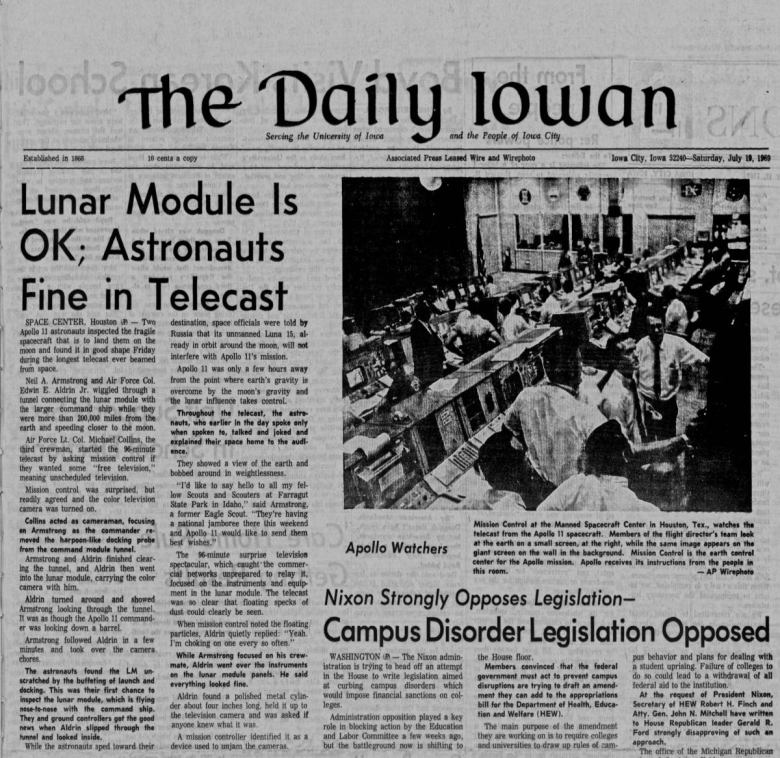
A report from The Daily Iowan during the Apollo 11 manned mission to the moon, July 19, 1969. -
A report from The Daily Iowan following the Apollo 11 manned mission to the moon, July 22, 1969.

This article is from Little Village’s December 2025 Peak Iowa issue, a collection of stories drawn from Hawkeye State history, culture and legend. Browse dozens of Peak Iowa tales here.