This post was originally published on here
Daijiworld Media Network – US
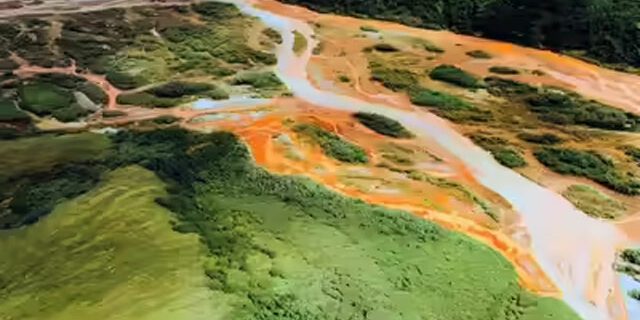
US, Dec 19: A river in northern Alaska has drawn global scientific attention after large stretches of its waters suddenly turned a striking rusty-orange colour, revealing a far deeper environmental change beneath the surface. Researchers have now confirmed that the dramatic colour shift is not a temporary surface phenomenon but the result of metals being released from thawing permafrost, highlighting a growing climate-driven threat across the Arctic.
Scientists have linked the discolouration to rising levels of dissolved metals such as iron, zinc, copper and nickel in the river system. As temperatures increase and permafrost melts, materials that have remained frozen underground for thousands of years are being exposed to oxygen, water and microbes. This process is gradually unfolding across several Arctic regions and poses serious risks to freshwater quality, aquatic ecosystems and communities that depend on these rivers for food and cultural practices.
Permafrost has long acted as a natural seal, locking metal-rich sediments safely underground. However, sustained warming in northern Alaska has weakened this barrier. Once exposed, iron-bearing minerals oxidise and dissolve into meltwater and groundwater, eventually flowing into rivers. The result is the rust-coloured appearance now seen in several waterways, caused largely by oxidised iron particles suspended in the water.
Along with colour changes, the chemical makeup of the rivers is being altered. Increased metal concentrations are making waters more acidic and changing sediment composition along riverbeds and floodplains. Importantly, scientists stress that these changes are not caused by mining or industrial pollution but by widespread, climate-driven thawing of frozen soils, making them far harder to control or reverse.
A recent study published in Nature Communications Earth and Environment documented similar rust-like discolouration across multiple Arctic streams. Researchers analysed water chemistry, sediments and permafrost conditions in affected Alaskan catchments and found that metal mobilisation occurs rapidly once frozen sulphide and iron-rich minerals are exposed.
The study revealed that even remote regions, far from human activity, are experiencing rising metal levels. In many cases, elevated iron was accompanied by other trace metals that can be toxic to aquatic life at high concentrations. Crucially, scientists concluded that the changes are driven by long-term permafrost degradation rather than short-term weather events, pointing to a lasting transformation of Arctic river systems.
Rising metal concentrations pose significant ecological risks. Fish species adapted to cold, low-mineral waters may suffer as acidity increases and metals clog gills or settle on spawning grounds. Invertebrates, which form the base of freshwater food chains, are particularly sensitive to chemical shifts, potentially triggering wider ecosystem disruption.
Human concerns are also growing. Many Indigenous and rural Arctic communities rely on rivers for drinking water, fishing and transport. While iron alone is not highly toxic, its presence often signals the release of other harmful metals. With limited water treatment infrastructure in remote Arctic areas, natural changes in water chemistry can have serious long-term health implications.
The discoloured river in Alaska is now seen as a visible warning of accelerating climate feedbacks across the Arctic. Thawing permafrost causes ground subsidence, alters drainage patterns and exposes fresh mineral surfaces to weathering. Warmer summers and increased rainfall further speed up the movement of metals from soil into rivers.
Once metals enter aquatic systems, they can interact with organic matter and influence the carbon cycle, potentially increasing carbon dioxide emissions. Scientists warn that as Arctic warming continues, river discolouration may become more widespread.
Researchers are now using satellite imagery, field sampling and chemical modelling to identify vulnerable river catchments before changes become visually obvious. While the orange hue is striking, experts caution it is only one sign of deeper environmental shifts that could permanently redefine Arctic freshwater systems.