This post was originally published on here
| IN A NUTSHELL |
|
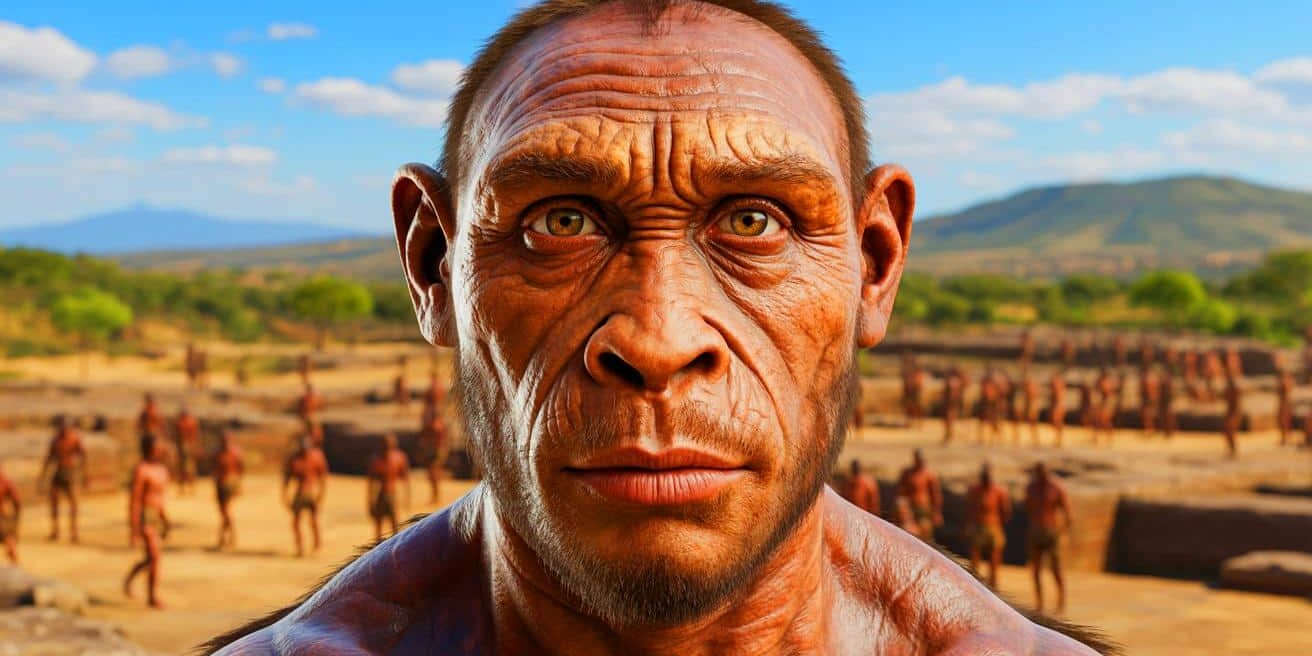
The discovery of a 1.5-million-year-old Homo erectus face is reshaping our understanding of early human evolution. An international team of researchers led by Dr. Karen Baab from Midwestern University has digitally reconstructed the face of the fossil known as DAN5. This fossil was unearthed in Ethiopia’s Gona region, a site rich in ancient human artifacts. The reconstruction reveals a more archaic visage than anticipated, challenging preconceived notions about this early human species. Published in Nature Communications, the findings offer new insights into the migration and evolution of one of the first human species to spread across Africa and into Eurasia.
Significance of the Gona Site
The Gona Paleoanthropological Research Project, co-directed by Dr. Sileshi Semaw and Dr. Michael Rogers, has been pivotal in unearthing ancient human history. The site in Ethiopia’s Afar region has yielded hominin fossils dating back over 6.3 million years. It has also provided stone tools that trace 2.6 million years of human evolution. The DAN5 fossil, discovered in this significant archaeological area, offers a glimpse into the life and characteristics of early Homo erectus. Researchers used advanced virtual methods to merge a fossil brain case with facial fragments from the same individual, creating the most complete fossil human skull from this period found in the Horn of Africa.
These findings highlight the importance of Gona in understanding human evolution. The site’s deep record of fossils and tools not only informs us about the physical traits of early humans but also their technological advancements. By analyzing these artifacts, scientists can piece together the lifestyle and capabilities of our ancient ancestors, offering a deeper understanding of how Homo erectus and other early species adapted and survived in challenging environments.
Reconstruction Techniques and Challenges
Reconstructing the DAN5 skull involved cutting-edge technology and meticulous work. The team employed high-resolution micro-CT scans of four major facial fragments excavated in 2000. These scans were used to create 3D digital models, which were then aligned and reassembled on a computer. The process required careful placement of teeth into the upper jaw and positioning of the reconstructed face onto the braincase. Dr. Baab likened the endeavor to assembling a complex 3D puzzle, where the final image was unknown. The reconstruction process took about a year, with multiple revisions to ensure accuracy.
This meticulous approach underscores the difficulties faced in paleoanthropological reconstructions. Beyond technical challenges, researchers must also contend with incomplete data and the need for interpretative insights. The reconstruction of DAN5 not only required technological precision but also a deep understanding of human anatomy and evolutionary biology. The final result offers a significant addition to our understanding of Homo erectus, providing a clearer picture of their physical traits and potential variations within the species.
Implications of the Archaic Features
The study of DAN5 reveals a surprising blend of features. While the braincase aligns with typical Homo erectus traits, the face and teeth possess more ancestral characteristics. This mix includes a relatively flat nose bridge and large molars, features associated with earlier hominins. The discovery adds a new dimension to the debate about Homo erectus’s origins and evolution. Some researchers suggest that these features indicate a retention of traits from populations that migrated out of Africa much earlier.
This finding challenges the prevailing theory that Homo erectus evolved solely within Africa before spreading to other continents. The presence of such ancestral traits in DAN5 suggests a more complex evolutionary history, potentially involving interactions and genetic exchanges with other hominin species. This complexity reflects the dynamic and interconnected nature of early human evolution, prompting scientists to reconsider the pathways that led to the rise of Homo erectus and, eventually, modern humans.
Future Directions in Early Human Research
The reconstruction of DAN5 opens new avenues for research. One key goal is to compare the fossil with early European human remains, including those classified as Homo antecessor. Such comparisons could illuminate facial variability within Homo erectus and offer insights into how the species adapted over time. Researchers are also interested in exploring the possibility of genetic admixture between different hominin species, akin to later interactions among Neanderthals, Denisovans, and modern humans.
The potential for discovering more fossils dating from one to two million years ago is crucial for testing these hypotheses. Such finds could clarify the evolutionary relationships between Homo erectus and other species, shedding light on the mechanisms of human evolution. As Dr. Rogers notes, the anatomical diversity observed in early human fossils is likely to grow with future discoveries, offering ever more nuanced understandings of our ancient past.
The revelation of the DAN5 fossil adds a compelling chapter to the story of human evolution. As researchers continue to investigate this and other ancient remains, they seek to unravel the complex web of interactions and adaptations that shaped the course of human history. What further secrets might these ancient bones hold, and how will they redefine our understanding of the human journey?
This article is based on verified sources and supported by editorial technologies.
Did you like it? 4.3/5 (20)