This post was originally published on here
The murdered professor from the Massachusetts Institute of Technology was on the brink of revolutionizing the energy sector and upending fossil fuel use as we know it.
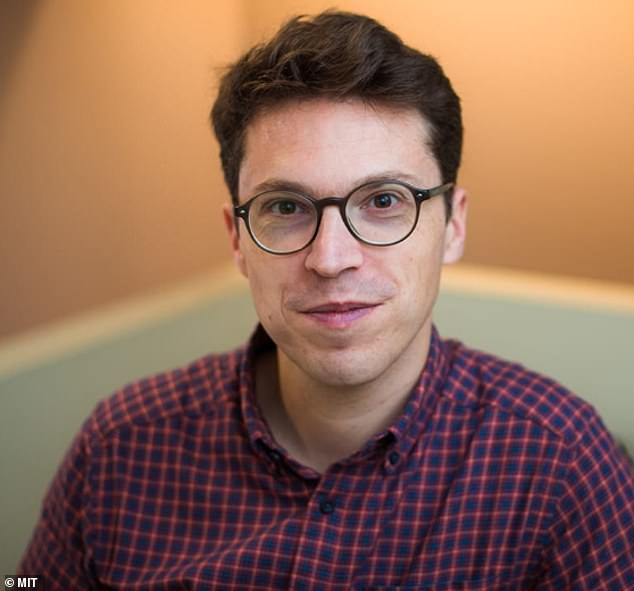
Nuno Loureiro, 47, was gunned down at his home in the Boston suburb of Brookline on Monday.
Authorities believe that the same alleged gunman, Claudio Neves Valente, who carried out the mass shooting at Brown University, may have assassinated Loureiro, but the investigation is still ongoing.
Before his death, Loureiro was leading MIT’s efforts to revolutionize energy production by making a game-changing clean power source that needs just a fraction of the fossil fuels current machines and vehicles use today.
His team’s research at MIT’s Plasma Science and Fusion Center (PSFC) centered on plasma physics, the study of super-hot, ionized gases, and how to apply them to fusion energy, a promising clean power source.
Fusion provides what scientists call ‘baseload electricity,’ a steady supply of power 24/7, using tiny amounts of fuel with no air pollution or climate-warming emissions, unlike carbon dioxide-producing fossil fuels.
A breakthrough in this field could disrupt the trillion-dollar fuel industry by reducing demand for oil, gas, and coal, especially for generating power and transportation. High-demand users like data centers could also switch to fusion for reliable, green energy.
‘This is a very advanced technology, and whatever nation masters it first is going to have an incredible advantage,’ Loureiro said on December 8.
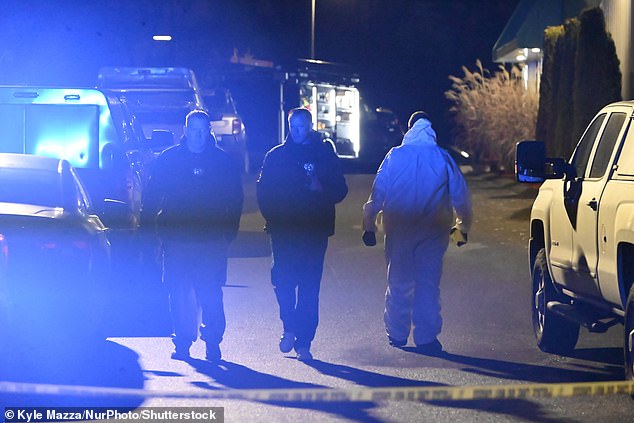
Authorities tied Neves Valente, the suspect in the Brown University shooting that killed two students and wounded nine on December 13, to the murder of Loureiro after matching surveillance footage from both crime scenes showing the alleged gunman in the same clothing.
The connection was further solidified by license plate reader data and video from a car rental agency tracking Valente’s gray Nissan Sentra with Florida plates, which he allegedly used to travel between both crime scenes.
Loureiro was already a respected physicist from Portugal when he joined MIT in 2016 as a professor and quickly rose to become a full-time professor by 2021.
Last year, he became the director of the MIT Plasma Science and Fusion Center, one of the university’s largest laboratories with more than 250 full-time researchers.
Loureiro specialized in theoretical physics, meaning he used math and computer simulations to figure out how plasma behaves under extreme conditions.
Plasma is the fourth state of matter, different from solids, liquids, and gases, where heat is so intense that atoms lose their electrons and create a mix of positively charged ions and free electrons – a critical component of fusion technology.
The clean energy source essentially mimics the sun’s power on Earth, smashing lighter atoms such as hydrogen together to ‘fuse’ and form heavier atoms like helium in a process that unleashes massive amounts of energy.
Until his death, Loureiro and the PSFC team were working with the company Commonwealth Fusion Systems to build SPARC, a compact fusion reactor in Massachusetts designed to produce energy from fusing atoms, with operations expected to start in 2026.

They were also overseeing new projects like launching a special laboratory at PSFC to quickly test and develop tough materials that can handle the extreme heat and radiation inside future fusion reactors, helping make clean fusion power practical and safe.
Dennis Whyte, MIT’s Hitachi America Professor of Engineering, said: ‘His loss is immeasurable to our community at the PSFC, NSE [Department of Nuclear Science and Engineering] and MIT, and around the entire fusion and plasma research world.’
MIT has previously noted that more than $8billion has already been invested in the development of commercial fusion reactors, which could one day challenge the fossil fuel industry for dominance.
‘If you walked into a room of fusion scientists in 2018 or 2019 and said there were going to be fusion startups, and venture capital funding to the tune of $9 billion, you would have been laughed out of the room,’ Loureiro said in a statement two weeks ago.
Neves Valente and Loureiro previously attended the same academic program at a university in Portugal between 1995 and 2000.
Loureiro graduated from the physics program at Instituto Superior Técnico, Portugal’s premier engineering school, in 2000, according to his MIT faculty page.
That same year, Neves Valente was let go from a position at the Lisbon University, according to an archive of a termination notice from the school’s then-president in February 2000.
Neves Valente went to Brown on a student visa and eventually obtained legal permanent residence in the US in September 2017.
It was not immediately clear where he was between taking a leave of absence from the school in 2001 and getting the visa in 2017. His last known residence was in Miami.
After officials revealed the suspect’s identity, President Trump suspended the green card lottery program that allowed Neves Valente to stay in the US.
Authorities said that the suspected gunman’s original target was Loureiro, but it was unclear what his alleged motive was or what his relationship with Loureiro had been.