This post was originally published on here
CHONGQING: A collaborative Chinese-international research team has solved how the destructive plant pathogen Xanthomonas acquires specialized nutrients from host tissues, offering a unique approach to combat crop diseases caused by this bacterium.
Xanthomonas, a globally significant agricultural threat, can infect over 400 crop species and cause severe disease. Its rapid spread and difficult control are compounded by the fact that many crops, such as rice, lack natural resistance.
A key survival mechanism of this pathogen has been uncovered in a study published in the journal Science. The research, led by corresponding authors from Southwest University, Jilin Agricultural University, and Duke University, also featured contributions from the University of California and Seoul National University.
First author Wang Shanzhi explained that upon infecting rice, Xanthomonas secretes an enzyme called AvrBs2—a “nutrient-synthesizing enzyme”—into the host’s plant cells. Inside the cell, AvrBs2 exploits plant nutrients to produce a cyclic sugar phosphate compound known as xanthosan.
The pathogen then reabsorbs and degrades xanthosan through a specialized transport protein and a degradation enzyme, thereby receiving essential nutrients for its growth and reproduction.
“This shows that Xanthomonas oryzae establishes a ‘synthesis-transport-utilization’ nutrient pipeline within rice, continuously plundering host resources to feed itself,” Wang clarified. “Blocking this nutrient acquisition pathway could therefore enhance rice resistance to the bacterial disease.”
Based on the study findings, the team proposed a new breeding strategy. Experiments proved that thwarting the pathogen’s use of xanthosan weakens its virulence.
Transgenic rice engineered with this trait exhibited enhanced disease resistance and showed no negative effects on growth or metabolism, demonstrating strong application potential.
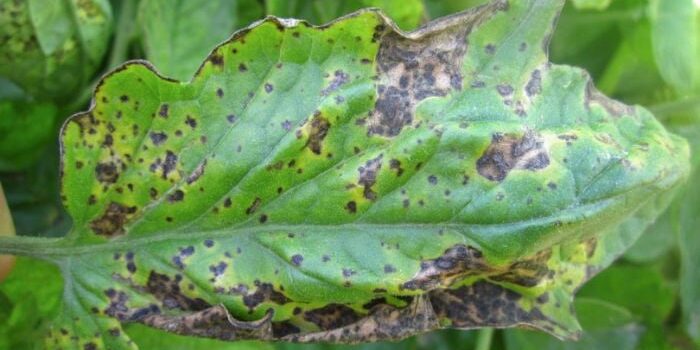
According to the researchers, this strategy offers new support for sustainable agriculture because AvrBs2 is shared by many Xanthomonas pathogens. This suggests the approach could also be effective in managing other bacterial diseases, such as citrus canker and tomato bacterial spot.