This post was originally published on here
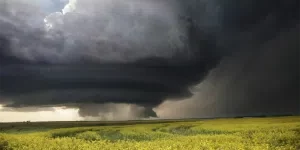
(Photo courtesy of David Samson / The Forum via UND Today)
(By UND Today)- A new research project at UND will take a close look at how cloud seeding is affecting hail in western North Dakota, and what that means for the people who live and work there.
Hail can damage crops, livestock, homes, vehicles, aircraft on the ground and local businesses, leading to costly repairs, lost income and safety risks for people caught in severe storms. For decades, the North Dakota Cloud Modification Project (NDCMP) has seeded thunderstorms in hopes of reducing hail damage and supporting agriculture. But a key question remains: Is cloud seeding really making a difference in the size and impact of hail?
Funded by the North Dakota Department of Water Resources, the project is led by principal investigator Marwa Majdi and co-investigator Mounir Chrit, both assistant research professors in the Department of Atmospheric Sciences at UND, with doctoral student Lynnlee Bestul contributing as a key member of the research team.
For more than 50 years, the North Dakota Cloud Modification Project has seeded thunderstorms in western North Dakota to reduce hail damage to crops. Pilots fly into selected storms and release tiny particles into the clouds to encourage many small ice particles instead of a few large hailstones. This collaboration between UND and the NDCMP is not new. UND atmospheric scientists have supported the program for many years through earlier hail and cloud physics projects, providing scientific guidance, evaluation tools, hailstorm forecasts from weather model simulations, and student training. This new project builds on that long history and takes the collaboration to a more advanced level.