This post was originally published on here
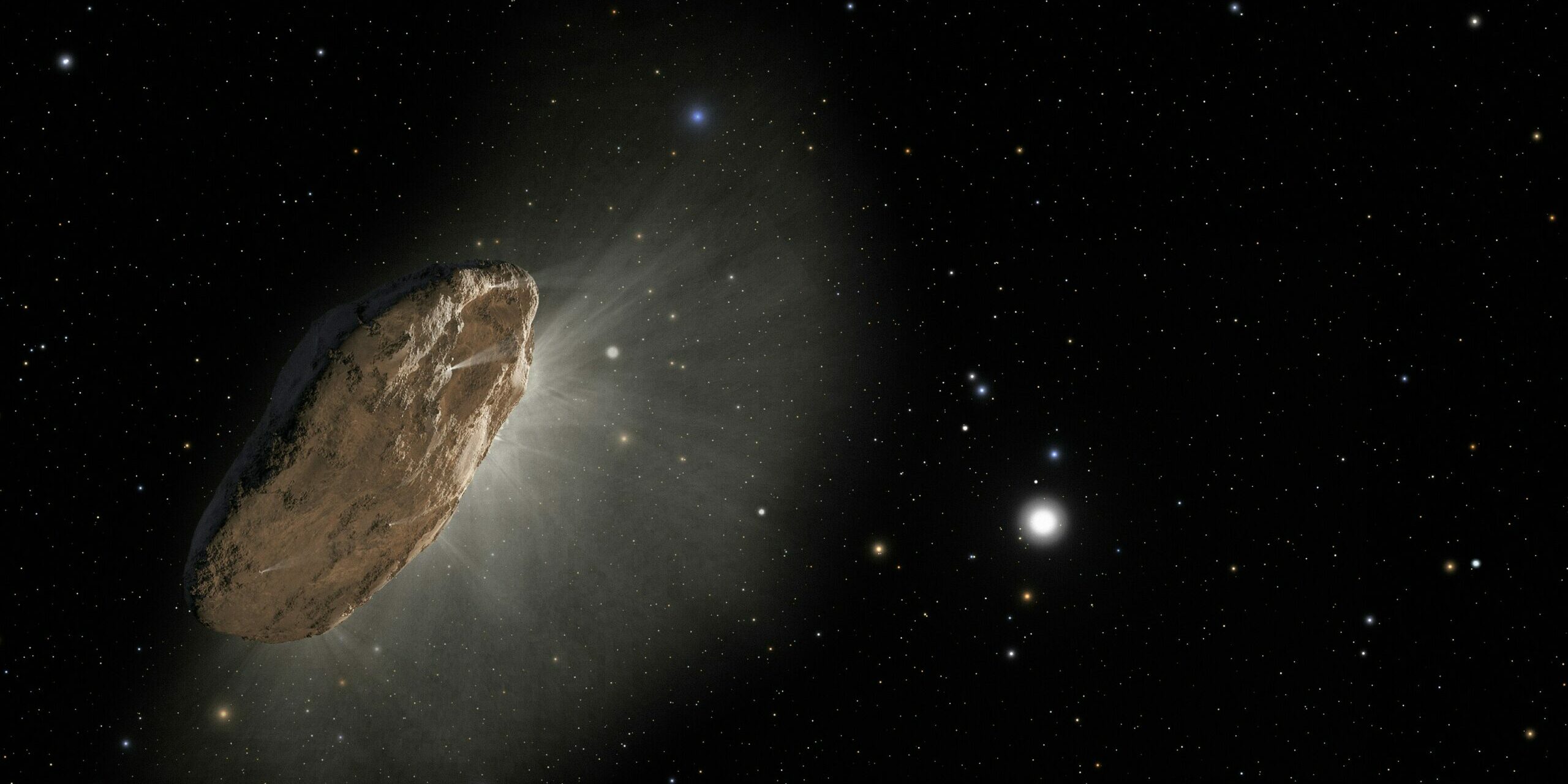
The scientific community is currently in a state of suspense as the highly anticipated data about the interstellar object 3I/ATLAS remains undisclosed. Professor Avi Loeb of Harvard University, the leading voice on classifying such cosmic visitors, has chosen to delay updating his widely discussed ‘Loeb Classification Scale’ until a crucial batch of high-resolution observations is fully analysed.
Professor Loeb declared that he will not recalibrate the scale until after the object undergoes a massive gravitational test at Jupiter on 16 March 2026. This unprecedented pause is due to anomalous features in the current data—including a persistent sunward anti-tail—that resist easy explanation, leading Loeb to wait for the most decisive evidence before making a final judgment. This restraint underscores a principle often lost in the noise: extraordinary claims require not just extraordinary evidence but fully vetted evidence.
Jupiter’s Gravitational Dominion Awaits 3I/ATLAS
The object’s trajectory is taking it directly towards Jupiter’s Hill radius, the precise boundary where the gas giant’s gravity begins to dominate that of the Sun. For astrophysicists, this intersection represents an invaluable opportunity to observe non-gravitational acceleration, trajectory deviations, and unusual energy behaviours.
This encounter effectively transforms Jupiter’s environment into a natural laboratory, allowing scientists to isolate how the object responds to dominant planetary gravity. If the object exhibits thrust-like behaviour or artificial energy modulation, Jupiter’s gravitational pull will either amplify or suppress those effects in a way that is distinctly measurable.
NASA’s Juno Spacecraft and the Planetary Defence Stakes
The stakes are further elevated by the presence of NASA’s Juno spacecraft, which is already operating within the Jovian environment. While Juno was not built to intercept interstellar visitors, its sophisticated sensor suite for studying magnetic fields, gravity, and plasma interactions provides a unique vantage point. This allows it to register any anomalous interactions should 3I/ATLAS behave unexpectedly as it approaches the massive planet.
This geometrical alignment is exactly the kind of setup planetary defence experts hope for but rarely get in a close encounter scenario. The object’s passage offers scientists a rare opportunity to test for behaviours that cannot be easily explained by conventional comet physics. Either outcome—whether the object behaves naturally or anomalously—advances scientific understanding.
Geopolitical Undercurrents and the Need for Rigour
Beyond the scientific implications, there’s a geopolitical undercurrent that has emerged whenever the arrival of interstellar visitors like this is discussed. Recent renewed global interest in planetary defence and the militarisation of space has intensified anxieties. Objects like 3I/ATLAS arrive at a time when trust, transparency, and verification in space science are under unprecedented strain.
Even Vladimir Putin recently made light of 3I/ATLAS, jokingly referring to it as a ‘secret weapon’ while reiterating opposition to the placement of weapons in space. The decision by Professor Loeb to hold his scale steady is therefore seen as the responsible posture, reinforcing the necessity for rigour. His pause suggests the next decisive data will come from Jupiter’s gravitational gate rather than Earth.
Professor Loeb confirmed his decision, stating, ‘I declined to update the scale until new data from the period bracketing its closest approach to Earth is publicly released and analysed,’ noting that the process may extend into March 2026. Researchers are now entering a phase where patience is as crucial as scientific curiosity.