This post was originally published on here
Overharvesting has raised conservation concerns for a widely foraged plant, but researchers say that better genetic insights could support more effective protection efforts.
For years, the wild ramp community has disagreed about how many kinds there really are. Some have insisted the plant is just a single species. Others have argued that wild ramps may include as many as four distinct species.
New research led by scientists at Penn State Beaver now offers the first genetic evidence that at least two distinct ramp species exist.
They published their results recently in PLOS One.
A popular plant under pressure
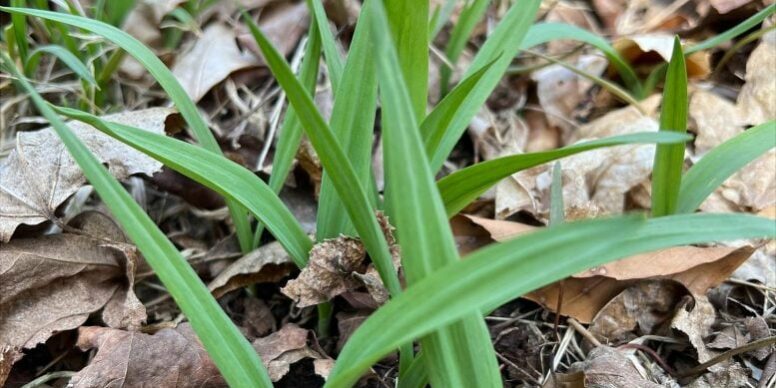
Ramps, also known as wild leeks, are native to the forests of eastern North America. They resemble green onions but have a strong garlic flavor. Their popularity among foragers and chefs who favor locally sourced ingredients has grown in recent years, and in some regions this demand has contributed to overharvesting.
Ramps belong to the plant genus Allium, which also includes onions, garlic, and related species. Earlier studies explored whether ramps consisted of more than one species but ultimately concluded that only Allium tricoccum existed. Penn State Beaver Associate Professor of Biology Sarah Nilson said that difficulty distinguishing between similar-looking plants has long fueled uncertainty about how many ramp species there actually are.
Genetics resolve a long dispute
“There has only been one other genetic study on ramps, and the tools used then were not high-enough resolution to identify the differences we found,” Nilson said, explaining her group employed “microsatellite markers” in their analysis.
Microsatellite markers are short, repeating sections of DNA that can be easily detected in laboratory tests. By extracting and analyzing DNA from plant samples, researchers can identify where these repeating sequences occur, Nilson explained. Comparing these markers is far faster than examining the billions of paired bases that make up the full DNA sequence and allows scientists to detect meaningful genetic differences more efficiently.
Nilson compared the process to evaluating two books that look identical on the outside. Rather than reading both word by word to find differences, she said, scientists can compare something like a table of contents to quickly see how they vary.
Evidence for a second ramp species
Nilson said they found enough genetic variability in the samples to support the existence of a second species of wild ramps, called Allium burdickii. The Allium burdickii samples were genetically distinct from Allium tricoccum samples, even when the samples were collected at the same location.
Nilson said the discovery was largely possible because she lives and works in southwestern Pennsylvania, where she collected the initial Allium burdickii samples. So far, Allium burdickii has only been found in southwestern Pennsylvania and states to the west.
“I live and work here, and I was able to do more fieldwork here, and we found it here,” Nilson said. “That’s the importance of having faculty all over the state. When you’re actually rooted in a place, you know it better.”
Additionally, the researchers found that there were differences in the amount of genetic variation between the species and among populations within species.
Conservation implications for foraging
The finding, Nilson said, could help better support sustainable harvesting and land management to preserve the plants. She explained that ramps are not only of culinary importance, but the foraging of ramps is culturally important to certain indigenous groups and Appalachian communities.
“We understand the cultural importance of these plants, and we want to be able to protect the practice of harvesting for those groups,” Nilson said.
A driving factor of overharvesting is that ramps are among the first plants to emerge in the early spring when there is a dearth of fresh produce, and everyone is excited to have it on the menu, Nilson said. Harvesters take the entire plant, including roots, because chefs will use it all. However, that’s a problem as it takes ramps seven years to fully grow.
Nilson recommended people only harvest what they need and wait until ramps have fully sized up before harvesting. She said ramps are easy to grow if they have enough water and a site in a shady forest area, so planting new ramps can help in conservations efforts.
“We’re not anti-foraging,” she said. “We’re encouraging education about more sustainable harvesting and waiting to harvest.”
Nilson’s research is an extension of work she began in 2018 when she was awarded a research grant by the Pennsylvania Department of Conservation and Natural Resources to determine if ramps are a vulnerable species.
Reference: “New microsatellite markers distinguish two species of ramps (Allium tricoccum Aiton Complex, Amaryllidaceae) and show variation in clonality and genetic diversity between species and among populations” by Sarah E. Nilson, Matt C. Estep, Eric P. Burkhart, Harvey Ballard, Ezra Houston, Bina S. Sitepu, Haley Velemirovich and Malia Costa, 8 October 2025, PLOS ONE.
DOI: 10.1371/journal.pone.0332086
Never miss a breakthrough: Join the SciTechDaily newsletter.
Follow us on Google and Google News.