This post was originally published on here
Geologists around the world are highlighting a dramatic, albeit slow-moving, transformation beneath the surface of the African continent: Africa might be splitting in two. In an extraordinary process that has been unfolding for millions of years, tectonic forces are cracking and stretching the continent along the East African Rift System (EARS), potentially setting the stage for a brand-new ocean basin and a future continental divide, according to ScienceDaily.
As Down to Earth reports, the rift zone — a network of cracks, faults, and volcanic regions — extends more than 3,000 kilometers from the Afar Triangle in Ethiopia down through Kenya, Tanzania, and beyond. It marks a boundary where the African Plate is slowly splitting into two major segments: the Nubian Plate to the west and the Somali Plate to the east.
A geological powerhouse beneath the surface
Recent research led by Earth scientists at the University of Southampton has identified deep, rhythmic pulses of molten rock rising from the Earth’s mantle beneath Ethiopia’s Afar region — sometimes described as a kind of geological “heartbeat.” These mantle pulses are believed to weaken and stretch the crust from below, accelerating the rifting process, says ScienceDaily.
“Beneath Afar, the mantle isn’t static,” said the study’s lead author. “These pulses of hot material are channeled upward, helping to thin and eventually rupture the continental crust.”
Scientists liken the crust’s behavior at the rift to pulling taffy: Under continuous tension, the material stretches thinner until it finally breaks. In geological terms, that break would mark the birth of a new ocean basin — Earth’s sixth — between the diverging land masses.
Signs of rifting on the surface
Although the breakup is imperceptibly slow on a human timescale, evidence of the continent’s stretch is visible today. Deep valleys punctuated by long, thin lakes — such as Lake Tanganyika and Lake Victoria — are surface expressions of rifting activity. These features trace the scar of the rift system as it continues to evolve, according to IFLScience.
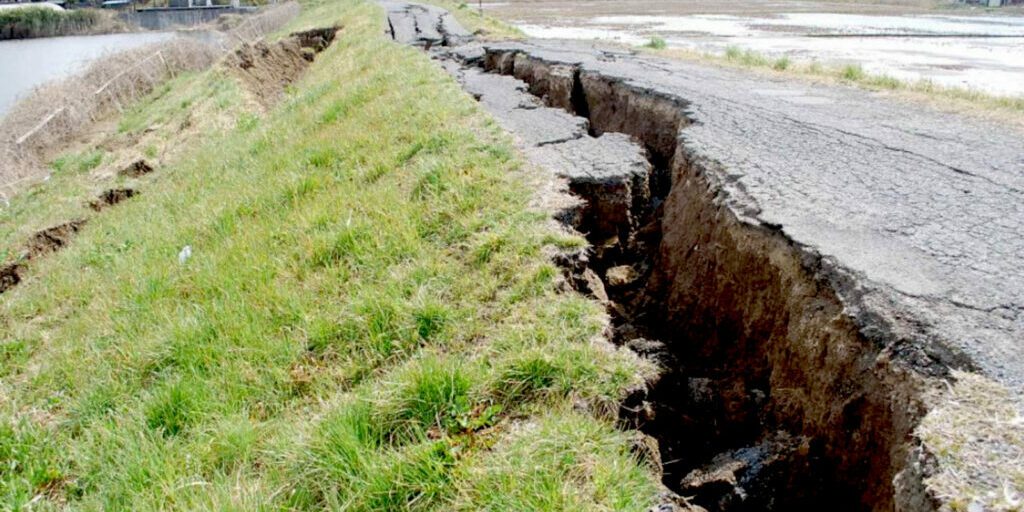
Occasionally, dramatic fractures appear on land, such as a notable rift crack that opened over 50 km in Ethiopia in 2005, illustrating how tectonic stretching occasionally manifests at the surface.
Moreover, seismic events linked to the rift — including earthquakes in the Great Lakes region — highlight the strain accumulating as the plates pull apart. Historical quakes like the 2005 Lake Tanganyika earthquake underscore the region’s active tectonics.
Long timeline, global consequences
Despite the compelling evidence, experts emphasize that this process will unfold over millions of years. Even under models that incorporate current spreading rates — measured in mere millimeters per year — a fully formed ocean separating eastern Africa from the rest of the continent is not expected within any near-term human timeframe.
Down To Earth
Nevertheless, the rift’s eventual outcome will reshape not just maps but environments and ecosystems. As the land stretches and thins, rising sea levels will one day flood the rift valley, creating new coastlines and potentially granting future coastal access to today’s landlocked nations, Down To Earth reports.
Scientific debate and future research
While the general scientific consensus supports the notion that Africa might be splitting in two, ongoing research continues to refine our understanding of the mechanics involved. GPS and geodetic measurements suggest even smaller microplates, such as the Victoria Plate in eastern Africa, are involved in complex motions influenced by both deep mantle forces and variations in lithospheric strength.
Researchers remain cautious: Some continental rifts fail to evolve into oceanic basins, instead stalling and leaving behind a geological scar with little further separation. Even so, the East African Rift System stands as one of the most active and geologically significant rifts on the planet, offering a rare window into how continents split and oceans form.
These are some facts about the tectonic event occurring in Africa:
- Africa might be splitting in two along the East African Rift System.
- Deep mantle pulses and tectonic stretching are driving the slow tectonic separation.
- A new ocean basin could eventually form between the Nubian and Somali plates.
- The process will take millions of years, but the geologic signs are clear and increasing.