This post was originally published on here
The past 12 months have been worrying for researchers who study the chemistry of the ocean.
More and more evidence has been published showing that human activities are fundamentally altering this chemistry in an acidic direction.
At the end of 2025, it seems clear ocean acidification is pushing the largest habitat on Earth into a risky zone.
How does CO2 in the atmosphere make the ocean acidic?
Ocean acidification is part of the global carbon cycle.
When carbon dioxide dissolves in water, it forms carbonic acid. This acid releases hydrogen ions, which lower the seawater’s pH balance.
pH balance
This sliding scale of 14 points indicates the acid/alkaline balance of a solution. Position 1 indicates the highest acidity, 14 the highest alkalinity. It stands for “potential of hydrogen”, because the scale is determined by the concentration of hydrogen ions.
Carbon dioxide emitted by human activities may be largely released into the atmosphere, but it does not all stay there. Huge amounts are absorbed by the ocean. A study published in 2023 determined that the ocean absorbed 25% of anthropogenic CO2 emitted from the early 1960s to the late 2010s. This has so far saved humanity from greater global warming.
Because of the rise in atmospheric CO2 concentrations over the past century, more CO2 has been taken up by the ocean, causing it to acidify.
How acidified is the ocean as of 2025?
Earth’s ocean has become roughly 30% more acidic than it was in the pre-industrial age, according to data from the European Environment Agency published in October. A huge part of that seawater pH decrease has come in recent decades. Just before the industrial revolution began in around 1750, Earth’s mean surface seawater pH was 8.2. By 1985 it had fallen to 8.11. By 2024, it was down to 8.04.
This data indicates that pH at the surface of the ocean will decline even further by 2100, by between 0.15 and 0.5, depending on how much emissions are curtailed.
Also in October, researchers working at the Norwegian University of Science and Technology (NTNU) authored a study of ocean acidification models to quantify the global ecological and economic consequences of future acidity rises. “If in the years to come we continue on the current emission level, our models show that for most regions the ocean is on a trajectory toward worst-case scenarios,” says Sedona Anderson, lead author of the paper.
Why does this matter?
In May, a new study found that as acidification intensifies, the ocean’s capacity to absorb atmospheric CO2 weakens, reducing its ability to slow global warming. The explanation lies in chemistry: as the sea accumulates more carbon dioxide, its “carbonate buffering” capacity is reduced, making CO2 more chemically challenging to absorb.
In March, researchers reported that the speed at which people are releasing CO2 into the atmosphere is much faster than the ocean’s natural capacity to absorb it without becoming acidic. This is profoundly altering the ocean’s chemistry. The consequences of the change are not yet fully clear.
What will happen to ocean animals with shells?
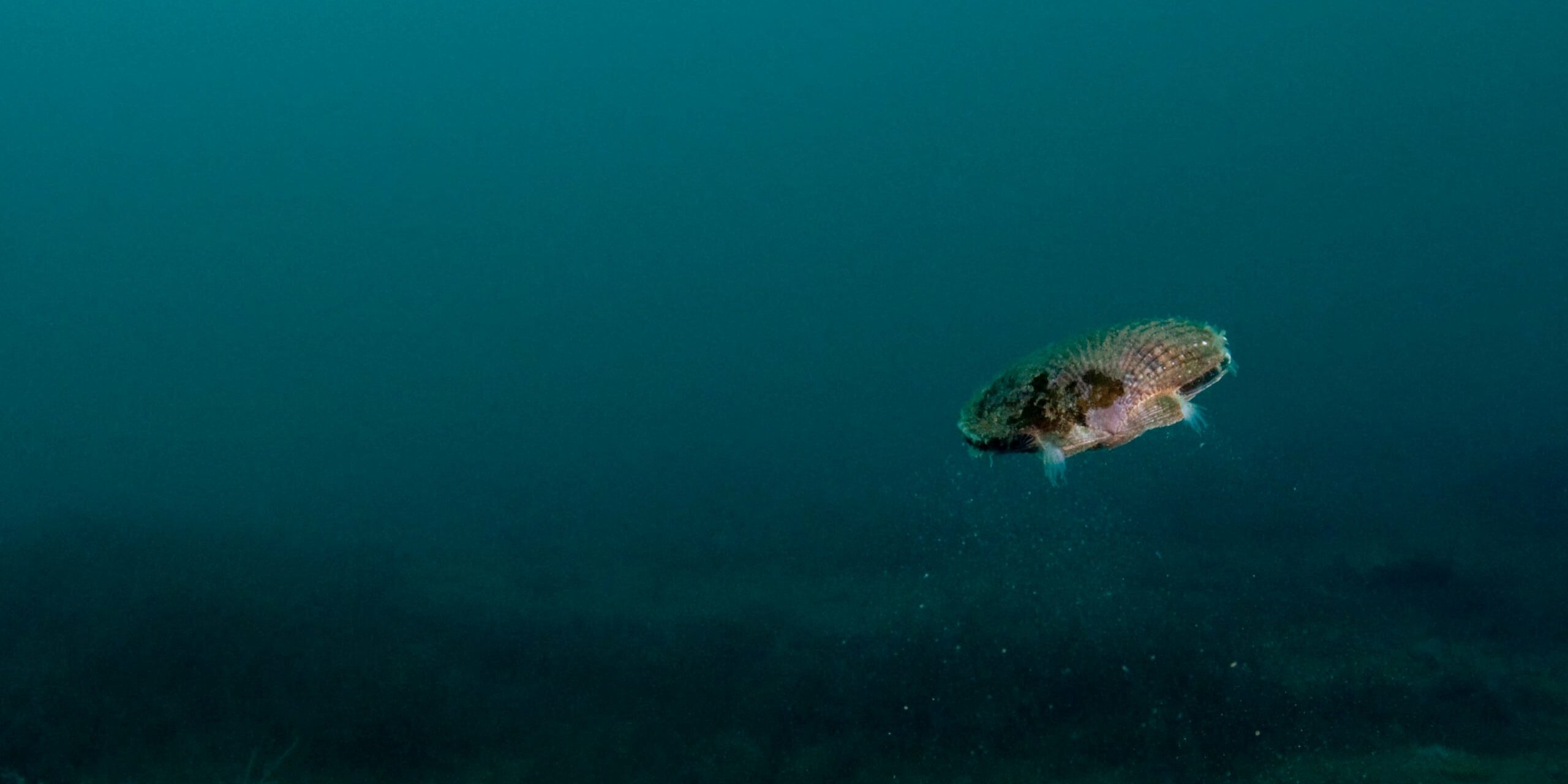
A study published in July explored the effects of ocean warming and acidification on two bryozoan species (invertebrate marine calcifiers) living in and around volcanic CO2 vents in the Tyrrhenian Sea, off Italy’s western coast. It found the populations of these animals are being increasingly depleted as the ocean warms in this particularly acidic environment. Calcifiers, such as corals, molluscs and terrapods, are small creatures with skeletons formed of calcium salts. Crucially, these creatures are foundational to food chains. They constitute, for example, about half of the diets of Arctic salmon.
In a collaborative study between Greenland and Spain published in 2016, it was concluded that calcifiers can meet the greater energy demands of processing calcium salts in more acidic environments by increasing their nutrient uptake; this has been seen on White Island in New Zealand. However, current models demonstrate that the ocean is becoming less hospitable, making it hard to provide the nutrients organisms need to cope with an already acidic environment.
Do we need to worry about humans and other animals, too?
While calcifiers are the first to suffer the consequences of a more acidic ocean, many other species, including humans, are set to pay the price if we continue on this trajectory. Upcoming research areas are focusing on the impact of changes in ocean chemistry on non-calcifying organisms.
In a summary about the “silent crisis” of ocean acidification published in April, experts from Spain’s Institute of Marine Sciences (ICM) highlight how data collected over recent decades is demonstrating that non-calcifying species, such as fish and squid, are suffering from impaired respiration, altered behaviour and reduced reproductive success in a more acidic environment.
The behavioural impacts are thought to be due to calciferous structures within fish ears that, like corals, cannot form properly in environments that are too acidic. This correlates with diminishing behavioural responses to danger. However, these are preliminary studies that focus on one generation of marine creatures only. More research in the field is needed.
Two other studies published this year, one observed in the Pacific and the other in the Mediterranean, found that the development and survival of mollusc larvae are negatively impacted by lower pH levels. A reduction in the number and characteristic variations of adult species was detected.
Though a direct correlation between increasingly acidic oceans and human health has not yet been explored, more than a billion people worldwide depend on healthy coral reefs for food and coastal protection. If these reefs become more fragile because they cannot properly build calcium shells, this will generate cascading problems. An acidic ocean will mean millions of dollars in lost fisheries and tourism revenue, because frailer coastal reefs will not provide the same level of coastal protection from storms.
What is the ocean acidification planetary boundary?
Perhaps the biggest news in ocean acidification this year is the warning that a new “planetary boundary” has been crossed.
In 2009, a group of scientists led by Potsdam University in Germany set out what they named planetary boundaries – nine limits to systems that have kept Earth’s environment stable during human existence. This project has become the annual Planetary Health Check report. One of the nine boundaries it investigates is ocean acidification. This is measured via the levels of aragonite in the ocean. Aragonite is a form of calcium carbonate used by huge numbers of sea creatures to build their shells and skeletons. When the ocean acidifies, carbonate ions become less abundant, making shell formation more difficult.
When the nine planetary boundaries were first established, the “safe limit” for acidification was set at a 20% reduction in the ocean’s aragonite levels, known as “aragonite saturation state”, compared to pre-industrial conditions. This figure was met with scepticism by some researchers in the field, who felt it was too high. “When the scientific community saw the data in the first planetary boundaries report, it quickly became apparent that that was just a best guesstimate,” says Helen Findlay, a professor at Plymouth Marine Laboratory in the United Kingdom.
In the years that followed, significant effort and resources were invested in analysing acidification in both pre- and post- industrial times, as well as in trying to better determine the acidification threshold after which catastrophic consequences take place.
In 2024, Findlay’s team reassessed those original thresholds. In a paper published in June 2025, the team concluded that the reduction in the ocean’s aragonite saturation state needed to be much lower than previously thought to keep the ocean healthy: around 10%, rather than 20%. The team estimated that by 2020, the global ocean was, on average, within the “uncertainty range of the ocean acidification boundary”. In other words, the boundary may have been crossed.
The deeper into the ocean the researchers looked, the worse the findings were. At 200 metres below the surface, 60% of global waters already indicated acidification levels beyond the newly established safe limit.
A few months later, the 2025 edition of the Planetary Health Check report confirmed this, reinforcing the idea that Earth’s oceans are now operating in a risk zone. Furthermore, following data revisions and thanks to advancements in data modelling since 2009, the 2025 report says the ocean’s pre-industrial aragonite saturation state was higher than originally thought. This means the drop in levels between the pre-industrial era and today has been more significant, blowing past even the team’s original ocean acidification “safe limit” threshold of a 20% drop in aragonite.
“When we published our first Planetary Health Check, several ocean experts told us that they could already see impacts on marine environments that didn’t align with an ocean operating in a safe zone,” says Levke Caesar, a member of the team that produces the report. “So, we thought that we should have reconsidered our study using more advanced data.”
Is every part of the ocean affected in the same way?
Ocean acidification is a widespread global problem but increasing amounts of research suggest some regions are more affected, especially the Arctic. These northern waters are very cold, and cold water dissolves CO2 more easily than warmer water.
In addition, some parts of the Arctic have major inputs of freshwater from rivers and melting ice. This reduces the local waters’ ability to buffer changes in pH, as an analysis of historical data published in April confirms.
Studies show the Arctic Ocean naturally experiences regional and seasonal variations in aragonite due to changes in ice and rivers. For example, before humanity started pumping out huge amounts of CO2, around 5% of polar waters became seasonally undersaturated with aragonite because of these natural seasonal shifts, according to Plymouth Marine Laboratory’s boundary reassessment. In the 2020s, however, that figure has risen to 21%. Some polar organisms are starting to exhibit the impacts of this change, Helen Findlay says.
Other studies show that coastal regions are more susceptible to acidification than offshore waters. In coastal areas, agricultural fertiliser runoff can increase the amount of nitrogen that ends up in the ocean. This can react with oxygen, causing local acidification and amplifying emissions-related acidification.
We know that the planet will find a way to survive. The question is if humanity will cope with the transition
Hana Jurikova, University of St Andrews
Work published in November shows that oceanic upwelling systems, such as the California Current, can also exacerbate acidification.
Can we learn from acidic oceans of the past?
More than 300 million years ago, volcanism massively raised CO2 levels in the atmosphere. This led to the end of what is known as the Late Palaeozoic Ice Age. As is happening today, the ocean sucked in much of the plentiful CO2 being held in the atmosphere, becoming more acidic in the process, as well as warmer and lower in oxygen. This led to the near-disappearance of calcifying organisms, such as coral reefs, and a mass extinction event sometimes called the Great Dying.
Scientists still debate the exact cause of that extinction event. “We know that the planet will find a way to survive. The question is if humanity will cope with the transition,” ponders Hana Jurikova, a researcher at the University of St Andrews’ School of Earth and Environmental Sciences, in Scotland. She was a lead author of an article on the end of the Late Palaeozoic Ice Age, published in early 2025.
Over the course of millions of years following the Great Dying, changes in oceanic pH were brought about by rock weathering and the degradation of mineral shells. The waters became less acidic, and ocean life rebounded until the dawn of the industrial age.
What can be done about it?
“Working in this field, I’m often depressed,” says Caesar. “Global regulations are needed, but there are also many solutions that [can] benefit most of the [planetary] boundaries.”
Zooming in, studies indicate that managing marine environments at a local level has a significant impact on multiple stressors. Such management can help mitigate the impacts of acidification. Restoring mangroves, wetlands and marine forests of algae, such as kelp and seagrass, and supporting farmers to reduce nutrient runoff into the ocean, can all help to balance seawater pH.
Other research is scoping out solutions to help the ocean recover from human-induced damage through direct intervention, too. Some of it considers the feasibility of adding minerals to the sea that could help reduce acidification, for example. Though other consequences of such an artificial strategy may be hard to predict.
Scientists consider acidification to be an escalating problem. This is primarily because achieving drastic reductions in anthropogenic CO2 emissions is looking increasingly challenging. Without those, ocean acidification will continue.