This post was originally published on here
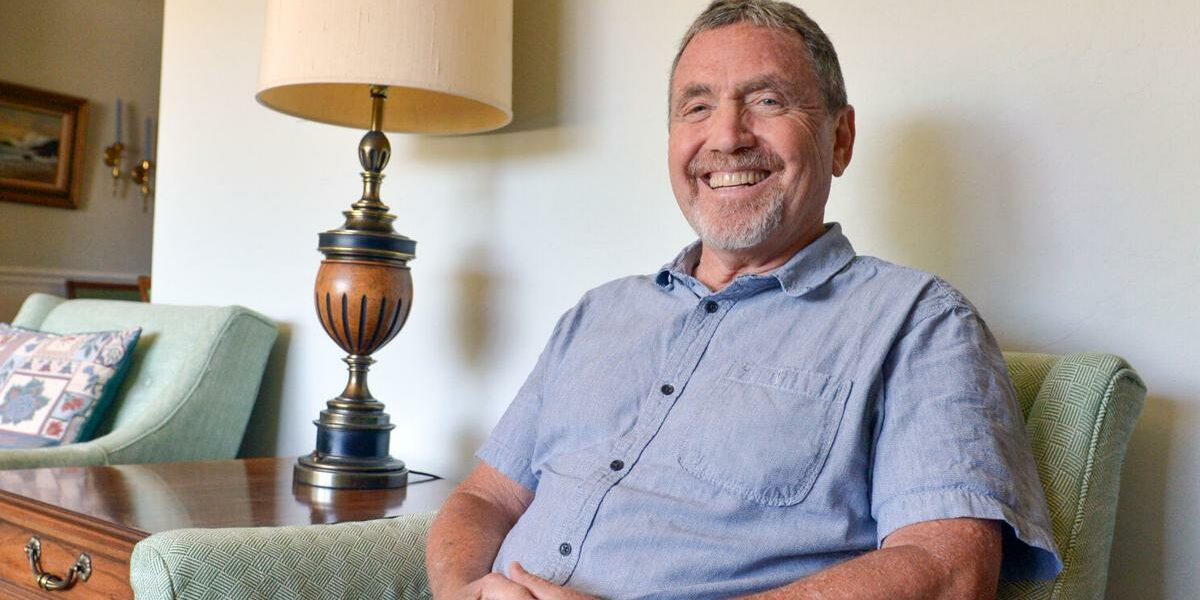
LIVERMORE — Ben Santer, the eminent climate scientist who worked at Lawrence Livermore National Laboratory (LLNL) for nearly three decades, is moving to a British university, where he will be able to continue his pioneering studies of how humans influence the climate.
Santer has been accepted into the United Kingdom’s Global Talent program, with a five-year UK visa, and the University of East Anglia (UEA) awarded him an honorary professorship.
UEA is where Santer carried out graduate studies and earned his PhD in 1978, so he knows the area and can join good friends there.
Those are very welcome developments, but his move is also driven by negatives — by personal attacks from those who oppose his climate findings, by what he sees as repression of free speech, and by the Trump Administration’s general hostility toward climate science.
Santer has even been attacked for advising federal judges about the state of climate science, a job undertaken in good faith five years ago at the request of the National Academies of Sciences.
Santer, 70, worked at LLNL from 1992 to 2021. Since leaving LLNL, he has been living in Oregon and doing research at prominent U.S. institutions, such as the Woods Hole Oceanographic Institution in Massachusetts.
At LLNL, he was well regarded in scientific circles from his earliest days, but he became more widely known in 1995 as the result of a painful interaction with the fossil fuel industry.
That year, as a junior scientist at LLNL, Santer served as lead author of a major report issued from a meeting of the Intergovernmental Panel on Climate Change (IPCC) in Madrid, Spain.
After days of debate, representatives of 96 nations had, for the first time, reached agreement that humans are influencing the climate.
By today’s standards, the report’s carefully chosen words were mild, almost timid: “The balance of evidence suggests a discernible human influence on global climate.”
That’s a far cry from the dramatic terminology often heard today, 30 years later, when scientists model climate-disaster scenarios and describe human influence in terms such as “indisputable” and “unequivocal.”
In 1995, however, the words “discernible human influence” came as a shock to the fossil fuel industry, undercutting its categorical claim that any climate change was entirely natural, and industry couldn’t be blamed or asked to accept responsibility.
In response, the industry attacked the report’s messenger: Santer. The young Livermore researcher, who had agreed only reluctantly to serve as first author of the report, was blasted repeatedly and publicly, including in the pages of industry-sympathetic publications, such as the Wall Street Journal.
Personaany of the attacks were personal and harsh, a far cry from the reasoned, if sometimes blunt, debates that normally characterize scientific disputes.
Those were not easy times for Santer, personally or professionally, but around the U.S., respected climate scientists came to his defense, affirming the validity of the report as well as his role in writing it.
The years since have brought honors and professional recognition. He enjoyed a highly successful career at LLNL, pioneering statistical methods dubbed “fingerprinting” that could distinguish human influence on the climate from natural factors.
Santer’s methods are derived from techniques developed in the electronics industry to extract a signal out of a noisy background; for example, to coax a clear human voice from a static-filled telephone line.
He earned a wide range of honors for his climate research, from election to the National Academies of Sciences to a MacArthur “Genius Grant” to awards from the World Meteorological Association and the American Meteorological Society.
In the years when the government valued climate science, the U.S. Department of Energy chose Santer for the prestigious E.O. Lawrence Award.
He is clearly on the right side of scientific history in the sense that research groups around the world have confirmed and extended the observation that humans are causing warming and, increasingly today, that warming is happening at a dangerous rate.
And yet opposition to climate science remains strong, especially in political circles where President Donald Trump leads “climate deniers” and has given them both a vocal platform and bureaucratic power.
Sometimes the government’s hostility to climate science has been almost comically petty, as when the Administration in March ordered LLNL and other national laboratories to remove terms such as “climate change,” “climate resiliency” and “carbon-free electricity” from their public websites.
Much more seriously, the Trump Administration has since taken substantive steps, decimating research programs and terminating thousands of scientific staff at government agencies in fields related to climate, the environment, medicine and health sciences.
Court cases have restored some of the jobs and programs, but not consistently and often too late to recover staff who had moved on to jobs in other fields.
The Administration has often retaliated against those not in lockstep with its policies and doctrine.
Speaking Science to Power
Despite the pushback, Santer has insisted on speaking out — “speaking science to power,” as he described it to The Independent.
As someone accustomed to the open give and take that was once integral to American science, he has refused to accept the restrictions now imposed on climate research and climate communications.
Santer has often granted public interviews and appeared on national podcasts, including a recent one with prominent environmental journalist Andrew Revkin. Santer has addressed many public gatherings, including local audiences at Livermore’s Bankhead Theater, Presbyterian Church and Public Library.
The current Bulletin of the Atomic Scientists features a Santer essay criticizing Trump Administration plans to shutter the National Center for Atmospheric Research in Boulder, Colorado.
While he is not willing to restrict his own remarks, Santer fears that his outspokenness may injure colleagues by association — fellow scientists whose continued funding may depend on not offending Washington.
“I have done climate research in cooperation with many colleagues,” he told The Independent. “It’s now difficult for me to continue to do this (speak out) without negative consequences to my U.S. collaborators.”
At the University of East Anglia, he can return to research and to speaking out without fear of causing harm to his associates.
Another IPCC meeting is coming, and he looks forward to analyzing the results of major climate modeling studies using his “fingerprinting” techniques.