This post was originally published on here
Amid the 872-day siege of Leningrad in the early 1940s, nine people died protecting a library. This library was not for books, but for seeds collected from around the globe. The nine who died were food scientists, starving to death alongside 700,000 of their neighbors. The library they were protecting was the world’s first seedbank, an ancestor to current-day genebanks worldwide.
Genebanks are biorepositories used to store genetic material, like seeds and cells. Their origins came from a wanderlusting Russian plant-lover named Nikolai Vavilov who dreamed of a one-stop shop for seeds from all over the world for researchers, scientists, and breeders to learn from and use to fight famine. Vavilov made 115 expeditions to 64 countries, collecting 380,000 samples for the seedbank in Leningrad, growing it into an agricultural bounty so diverse and valuable, even the Germans caught wind of it. After the Nazi siege and Vavilov’s death in the Gulag, his idea turned into something even more monumental: an answer to humanity’s questions as to how to maintain food’s genetic diversity and feed the global population amid disaster, war, and climate change.
Now, there are hundreds of genebanks around the world. “Almost every country has its own national genebank,” Stefan Schmitz, executive director of the Crop Trust, tells Popular Science. And there are countless beyond those. At the Crop Trust, Schmitz and his colleagues work to support genebanks and seedbanks (like genebanks, but focused on seeds) through funding, management, trainings, and technology.
Advertisement
Advertisement
Coming up on a century in existence, genebanks have become vital to the future of humanity. In the event of a massive emergency, these would be our Noah’s Ark.
Genebanks help protect important plant varieties, such as the West African Bambara groundnut shown here. Image: Crop Trust / Michael Major
Genetic diversity and food security
Genebanks are troves of genetic diversity, an essential safeguard against famine. Think of the Irish Potato Famine: If all farmers plant the same variety of potato, a single threat in the form of a fungus, virus, or insect can wipe out an entire nation of crops.
The International Center for Agricultural Research in the Dry Areas (ICARDA) oversees two genebanks in Morocco and Lebanon. Not only do these genebanks house incredibly diverse collections, but they are also windows into plant and human history. “We collect the crop wild relatives from this region, the first domesticated forms, the primitive forms, and we have our [locally adapted forms],” Athanasios Tsivelikas, ICARDA’s Morocco genebank manager, tells Popular Science. Some of ICARDA’s plant varieties date back to the dawn of agriculture in the Fertile Crescent. Other, wilder varieties go back even further.
ICARDA’s collection shows us how seeds adapt to challenging climates over centuries. Seeds evolve to better withstand their environments from generation to generation. Many of ICARDA’s seeds evolved in some of the most extreme conditions on Earth and may hold the answer to humanity’s survival on a warming globe. “We are talking about climate resilience. We are also talking about this kind of adaptation to this extreme heat, salinity, and drought conditions,” Tsivelikas says.
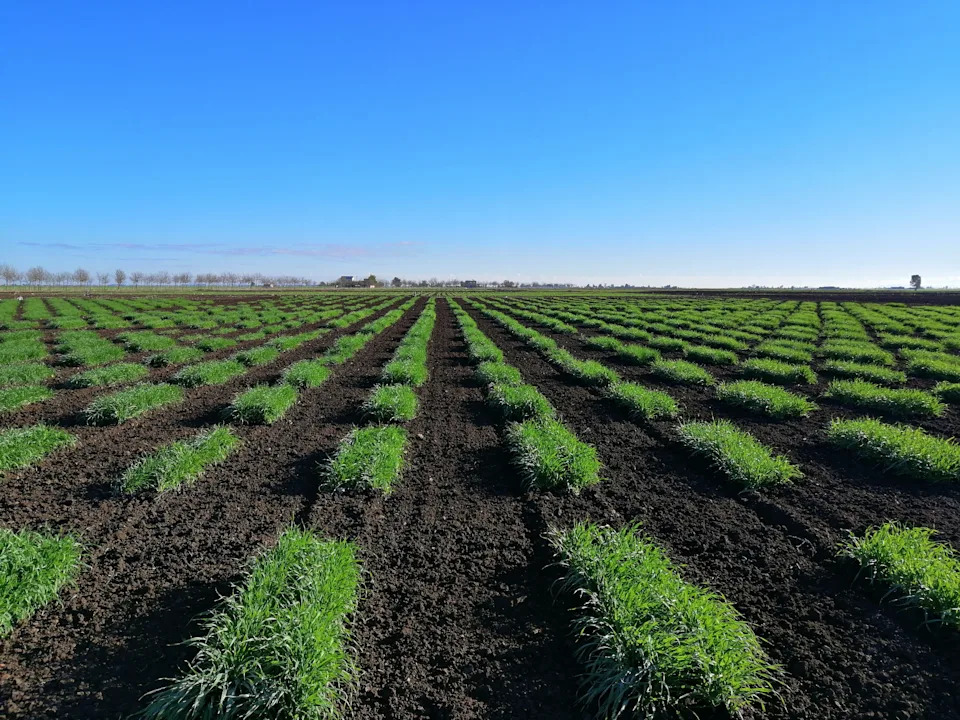
The International Center for Agricultural Research in the Dry Areas (ICARDA) cultivates many unique, traditional plant varieties, like barley (shown here). Image: ICARDA
Research and safekeeping
Among their many purposes, genebanks continue to serve as the genetic libraries Vavilov dreamed of, facilitating agricultural research, plant breeding, and farming. Anyone who needs samples can request them from a genebank.
Advertisement
Advertisement
Plant breeders and researchers may find valuable traits for nutrition or climate resilience in a collection faraway. For example, if someone is trying to create a more nutritious variety of wheat, they may find something that will help them in a roster of seeds from a genebank in a different country. They could then reach out to that genebank with their request and, if their request is approved, the genebank will send them samples of the variety they want to study.
You can also think of genebanks as agricultural safety nets. In regions that experience natural disaster or war, “they provide emergency support for farmers,” Schmitz says. “Genebanks have been in a position to provide old, adapted seeds to farmers so they could then multiply them again.”
They can be important insurance policies for other genebanks as well. Genebanks send duplicates of their collections to fellow genebanks to ensure an even higher level of safety, should anything happen to their own collection. Among genebanks, there is something called the black box system, where you can send seed duplicates to another genebank for safekeeping only, not for research or anything else. Those duplicates remain yours and yours alone, housed faraway in the event of a disaster.
Related ‘Ask Us Anything’ Stories
Why smelling a pine tree can instantly lift your mood
Advertisement
Advertisement
What are ultra-processed foods and are they bad for me?
Does eating spicy food help you lose weight? Science has a clear answer.
Should you keep eggs in the fridge? Short answer: Yes.
Should I freeze my sperm? Men consider their ‘sixth vital sign.’
A backup for the backup
The vulnerability of genebanks makes this extra assurance essential. Power outages, war, and imperfect infrastructure can compromise a genebank overnight. Just one power outage can be a crisis for a facility that needs to keep temperatures at zero degrees Fahrenheit (-18 degrees Celsius).
So, in 2008, experts came up with the ultimate backup plan.
They put a massive global facility in the North Pole, in a part of Norway called Svalbard. There, the farthest north you can go on a commercial airline, the frigid permafrost ensures that even if the power went out, the seeds inside the vault would still be safe. Now, the Svalbard Global Seed Vault houses 1,378,238 seed samples from almost every country globally, with room for millions more.
Advertisement
Advertisement
“Svalbard is nothing else but a huge backup facility,” says Schmitz. “So that in case one of the 800+ genebanks loses their collection due to [a] thunderstorm, fire, earthquake, or war, you can make sure you have this security backup.”
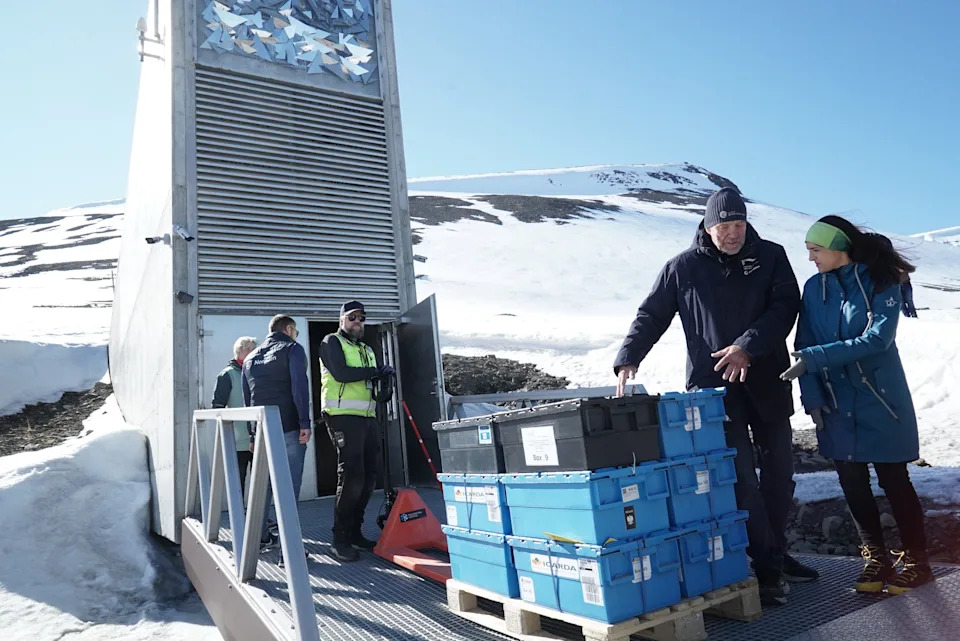
On June 3, 2025, several staff members transported ICARDA seed samples into the Svalbard Global Seed Vault in northern Norway. That week alone, 14 genebanks from around the world deposited more than 11,200 seed samples, underscoring the critical role of crop diversity in future food security. Image: Xinhua News Agency / Contributor / Getty Images Xinhua News Agency
Shortly after Svalbard was established, Tsivelikas’ colleagues at an ICARDA genebank in Syria began sending the new facility copies of their seeds via the black box system. When civil war broke out in 2011, they ramped up their shipments, reaching over 100,000 duplicates under Svalbard’s roof.
And it was lucky they did. In 2014, ICARDA’s genebank in Syria had to be evacuated. “It was the largest disaster we are aware of to genebanks,” says Schmitz.
Tsivelikas’ relief and gratitude at his colleagues’ forethought is palpable to this day. “I cannot express how wise my colleagues in Syria were,” he says. “They were thinking of every possible event that could happen.” While they couldn’t predict the specifics of this civil war, they were ready for it anyway. After the team evacuated, ICARDA established new genebanks in Morocco and Lebanon.
Advertisement
Advertisement
When the new facilities opened, Tsivelikas was there. He went to Svalbard in 2015 to begin the process of getting the duplicated seeds back to ICARDA. “We managed, from Svalbard, to retrieve the [samples of seeds] to our new genebanks in Morocco and in Lebanon,” he says.
ICARDA was the first genebank to retrieve its collection from Svalbard, but there have been others since. Now, Sudanese genebank workers are following in the footsteps of those in Syria, sending seeds to Svalbard amid their civil war. These seeds will be essential for rebuilding.
“There are lots of interesting examples where genebanks not only serve as a starting point for modern breeding and modern plant research, but sometimes simply to help farmers after a catastrophe or natural disaster,” Schmitz says.
In Ask Us Anything, Popular Science answers your most outlandish, mind-burning questions, from the everyday things you’ve always wondered to the bizarre things you never thought to ask. Have something you’ve always wanted to know? Ask us.