This post was originally published on here
Artificial intelligence-driven discovery, landmark space missions and major advances in medicine and Earth science are set to shape global research in 2026, according to a wide-ranging outlook published by the journal Nature.
Nature reports that artificial intelligence will play an increasingly central role in scientific research, with AI “agents” capable of combining multiple large language models to carry out complex, multi-step tasks expected to be used more widely, sometimes with minimal human oversight. Researchers say the coming year could even see the first major scientific breakthroughs credited primarily to AI systems, though growing reliance on such tools is also likely to expose weaknesses, including errors that can lead to data loss.
Alongside large language models, new approaches are emerging that focus on smaller, more efficient AI systems trained on limited datasets to solve specific reasoning problems. Nature noted that one such compact model recently outperformed far larger systems on a logic test, highlighting a shift toward more specialized and less resource-intensive AI for science.
Momentum is also building in gene editing. Nature said 2026 could see the launch of two clinical trials testing personalized gene therapies for children with rare genetic disorders. These efforts build on the case of KJ Muldoon, a baby treated with a tailored CRISPR-based therapy designed to correct a specific disease-causing mutation. One team plans to seek approval from the US Food and Drug Administration to begin trials targeting rare metabolic disorders, while another aims to test similar approaches for inherited immune system diseases.
In medical research, a massive UK clinical trial involving more than 140,000 participants is expected to report results next year on a single blood test designed to detect around 50 types of cancer before symptoms appear. The test analyzes fragments of DNA shed by tumors into the bloodstream and can identify the likely tissue or organ of origin. If successful, UK health authorities plan to roll out the screening tool across hospitals.
Regulatory changes are also on the horizon. Nature highlighted that in April, the United Kingdom will implement its biggest overhaul of clinical trial regulation in two decades, streamlining ethics and regulatory approvals into a single application and requiring greater transparency through trial registration and rapid publication of results. Meanwhile, proposed changes by the FDA that would allow approval of some new drugs based on a single clinical trial are expected to continue unfolding through 2026.
Space exploration will be another defining theme. NASA’s Artemis II mission is scheduled to send four astronauts on a ten-day journey around the Moon aboard the Orion spacecraft, marking the first crewed lunar mission since the 1970s and paving the way for future landings. China is also preparing to launch its Chang’e-7 lunar probe, aiming for the Moon’s challenging south pole region to search for water ice and study seismic activity.
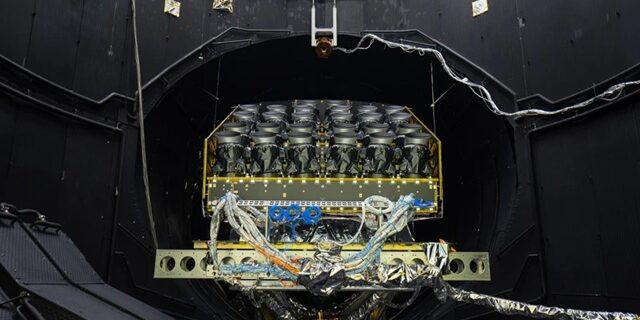
Beyond the Moon, attention will turn to Mars and distant planets. Japan plans to launch its Martian Moons eXploration mission to collect samples from Phobos, which would be returned to Earth in 2031. The European Space Agency is set to launch its PLATO mission to search for Earth-like exoplanets around nearby stars, while India’s Aditya-L1 spacecraft will continue observing the Sun during the peak of its activity cycle.
Closer to home, Nature reported that China’s new ocean-drilling vessel Meng Xiang is expected to begin its first scientific expedition next year. Designed to drill up to 11 kilometres through the ocean floor into Earth’s mantle, the ship could provide unprecedented insights into how oceanic crust forms and what drives tectonic activity.
Taken together, Nature said, these developments point to a year in which science pushes deeper into space, the human body and the Earth itself, with artificial intelligence increasingly acting as both a powerful tool and a new source of uncertainty in the pursuit of discovery.