This post was originally published on here
The site is linked historically with Saint Sabbas, one of the founders of Judean Desert monasticism, whose legacy shaped monastic practices for centuries.
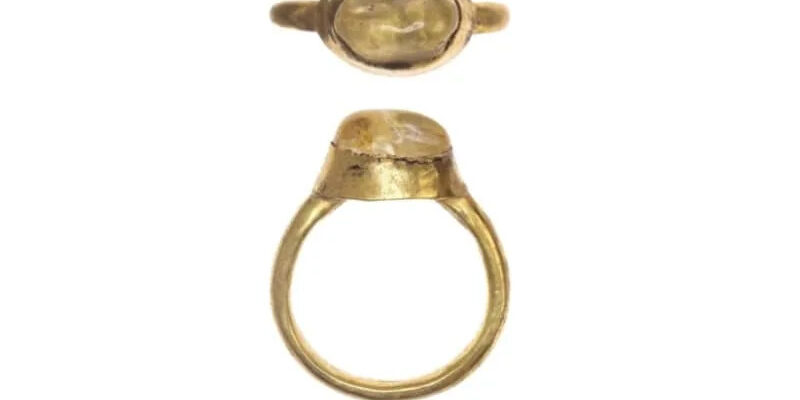
The Civil Administration’s Archaeology Unit announced on Wednesday the discovery of rare Byzantine-era gold coins and a delicate gold ring at the Hyrcania archaeological site in the northern Judean Desert.
Researchers stated that the two gold solidus coins, bearing the image of Byzantine Emperor Heraclius, and the ring shed light on the region’s Christian religious landscape during the Byzantine period, particularly in connection with the development of desert monastic life.
Advertisement
Advertisement
In cooperation with academic teams from the Hebrew University of Jerusalem, the finds were uncovered in ongoing excavation, research, and conservation efforts at the multi-layered site, officials said, as part of a preservation campaign following damage from antiquities looting.
Delicate gold ring discovered at the Hyrcania archaeological site in the northern Judean Desert. (credit: COGAT SPOKESPERSON’S OFFICE)
Area where items found linked to Saint Sabbas, Byzantine Christian activity
The site is historically linked to Saint Sabbas, one of the founders of Judean Desert monasticism, whose legacy shaped monastic practices for centuries. These findings add to a growing body of evidence of Byzantine Christian activity in isolated desert locales dating from the 4th to 7th centuries CE.
Khirbet Hyrcania, established in the late Hellenistic period, served as a fortress and settlement for centuries during the Roman and Herodian eras, before becoming a Christian monastic center in the Byzantine period.
“The finds uncovered at Khirbet Hyrcania reflect an important chapter from the Byzantine period and the early Christian tradition in the region,” said Binyamin Har-Even, head of the Civil Administration’s Archaeology Unit. “Our work is intended to protect the past, enable its study, and make it accessible to everyone.”