This post was originally published on here
From Jim Carrey to Ricky Gervais, there are some people who are just plain funny.
But do you have what it takes to be the next big comedian?
Scientists say there are four key humour styles – and have even come up with a test to reveal which ones you possess.
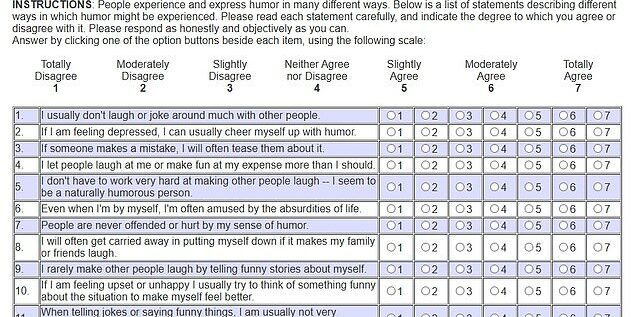
The test, called the Humor Styles Questionnaire, includes 32 questions to assess your levels of affiliative humour, self–enhancing humour, aggressive humour, and self–defeating humour.
If you score highly for affiliative humour, this suggests you love cracking jokes and engaging in spontaneous witty banter.
A high score for self–enhancing humour indicates you have a generally humorous outlook on life.
Aggressive humour relates to the use of sarcasm, teasing, and ‘put–downs’, while self–defeating humour involves excessively self–disparaging humour.
So, what’s your humour style? Take the test to find out.

The Humor Styles Questionnaire was created back in 2003 by researchers from the University of Western Ontario.
‘The Humor Styles Questionnaire assesses four dimensions relating to individual differences in uses of humor,’ the team, led by Rod A. Martin explained in their study, published in the Journal of Research in Personality.
‘These are: relatively benign uses of humor to enhance the self (Self–enhancing) and to enhance one’s relationships with others (Affiliative), use of humor to enhance the self at the expense of others (Aggressive), and use of humor to enhance relationships at the expense of self (Self–defeating).’
The questionnaire includes 32 statements, describing different ways in which humour might be experienced.
Participants are asked to read each statement carefully, and indicate the degree to which they agree or disagree with it.
The statements include things like: ‘I usually don’t laugh or joke around much with other people,’ ‘I laugh and joke a lot with my friends’, and ‘I enjoy making people laugh’.
At the end of the test, you’ll be given your score for each of the four humour styles, and told how that compares against the rest of the population.
If you score highly for affiliative humour, this suggests you enjoy sharing humour with other people – much like Michael McIntyre.

‘They often tell jokes and funny stories to amuse others and make them laugh, and they enjoy laughing along with others,’ the researchers explained.
‘They do not take themselves too seriously, and can laugh about their mistakes without feeling too badly about them.
‘Research shows that those who are high on affiliative humor tend to be cheerful, outgoing and friendly, and tend to have enjoyable relationships with others.’
People like Greg Davies who score highly for self–enhancing humour, tend to maintain a humorous outlook on life, even during difficult times.
‘They always look on the funny side of things and use humor to cheer themselves up,’ the researchers explained.
‘Even when they are alone, they are often amused by the absurdities of life.
‘Research indicates that those who are high on self–enhancing humor tend to be emotionally well–adjusted, and do not easily become discouraged, anxious, or depressed. They cope well with stress and tend to be optimistic.’
Meanwhile, people like Jimmy Carr who are high on aggressive humour often tease, put down, and manipulate other people.
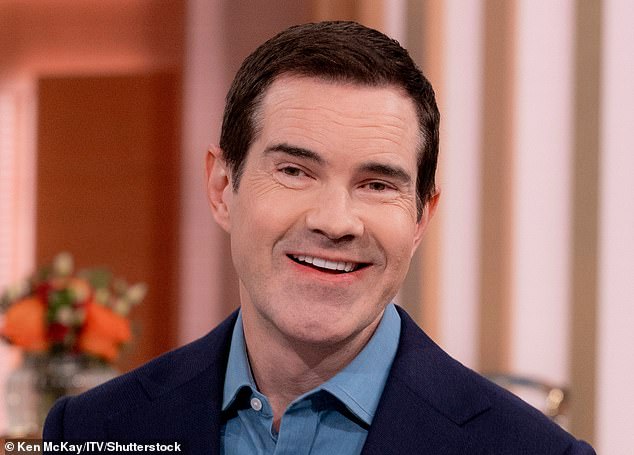

‘Although they may be very witty, their humor tends to involve ridicule or sarcasm,’ the researchers said.
‘They like to tell racist or sexist jokes, and are not concerned about how their humor might be hurtful to others.
‘Making fun of others is a way they try to enhance their own self–esteem.
‘Research indicates that people who are high in this humor style tend to be generally aggressive and insensitive to others.
‘Their levels of self–esteem and emotional well–being are no higher or lower than the average person.
‘Those who are low on this humor style tend to have more satisfactory relationships.’
Finally, people like Nish Kumar who score highly for self–defeating humour can be quite funny, but often go too far in making jokes at their own expense.
‘They tend to laugh along with others when being ridiculed or made fun of,’ the researchers explained.
‘They try to make other people accept them more by allowing themselves to be the butt of others’ humor.
‘They also tend to use humor to hide their true feelings from others, putting on a happy face even when feeling unhappy inside.
‘According to research findings, people who are high in this style of humor tend to have low self–esteem, and are often unhappy and anxious.
‘They are often dissatisfied with their relationships.’