This post was originally published on here
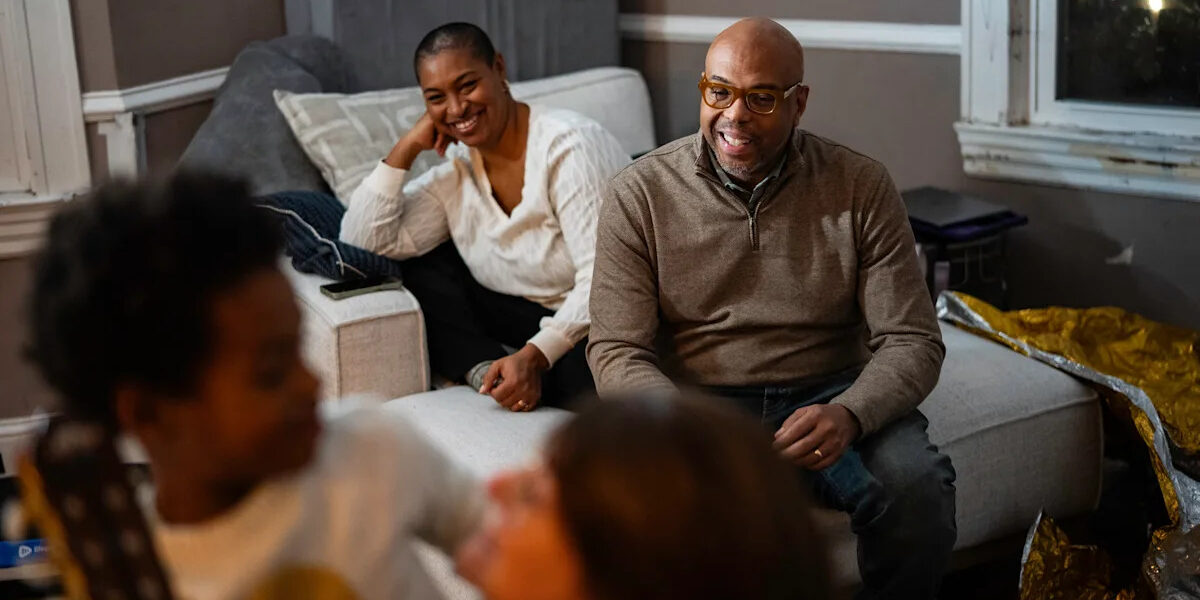
When Marc and Cristina Easton’s son was diagnosed with autism at 20 months, the Baltimore couple left the doctor’s appointment in confusion. Their toddler – who was very social – didn’t resemble the picture of the condition they thought they knew. And the specialists could offer little clarity about why or what lay ahead.
It wasn’t until four years after their child’s diagnosis that the Eastons finally began to get answers that offered them a glimmer of understanding. This summer, a team from Princeton and the Flatiron Institute released a paper showing evidence for four distinct autism phenotypes, each defined by its own constellation of behaviors and genetic traits. The dense, data-heavy paper was published with little fanfare. But to the Eastons, who are among the thousands of families who volunteered their medical information for the study, the findings felt seismic.
Advertisement
Advertisement
“This idea that we’re seeing not one but many stories of autism made a lot of sense to me,” Cristina said.
For decades, autism has been described as a spectrum – an elastic term that stretches from nonverbal children to adults with doctorates. Beneath that vast range lies a shared pattern of social communication and behavioral differences, long resistant to neat explanations.
Now, advances in brain imaging, genetics and computational science are revealing discreet biological subtypes. The discoveries could one day lead to more accurate diagnoses and treatments – raising profound questions about whether autism should be seen as something to cure or as an essential facet of human diversity.
There are a few high-impact mutations that alone appear to lead to autism. But researchers now suspect that the majority of cases arise from a subtler genetic architecture – common variants scattered throughout the population that, in certain combinations and under certain environmental conditions, can alter development.
Advertisement
Advertisement
And while recent public discourse has been clouded by misinformation about the role vaccines play in autism, Tylenol and what factors cause the condition, the new analysis is gradually illuminating the science of autism’s beginnings. It suggests that some children may have genetic mutations when they’re born that activate at different times in life – a reflection of varying paths that emerge at different moments.
Natalie Sauerwald is one of the lead authors of the subtypes study and a computational biologist at the Flatiron Institute, part of the Simons Foundation, which funds scientific research. She compared earlier autism research to assembling a jigsaw puzzle, only to find that the pieces didn’t quite fit – not because the image was unclear but because “the box had always contained several puzzles, shuffled together.”
There isn’t just one autism, Sauerwald said: “There are many autisms.”
– – –
Advertisement
Advertisement
Genetic roots
Pinning down who counts as autistic has always been complicated. The condition manifests in an extraordinary range of ways – across genders, abilities and life experiences – defying any single definition. Boys are far more likely to receive a diagnosis than girls, though many researchers suspect that girls are frequently overlooked because their symptoms may appear less disruptive or more easily masked.
In recent years, as diagnostic criteria have broadened, the number of people identified as having autism has risen sharply. Most of the growth has been in those who have more mild symptoms as opposed to those who are profoundly impacted and have minimal or no language or have an intellectual disability, according to Centers for Disease Control and Prevention data. About 1 in 150 children were diagnosed with autism in 2000 in U.S. communities examined by the Centers for Disease Control and Prevention; by 2022, that figure had climbed to 1 in 31. The increase may look staggering, but many experts say it reflects not an epidemic of autism itself but a greater understanding of its many forms – and a society becoming more attuned to recognizing them.
A computational biologist, Sauerwald’s lifework has been about studying genes and their relationship with human health. She had previously published research on covid-19 and cancer, but she had read a lot about how the significant variability of autism made it so difficult to treat and reached out to researchers at Princeton.
Advertisement
Advertisement
When Sauerwald began analyzing the autism database managed by the Simons Foundation, a science nonprofit, and housing information on over 5,000 children, she expected the results to be messy. The spectrum spans such a wide range that she assumed the categories would blur together, like overlapping circles in a Venn diagram. Instead, the data resolved into four groups with their own genetic and behavioral signatures.
“That level of distinctiveness was really surprising,” she said.
The work published in July in Nature Genetics detailed the four categories.
-Broadly affected: The smallest group – about 10 percent of participants – faced the steepest challenges, marked by developmental delays, difficulties with communication and social interaction, and repetitive behaviors that touched nearly every part of life.
Advertisement
Advertisement
-Mixed autism with developmental delay: Roughly 19 percent showed early developmental delays but few signs of anxiety, depression or disruptive behavior. Researchers call this group “mixed” because its members vary widely in how strongly they display social or repetitive behaviors.
-Moderate challenges: About a third of participants fell into this group, showing the hallmark traits of autism – social and communication differences and repetitive habits – but in subtler ways and without developmental delays.
-Social and/or behavioral: The largest group, around 37 percent, met early developmental milestones on time yet often grappled with other conditions later on, including ADHD, anxiety, depression or obsessive-compulsive disorder.
One of Sauerwald’s co-authors, Olga Troyanskaya, director of Princeton Precision Health, said she was stunned that in the social and/or behavioral group, individuals tended to be diagnosed later – 6 to 8 years of age – whereas most children exhibit noticeable symptoms before the age of 3 and are diagnosed at that time.
Advertisement
Advertisement
The new analysis study showed the delay may stem from genetic mutations that are present when a child is born – but activate later in life.
“To me, this was the most fascinating part,” Troyanskaya said. “We’ve always thought of autism as a disorder of fetal development – but that may be true only for some children.”
That breakthrough idea was given another boost in October when a second study – published in Nature by an entirely different team using separate data – arrived at essentially the same conclusion: Genetically distinct forms of autism may unfold on different life timelines. The new analysis, based on data from the United States, Europe and Australia, suggested that children diagnosed after age 6 carried distinct genetic profiles and that their form of autism looked strikingly different from the early-childhood type – less like a developmental delay and more akin to conditions such as depression, ADHD or post-traumatic stress disorder.
“These findings provide further support for the hypothesis that the umbrella term ‘autism’ describes multiple phenomena with differing [causes], developmental trajectories and correlations with mental-health conditions,” the authors wrote.
Advertisement
Advertisement
– – –
Tracing outside forces
Understanding that autism may encompass multiple distinct conditions naturally leads to another question: What, exactly, drives these differences at the biological level?
In totality, hundreds of genetic mutations have been identified as being linked to autism.
Roughly half appear to be inherited – but the rest arise spontaneously, and it is these that are perhaps the most mysterious. These mutations come from random copying errors in DNA or from outside influences. The list of suspects impacting autism is long: air pollution, paternal age, maternal diabetes, prenatal infections – all supported by some evidence, though none yet definitive.
Advertisement
Advertisement
Sauerwald and Troyanskaya’s work illuminates the genetic blueprint of autism. But genes don’t act in isolation. Across laboratories, scientists are probing external forces, particularly the prenatal environment, to find out what might nudge those genes to switch on or off.
That curiosity has, at times, collided with politics. In recent months, scientists have been baffled by the Trump administration’s decision to single out Tylenol use in pregnancy as a possible cause. “There are other exposures with similarly not very strong statistical associations,” said Catherine Lord, a professor of psychiatry at UCLA and one of the field’s foremost experts, referring to work on SSRI antidepressants, fever, heavy metals and other possible prenatal and environmental associations. “Across these studies, the effect sizes are small.”
Zeyan Liew, an environmental epidemiologist at Yale, has spent years studying PFAS, also knows as “forever chemicals,” the synthetic compounds used in products like Teflon that now pervade food and drinking water. His National Institutes of Health-funded research, drawing on data from millions of children across three European countries, found no direct link between maternal PFAS levels and autism diagnoses. But the data hinted at something subtler: Children whose mothers had higher exposure tended to show more social and behavioral difficulties – hyperactivity, anxiety, trouble forming friendships.
“It shows that a mother’s PFAS level is correlated with a child’s social developmental functioning,” Liew said. The chemicals, he suspects, may act on the developing brain, disrupt hormonal balance or trigger oxidative stress – “unwanted biological interference,” he said, “during a period of rapid brain development.”
Advertisement
Advertisement
David Mandell, a professor of psychiatry at the University of Pennsylvania and part of a newly funded NIH team, is developing a predictive model to examine a wider range of exposures: medications, air quality, access to green space, the built environment. The goal, he said, is to understand not just which factors matter, but when. Timing may prove decisive. He pointed to the infamous case of thalidomide, a morning-sickness drug withdrawn in the 1960s after causing birth defects. Autism risk rose only among women who took it between the 20th and 24th day after conception.
“We need to look in detail at what specific part of pregnancy,” Mandell said.
– – –
A brain wired differently
Advertisement
Advertisement
If multiple types of autism arise from the interplay of genetics and environment, then the brain is the place where those varied influences converge and become visible.
One promising but still early line of research centers on biochemical pathways in the brain: In some children, autoantibodies appear to block folate transport into the brain, and early trials of leucovorin, a form of vitamin B, suggest it may restore function in some cases. The findings are preliminary, but this is the medication the Trump administration fast-tracked for approval in September.
While that work points to chemistry at the molecular level, another line of inquiry looks at the brain’s architecture itself. Two decades ago, scientists noticed that some young children with autism had brains that grew unusually fast in infancy. The overgrowth, often linked to more severe symptoms, seemed to reach across regions responsible for both higher reasoning and basic sensory perception – the midbrain, hippocampus, parahippocampal gyrus, superior temporal gyrus and beyond.
The newest insights into autism have less to do with differences in brain regions but rather the connections that link them.
Advertisement
Advertisement
For decades, Yale researcher James McPartland has been peering into people’s brains, searching for clues about autism. His work has involved painstakingly cataloguing scans and measuring subtle changes over time. Then, a few years ago, a pattern emerged.
Adults with autism, McPartland noticed, seemed to have fewer synapses – the tiny junctions where nerve cells exchange information – than their neurotypical peers. And within the autism group, those with the sparsest connections often struggled most with the social demands of daily life. The findings were presented this year at the American Neuropsychiatric Association’s annual conference.
“We saw a very strong correlation between synaptic density and the kinds of challenges people faced,” McPartland, director of the Center for Brain and Mind Health at the Yale School of Medicine, said. “We were very excited.”
– – –
Advertisement
Advertisement
Ellis
The Eastons’ autism journey began in 2021.
Both Marc (who works in quality assurance in New York City) and Cristina (at the time a teacher) were still working from home following the pandemic closures, and they noticed little things that seemed off about their son Ellis.
Marc, now 55, observed that Ellis no longer repeated words the way he once did, and Cristina, now 42, found herself puzzled by the way he played. When she set out bowls of quinoa and lentils, hoping he’d scoop or pour, he would only sprinkle.
Ellis’s parents didn’t think much of the referral for a developmental evaluation – until it came back as autism. A diagnosis relies on behavioral checklists, not scans or lab tests, and on criteria many clinicians see as vague.
Now 6 years old, Ellis is a nonspeaking kindergartner who communicates through music. When he’s been upset and is calm again, he sings a melody from a Batwheels clip. When he wants fruit, there’s a fruit salad song he hums and a weather song when he wants to go outside. He’s also a Taylor Swift fan, and each of her songs is associated with an emotion or want.
The diagnostic shorthand – calling someone profoundly affected, or assigning a “Level 1, 2 or 3” label based on support needs – feels too blunt to them. Cristina worries that the familiar linear framing of autism, from mild to severe, often becomes “a way to write people off.” The couple has seen how hard it is to categorize people who defy simple descriptions such as an adult who is academically gifted but struggles to tie their shoes.
Participants in Sauerwald’s research study haven’t been given individual results, but the Eastons say they have been debating what category Ellis falls into, hoping it will illuminate the roots of his diagnosis and hint at the trajectory ahead.
“When you have a child like ours, your natural inclination is to reverse time and look at your childhood and entire family tree and every experience,” to try to figure out what might have led to the diagnosis, Cristina said.
Cristina believes Ellis belongs to the “broadly affected” category – his delayed milestones and trouble communicating fit that profile. Marc, though, sees him in the mixed group, where symptoms are milder and more variable, because he is able to communicate his needs outside of speech. Still, both parents agree that the study’s new framework captures a complexity long missing from the way autism is typically described.
“It’s dangerous to put people into boxes based on what they appear to do,” Cristina said. “That’s why this new study feels so promising – it sees people with the complexity as they actually are.”
Related Content
After more than 125 years, the Christmas Bird Count is more popular than ever
Maine deer eat from trough on live stream, have become internet darlings
A viral love story: She answered his DM, then flew to Ireland to meet him