This post was originally published on here
Last Updated:
The Supreme Court’s November order should be seen as part of an evolving regulatory framework rather than a final verdict on the future of the Aravallis.
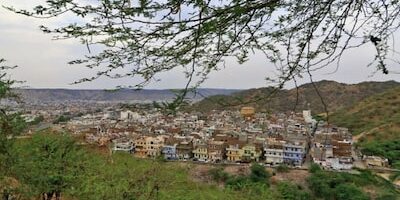
The Aravalli range occupies a unique place in India’s ecological and cultural landscape. (Getty Images)
The Aravalli range occupies a unique place in India’s ecological and cultural landscape. Extending across Rajasthan, Haryana, Delhi, and Gujarat, the hills play a vital role in groundwater recharge, air quality, and climate moderation in northern India. It is therefore natural that the Supreme Court’s November 20, 2025, order concerning the definition of the Aravalli Hills has generated significant public discussion, both online and in local protests.
Some commentators and civil society groups have expressed apprehension that the ruling could weaken environmental protection or increase mining pressure on the region. These concerns reflect a broader anxiety about ecological degradation and deserve to be heard. At the same time, a careful reading of the order and subsequent official clarifications suggests that the intent and likely impact of the decision may be more limited and structured than is sometimes assumed.
Recommended Stories
Clarifying A Long-Standing Ambiguity
At the heart of the issue lies a technical question that has troubled regulators for decades: what precisely constitutes an “Aravalli hill.” In the absence of a uniform definition, different states applied different criteria, leading to regulatory inconsistencies and frequent disputes. These ambiguities also complicated enforcement, particularly in areas where mining and construction activity occurred near hill bases.
The Supreme Court’s order addresses this gap by accepting a scientific, uniform definition recommended by an expert committee under the Ministry of Environment, Forest and Climate Change. Under this framework, the Aravalli hills are identified as landforms rising 100 metres or more above local relief, with associated ranges extending up to 500 metres. The primary objective is regulatory clarity and consistency across states.
Scope And Safeguards
A central public concern is the perception that large parts of the Aravalli range will lose protection. Government submissions before the Court indicate, however, that the vast majority of the Aravalli region continues to be protected under existing forest, wildlife, and environmental legislation. The Court’s directions apply specifically to mining regulation and do not override other statutory safeguards.
Importantly, the order includes significant restraints. The Supreme Court has directed that no new mining leases be granted until the Indian Council of Forestry Research and Education prepares a comprehensive Management Plan for Sustainable Mining. Mining remains prohibited in forests, wildlife habitats, eco-sensitive zones, and other inviolate areas, while existing operations are subject to strict compliance and monitoring.
Addressing Enforcement Challenges
One of the persistent challenges in the Aravalli region has been illegal and unregulated mining, often facilitated by unclear boundaries and overlapping jurisdictions. By introducing a uniform definition and linking future decisions to scientific planning, the Court’s approach may strengthen the ability of authorities to act against such violations, provided enforcement remains rigorous.
From the government’s perspective, this emphasis on clarity and planning is intended to close loopholes rather than create new ones. Whether this objective is achieved will depend on implementation and transparency in the coming months.
A Debate That Calls For Balance
Public concern for the Aravallis—expressed through social media campaigns as well as offline engagement—underscores the range’s importance. At the same time, environmental governance is most effective when debate is informed by legal context and scientific assessment, rather than assumptions of intent.
The Supreme Court’s November 2025 order should be seen as part of an evolving regulatory framework rather than a final verdict on the future of the Aravallis. Continued judicial oversight, clear communication by authorities, and vigilant public engagement will together determine whether ecological protection and lawful development can be balanced in practice.
Mohit Gupta is a Research Fellow at Madras University. Views expressed are personal and solely those of the author, and do not necessarily reflect News18’s views.
December 28, 2025, 12:32 IST
Loading comments…
Read More