This post was originally published on here
When you hear that a giant, icy mass hurtling through space has entered our solar system, your mind might leap straight to aliens — and for some scientists, that possibility isn’t entirely out of the question.
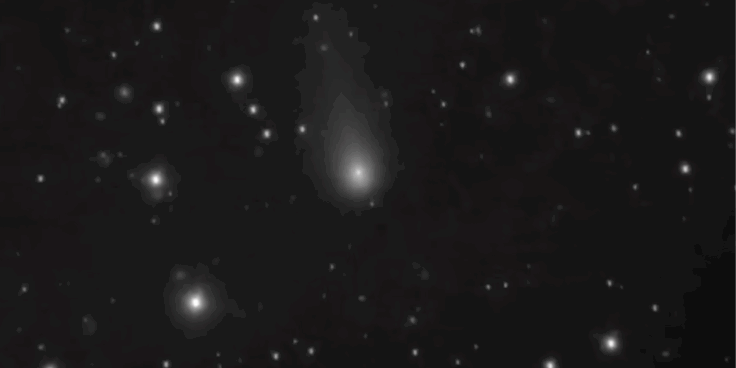
Harvard astrophysicist Avi Loeb has spent months analysing 3I/ATLAS, a comet-like object from beyond the solar system that passed Earth shortly before Christmas. While most astronomers see a frozen mass of dust and gas, Loeb suggests it could be something more provocative: a messenger, or even a machine, from another civilisation.
‘In the first case, humanity need not do anything but await the arrival of this interstellar messenger with open arms,’ Loeb tells Metro. ‘It is the second option which is of great concern’.
YouTube
Scientists Clash Over What 3I/ATLAS Really Is
3I/ATLAS was first detected in July, its strange trajectory hinting that it came from deep interstellar space. Since then, it has lit up both telescopes and imaginations worldwide. Everyone from amateur astronomers to celebrities such as Kim Kardashian has weighed in — albeit with varying degrees of scientific rigour.
Loeb argues the comet is intriguing because of its unusual chemical composition and speed, which do not entirely fit known natural models. This is not the first time he has proposed theories that challenge mainstream thinking; the professor has long urged humanity to consider that some objects passing through our cosmic neighbourhood could be alien technology.
Curiosity about 3I/ATLAS has even sent Google searches for ‘planetary defence’ soaring nearly 300% in recent months as people wonder just how ready we are for something big and unexpected from space. NASA, however, assures the public there’s no danger — the comet will stay a comfortable 170 million miles from Earth.
Alena Darmel : Pexels
Could Aliens Even Know We’re Here?
Loeb warns that, if intelligent life is out there, Earth may have already given away its position. In 1977, NASA’s Voyager 1 and 2 probes carried golden records filled with greetings, music and sounds of humanity into the void — signals of our existence cast like messages in a cosmic bottle.
‘We should be ready for the possibility of a visitor that detected them,’ Loeb says. ‘It may come to save us or destroy us. We’d better be ready for both options and check whether all interstellar objects are rocks’.
He has even suggested the world needs an ‘alien alert system’ similar to the Richter scale, allowing scientists and governments to rank potential extraterrestrial threats and act quickly in the face of the unknown.
Great question!@NASA’s observations show that this is the third interstellar comet to pass through our solar system. No aliens. No threat to life here on Earth.
3 = the third
I = interstellar, meaning from beyond our solar system
ATLAS = discovered by our Asteroid… https://t.co/StDNRqvRCJ— NASA Acting Administrator Sean Duffy (@SecDuffyNASA) October 30, 2025
Defensive Dreams and Cosmic Realities
While talk of alien visitors may sound like science fiction, planetary defence experts take space threats seriously — though their worries tend to focus on asteroids rather than spaceships. According to science journalist Dr. Robin Andrews, author of How to Kill an Asteroid, humanity has two basic options for stopping an incoming rock: deflect it or destroy it.
That might mean slamming a probe into it, or even using a nuclear device to nudge its orbit. But comets like 3I/ATLAS move at extraordinary speeds — this one travels 42 miles per second — and Andrews admits that even our most advanced rockets would struggle to catch up.
‘If a comet were truly heading for Earth, it would be a nightmarish scenario,’ he says. ‘The odds are tiny, but defending against it would be incredibly difficult’.
As for potential alien craft? Theoretical defence is equally bleak. Earth’s atmosphere would offer some natural resistance, heating any incoming ship to plasma temperatures, but military options beyond that are limited. Even with high-tech systems like America’s THAAD missile defences, experts agree that any civilisation capable of interstellar travel would be far beyond our current military reach.
Mark Christopher Lee, filmmaker and UFO researcher, jokes that our best chance might be a War of the Worlds-style twist — where aliens succumb to Earth’s microbes — or perhaps a distraction involving social media. ‘Maybe we could distract them with TikTok,’ he quips. For now, Loeb urges global cooperation, more vigilant space monitoring, and humility in the face of the cosmic unknown.