This post was originally published on here
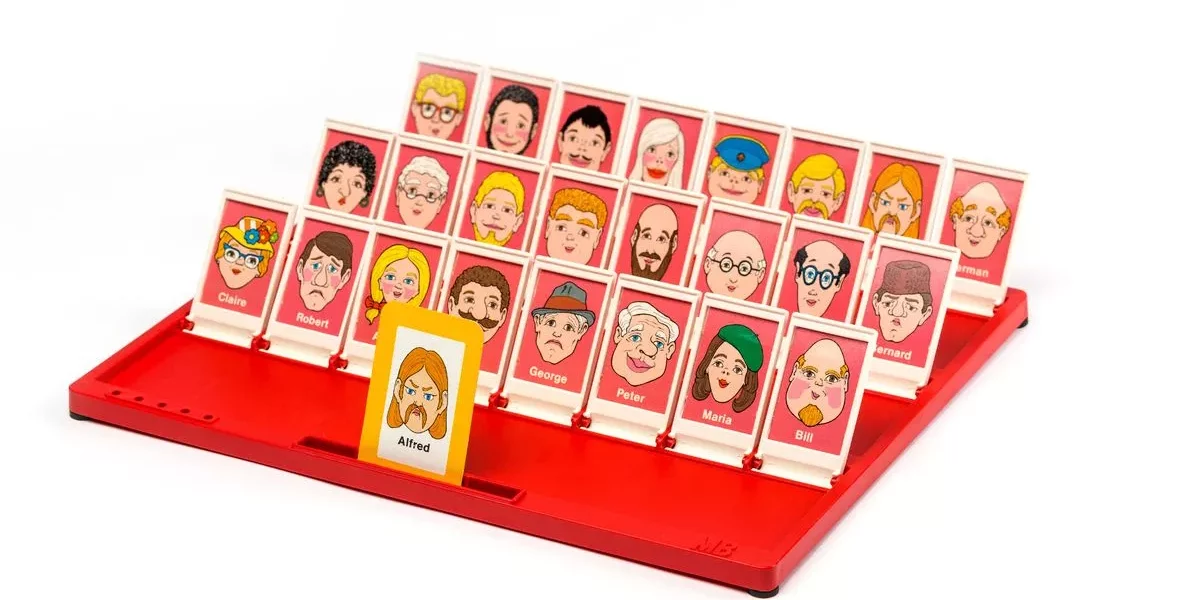
If you’re a fan of the Guess Who board game, you’ll probably want to hear about these top tips that can dramatically increase your chances of beating friends and family
Guess Who has remained a family favourite game for decades. It was invented by Theo and Ora Coster and launched in the UK in 1979 – with various spin-off versions following over the years.
The aim of the two-player guessing game is to find the mystery character your opponent has chosen from a set of cartoon faces. Each round, they can ask one question to help identify this person.
Popular questions to whittle down the suspects list include – “Does your person wear glasses?”, “Is your person bald?” or “Does your person have red hair?”
But did you know there’s an even more efficient way of winning the game? The advice is bound to put you in a good position if your family is playing Guess Who at Christmas.
Dr David Stewart, mathematician at the University of Manchester, says players should try and split the suspect pool “as close as possible into halves”.
It can mean getting more creative with your questions to get rid of half the characters in one go, therefore bringing you closer to victory.
He told the Daily Mail: “You can always ask a question that captures the exact number you want in the ‘yes’ category. Use a formulation like: “Does their name come before ‘Nancy’ alphabetically?'”
Eliminating 50% of the board in one go is much more efficient than asking about glasses or hats – as very few characters actually have these accessories.
When you get down to four remaining players, the experts recommend asking questions that provide a 1-3 split in suspects.
You can be a bit cheeky by straying a little from the simple yes-no format if you dare to, but this may annoy any competitive family members.
The experts recommend using “tripartite” questions to really throw your opponents off balance. This is a bit of a confusing approach, so can be particularly chaotic if players have been enjoying any festive booze!
Dr Stewart and his colleagues advise asking a three-part question like – “Does your person have blonde hair OR do they have brown hair AND the answer to this question is no?”
They added: “If we were to ask you this question and your person had blond hair, then you would say yes because the first line succeeds.
“If they had grey hair, then both parts fail and you would say no; but if they had brown hair then you would find yourself, in effect, answering: ‘Is the answer to this question no?’
“You cannot answer honestly, so we may assume that your head explodes.”
So there you have it, by confusing your opponent to give away additional information about your character, you’re bound to give yourself an advantage.
Or, if the tripartite trick is too complicated for you to get your ahead around, don’t fret because there are more ways to secure victory.
How to win at Guess Who
1. Never ask questions about rare features at the beginning – for example, “Does your person have earrings?” if only two characters do.
2. Try to split the remaining possibilities in half with each question until you get down to smaller numbers. Think about questions that will leave you with as close to 50/50 as possible.
3. Plan your questions instead of rushing – Before asking, quickly scan your board and count how many characters have a certain feature. This helps you choose the most effective question.
4. Pay attention to your opponent – Listen to the questions your opponent asks. They may give you clues about which character they have chosen, especially if they seem to hesitate or change tactics.
5. Go in for the kill – Once the group is smaller, focus on unique features (like a specific colour of glasses or a rare accessory) to quickly narrow down the options.