This post was originally published on here
UNITED STATES — Scientists are closely monitoring a notable rise in global volcanic activity, with multiple regions across the world experiencing eruptions, elevated unrest, or signs of increased seismic movement. While isolated volcanic activity is common, experts say the current simultaneous global pattern stands out.
Multiple Volcanoes Showing Elevated Unrest Across Several Continents
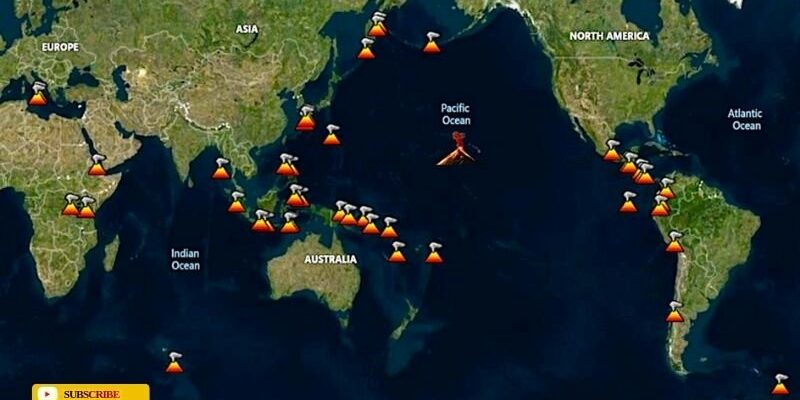
Recent monitoring screenshots and global mapping reveal active or restless volcanoes spanning the Pacific Ring of Fire, Southeast Asia, Central America, South America, Africa, and island chains across the Indian and Pacific Oceans.
Some of the most active zones include:
- The western Pacific region near Indonesia and the Philippines
- Central American volcanic belts
- South American Andes
- Isolated activity near the Pacific Ocean basin
- Active sites across the South Pacific islands
Researchers note that while volcanic clusters are not rare, the number of active locations at the same time warrants attention.
Scientists Point to Increasing Solar Activity as an Overlapping Factor
At the same time, Earth is moving deeper into Solar Cycle 25, a period when sunspot numbers, solar flares, and energetic radiation increase. Solar activity is known to influence Earth’s magnetic field, atmospheric conditions, and sometimes tectonic behavior.
While there is no definitive scientific link proving solar activity causes volcanic eruptions, experts agree that when both Earth-based instability and heightened solar cycles overlap, the interaction becomes important to track.
Why This Global Pattern Has Drawn Attention
Individually, these events are not unusual. Volcanoes erupt frequently across the planet.
However, what stands out is:
- The global timing
- The number of volcanoes showing unrest at once
- The overlap with a strengthening solar cycle
- The rapid pace of recent geological changes
Observers and researchers emphasize that large-scale simultaneous activity is uncommon, making the current situation worth documenting closely.
Monitoring Efforts Continue as Activity Evolves
Geologists, atmospheric researchers, and independent volcano watchers are continuing to monitor changes, analyze satellite data, and cross-reference signs of Earth system instability. Many say that while there is no immediate global threat, understanding the emerging pattern is essential for long-term scientific assessment.
The global volcanic map displayed in recent monitoring images highlights how widespread the activity is and reinforces why analysts are watching the situation so closely.
As one observer summarized: “Watching. Documenting. Connecting. The timing is interesting — and worth paying attention to.” SaludaStandard-Sentinel.com will continue to monitor global geological developments and provide updates as new information becomes available.