This post was originally published on here
Activating two somatostatin receptors enhances amyloid beta breakdown and improves memory in models of Alzheimer’s disease.
Scientists at Karolinska Institutet in Sweden and the RIKEN Center for Brain Science in Japan have uncovered two brain receptors that help regulate how amyloid beta is broken down, a process that is disrupted in Alzheimer’s disease. The researchers say their findings point to the possibility of developing future treatments that could be safer and less expensive than the antibody-based therapies currently in use.
Alzheimer’s disease, the most common cause of dementia, is marked by the buildup of amyloid beta (Aβ) plaques in the brain. One of the main enzymes responsible for clearing Aβ is neprilysin, but its activity declines as people age and as the disease progresses.
The international research team found that two somatostatin receptors, known as SST1 and SST4, work together to control neprilysin levels in the hippocampus – a brain region important for memory. Their results were reported in the Journal of Alzheimer’s Disease.
Receptor control of neprilysin activity
The conclusions are based on studies using genetically modified mice and experiments in cell cultures. When the two receptors were missing, neprilysin levels dropped, amyloid beta accumulated, and the mice showed memory problems. The researchers also tested a compound that stimulates SST1 and SST4.
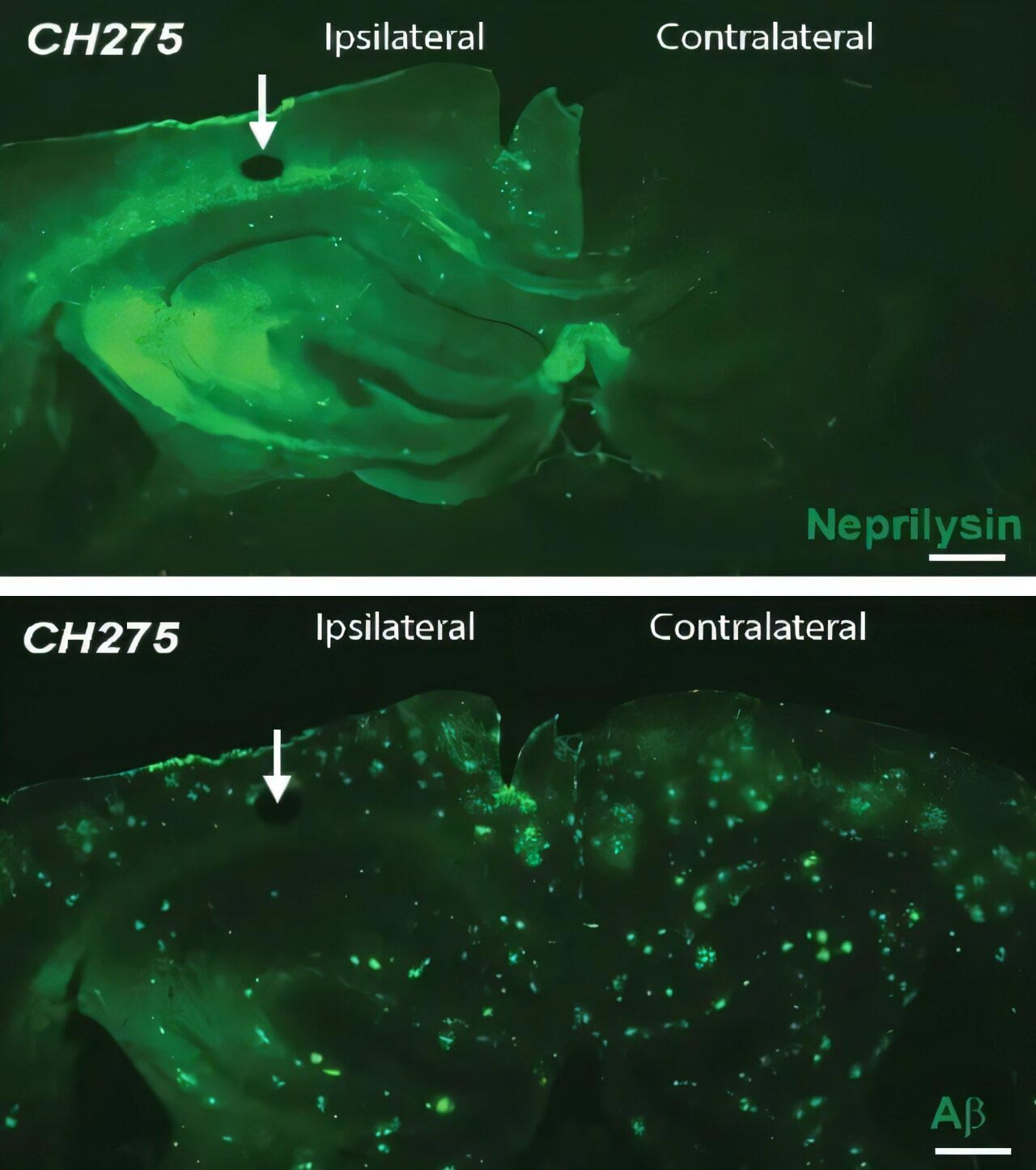
In mice with Alzheimer’s-like changes, this treatment raised neprilysin levels, reduced Aβ buildup, and improved behavior, all without causing serious side effects.

“Our findings show that the brain’s own defense against amyloid beta can be strengthened by stimulating these receptors,” says Per Nilsson, docent at the Department of Neurobiology, Care Sciences and Society, Karolinska Institutet.
Moving beyond antibody therapies
Currently, the most advanced Alzheimer’s treatments are based on antibodies. These are associated with very high costs and can, in some cases, cause serious side effects.
“If we can instead develop small molecules that pass the blood-brain barrier, our hope is that we will be able to treat the disease at a significantly lower cost and without serious side effects,” says Per Nilsson.
SST1 and SST4 are so-called G protein-coupled receptors, which are often well-suited as targets for drug treatment. Drugs that target G protein-coupled receptors are generally inexpensive to manufacture and can be taken as tablets.
Reference: “Somatostatin receptor subtypes 1 and 4 regulate neprilysin, the major amyloid-β degrading enzyme in brain” by Per Nilsson, Karin Sörgjerd, Naomasa Kakiya, Hiroki Sasaguri, Naoto Watamura, Lovisa Johansson, Makoto Shimozawa, Satoshi Tsubuki, Zhulin Zhou, Raul Loera-Valencia, Risa Takamura, Misaki Sekiguchi, Aline Pegel, Stefan Schulz, Takashi Saito, Nobuhisa Iwata, Bengt Winblad and Takaomi C. Saido, 19 November 2025, Journal of Alzheimer’s Disease.
DOI: 10.1177/13872877251392782
The research has been funded by, among others, the Swedish Research Council, the Hållsten Research Foundation, the Alzheimer’s Foundation and by the private initiative Innovative ways to fight Alzheimer´s disease – Leif Lundblad Family and others and RIKEN. The researchers report no conflicts of interest.
Never miss a breakthrough: Join the SciTechDaily newsletter.
Follow us on Google and Google News.