This post was originally published on here
From the “first light” of the world’s largest sky survey to the first tipping point in renewable energy production, 2025 is likely to be remembered as a year of many firsts in the world of science.
As the year draws to a close, we take a look at some of the biggest science stories of the year, and why they matter.
The universe in high definition
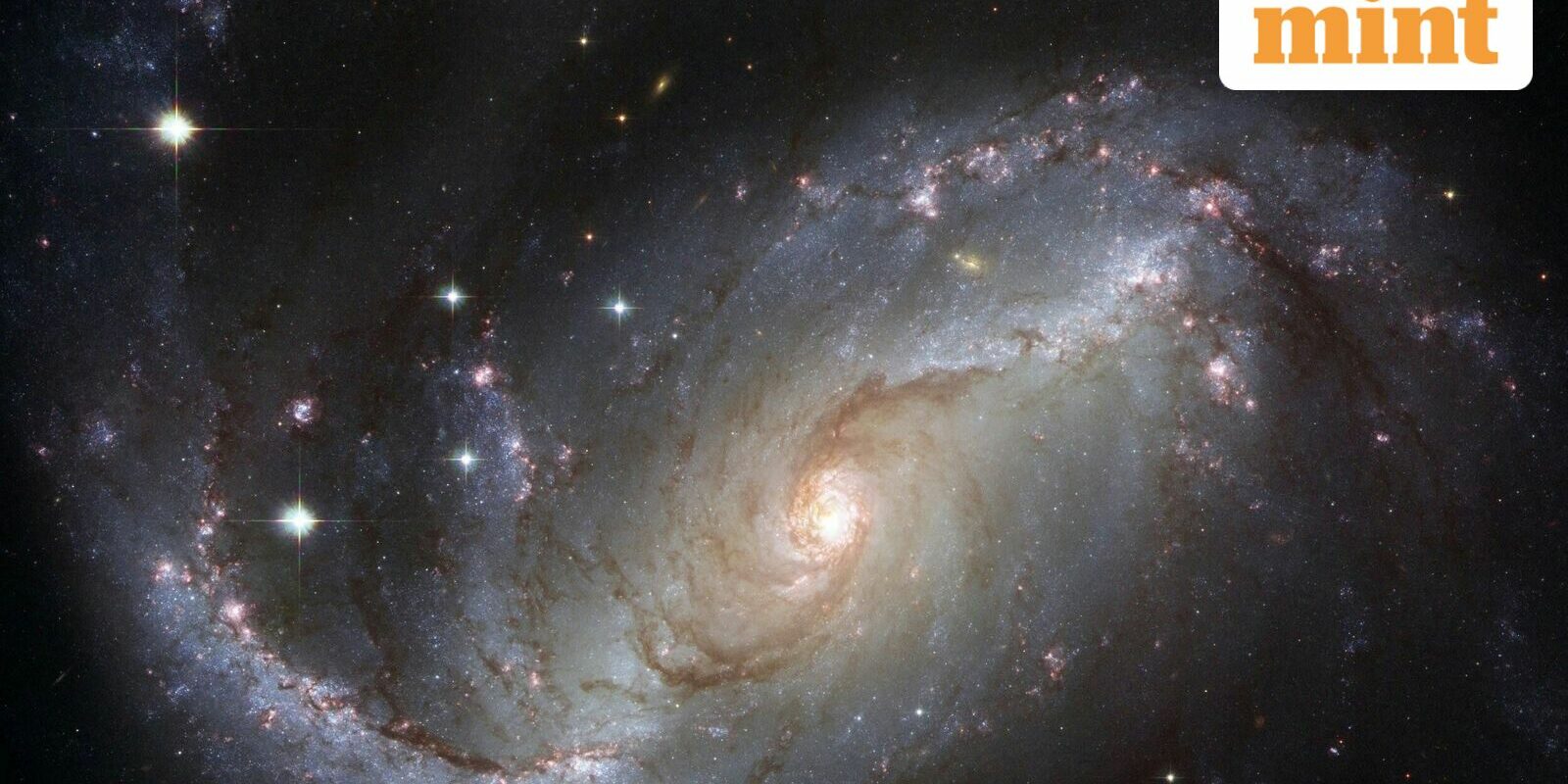
After over a decade of anticipation, the Vera C. Rubin Observatory opened its shutter this year, capturing its first light from Chile.
Named after the American astronomer who pioneered work on galaxy rotation rates, the observatory, which sports a 3,200-megapixel camera—the largest ever constructed—promises a look at the universe like never before.
Unlike telescopes that focus on one target of observation at a time, the newly-opened observatory will photograph the entire visible southern sky every few nights, creating a 10-year time-lapse motion picture of the universe, allowing humankind to watch the cosmos breathe in real-time.
The observatory, over the course of its lifetime, is expected to catalogue approximately 20 billion galaxies and 17 billion stars, in addition to capturing millions of supernovae, asteroids, and small Solar System bodies.
With full survey operations set to begin from early 2026, data from the observatory is expected to finally reveal the nature of dark energy and dark matter in the coming years.
Renewables overtake coal
The argument that renewables are too expensive or unreliable died a meek death in 2025 as clean energy, for the first time ever, overtook coal in terms of electricity generation.
Driven by plummeting hardware costs and a massive surge in solar energy capacity across Europe and China, renewables crossed a tipping point, relegating coal to second place and marking a psychological and economic milestone for the much-needed transition to green energy.
Having passed the tipping point, the focus for the remainder of the decade, with regard to renewable energy, is expected to shift to storage and grid modernization.
A roadblock for Huntington’s Disease
Huntington’s Disease, up until this year, was considered to be a death sentence, with patients typically receiving only palliative care as the genetic disorder destroyed their brains.
No more. Clinical trials led by neuroscientist Sarah Tabrizi successfully demonstrated that the disease’s progression could be slowed by 75%, offering a glimmer of hope for patients.
The first “disease-modifying” success for Huntington’s and a demonstration of the “gene silencing” approach, Tabrizi’s work paves the way for patients to receive actual treatment rather than mere end-of-life care.
It also proves that neurodegenerative diseases previously thought to be incurable through drug-based treatments can be tackled, and the success has already accelerated parallel trials for other diseases affecting the brain, from Alzheimer’s to Parkinson’s.
The interstellar visitor
Science aficionados and beyond, the entire world in 2025 was captivated by a rare visit from an interstellar object, dubbed 3I/ATLAS.
The third interstellar visitor to be documented in our corner of the galaxy, the peculiar nature of 3I/ATLAS sparked wild conspiracy theories of it being an alien spacecraft.
Given the hype, space agencies around the world rallied to track 3I/ATLAS as the comet passed through the Solar System, giving scientists a “free sample” of objects from alien star systems that revealed a chemical fingerprint unlike anything found in our own solar backyard.
The detailed tracking of 3I/ATLAS also paved the way for future “interceptor” missions, with space agencies planning spacecraft that will sit in orbit to physically chase down and sample the next visitor.
Personalized genetic editing
This year also saw scientists come up with a personalized solution for rare genetic disorders, a first in the history of genetic editing.
The breakthrough came via attempts to treat KJ, a baby born with a unique mutation that no drug could cure.
Using CRISPR technology to programme a custom editor for KJ, scientists manufactured the cure and administered it in record time, fixing the error in the baby’s liver cells.
The breakthrough, which served as a proof-of-concept for the “N=1 Medicine” idea (medicine for a population of one), now raises questions about the entire model of the pharmaceutical industry, proving that specific codes can be written to save a single life.
AI going green?
Artificial intelligence (AI) has been a buzzword since OpenAI’s chatbot ChatGPT came into the mainstream a few years back, but recent conversation about AI has centred around its exorbitant energy demands.
However, in 2025, the release of China’s DeepSeek open-source model proved that top-tier AI reasoning need not go hand-in-hand with massive energy consumption.
As US tech giants raced to build larger, power-hungry data centres, a team led by Liang Wenfeng in China demonstrated that AI could also be efficient: DeepSeek matched the performance of GPT-5 using only a fraction of computing power and energy used by the latter.
Not only did DeepSeek break the narrative that AI is likely to spell environmental disaster, but it effectively democratized AI access, allowing universities and smaller labs to run ‘super-intelligence’ class AI models on local hardware.
Quantum advantage realized
In another breakthrough from China, researchers took a step towards realizing quantum advantage after a new superconducting quantum chip, the Zuchongzhi 3.0, solved a complex sampling problem a whopping 1 quadrillion times faster than the world’s fastest classical supercomputer, Frontier.
Despite the calculation being of an abstract nature, the stability of the system proved that quantum hardware was scaling faster than predicted.
The downside? Well, internet security, in its current state, is looking at obsoletion, forcing governments to scramble to update encryption standards. A machine capable of breaking all known online security is no longer a sci-fi possibility: it’s an engineering roadmap.