This post was originally published on here
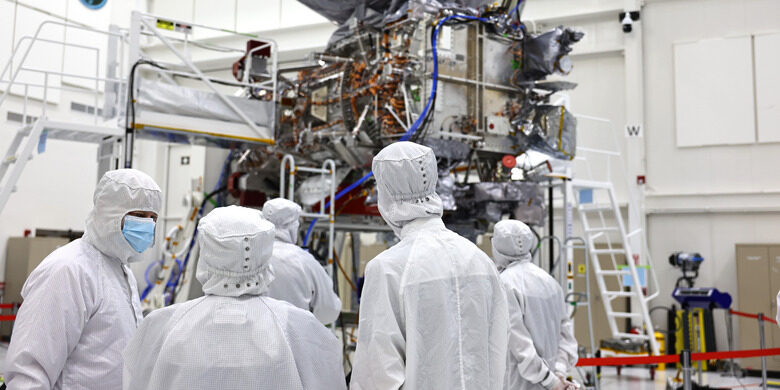
The search for life on Mars may continue, but the search for life going to Mars just took a big turn. Way back in 2007, scientists took samples from the cleanroom where the Phoenix Mars rover was built. This year, with modern genome sequencing technology, they finally took a peek at what was there. And, boy: they found no less than 26 brand new species of bacteria, all tolerant to extreme conditions. These things survived disinfectants and UV light, slipped through air filters, and toughed it out through temperature and humidity controls. It is entirely possible they oozed their way onto the Phoenix rover, which means they just might have made it all the way to the red planet. I didn’t know it was possible for something weirder than Elon’s sperm to make it to Mars, but here we are.
As Live Science reports, the next step is to build a planetary simulation chamber to see if these microorganisms could survive through space and on Mars. That’s a pretty tall order: space is a vacuum, is extremely cold, is exposed to intense solar radiation, and also has no food. It’s a zero-star motel, basically. Then again, one of the reasons these things are so hard to detect is that they are able to resurrect themselves from near-death states, per National Geographic. A germ could theoretically “die,” go all the way to Mars, and then wake back up in alien soil. And once in strange soil, they do start exhibiting strange behaviors, meaning they get even weirder. Yes, zombie creatures from another world could indeed land on a defenseless planet, but in a twist, it’s the Earthlings who would be the invaders.
The smallest astronauts
Nasa/Getty Images
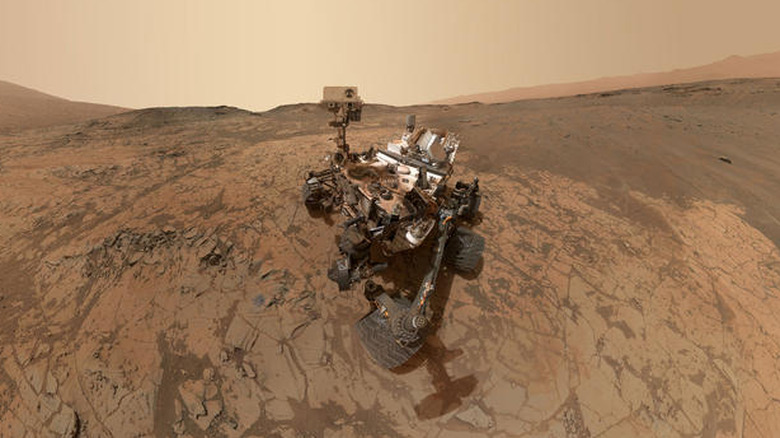
Ironically, what was the Phoenix rover trying to do? Find signs of organic molecules. The possibility that Earth germs could hitch a ride risks a false positive in the search for extraterrestrial life. Turns out, that life might be less “extra” and more “terrestrial.” Scientists would check any life signs to see if they could be from Earth, but even then, scientists don’t know every single germ. They just found 26 more! Inside a NASA cleanroom! Worse, of course, is that such contamination could ruin the pristine Martian surface, corrupting scientific inquiries into the red planet, its origins, and its lessons for our own world.
For the moment, though, there’s not much to be done. Those cleanrooms are the very cutting edge of sterilization; it we know how to do it, we’re already doing it. So studying these new superbugs may help to find new methods, which could in turn be applied in hospitals and other clean environments. Until then, the chance that a plucky little bacterium might go on a cosmic journey and possibly plant its microscopic flag in red dust is just one that space agencies have to take.