This post was originally published on here
Smog and mirrors: A Wknd interview with an aerosol scientist and advisor to WHO
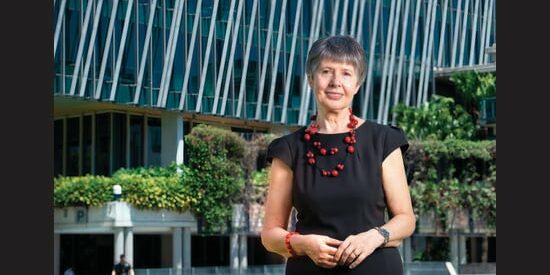
Lidia Morawska recently won Australia’s Prime Minister’s Prize for Science. Her focus is ultrafine particles. What we breathe in really worries her, she says.
It’s like a giant ocean above our heads. It holds, like the oceans, a host of unanswered questions.
Among the ones that concern us most directly: What happens to what’s in the air we breathe? How much gets into the bloodstream; what impact does it have?
Zooming out, more queries take shape: In what ways can the tiniest particles in the air affect monsoon patterns, or intensify storms? How do these aerosols affect disease transmission?
Lidia Morawska, 73, a Polish-Australian aerosol scientist, has been researching some of these questions for 35 years. Her area of focus is a particularly invasive component: ultrafine particles (UFP; smaller than the smallest particulate matter of 2.5 microns captured by air-quality monitors).
One pivotal movement she piloted changed how the World Health Organization (WHO), and the world, treated the Covid-19 virus amid the pandemic.
It wasn’t just large droplets settling on surfaces that helped it spread. It wasn’t just about doorknobs and communal furniture.
Microdroplets, light and small, were lasting far longer than existing calculations accounted for, she told WHO (Morawska has been an advisor to the global body since 1998). These were exhaled during breathing, talking and coughing, and were entering the respiratory systems of healthy people.
The physics of particle transmission is something Morawska began studying during the SARS (Severe Acute Respiratory Syndrome) epidemic of 2003. There was so little existing research, she says, that it brought home to her “how little we still know as a species”.
By the time Covid-19 struck, the understanding was there, but not immediate acceptance.
“It was truly distressing to see advisories on washing hands but nothing on masks, early on; to see people step out to the supermarket in gloves but no masks,” she says.
A group of 240 scientists around the world eventually “pushed really hard, and our open letter, after several obstacles, compelled WHO to accept the airborne pathway of transmission”. By the time WHO factored airborne transmission into its advisories, FAQs and protocols, the clocks had turned to July 2020.
It had been “beyond frustrating”, Morawska says. “People were dying because they didn’t have the correct information and protocol. I still struggle to understand why it took so long.”
For her research, and her advocacy, Morawska was named one of Time magazine’s 100 most influential people in the world, in 2021. She recently won the $250,000 Prime Minister’s Prize, Australia’s most prestigious science award.
The prize is a matter of pride, but the greater pride comes from even incremental progress, she says.
A critical turning point, for instance, came in 2021, when WHO included a section on UFP in its global air quality guidelines, recognising it as a threat, after a struggle that lasted years. Then, in 2024, the European Commission added UFP to its Ambient Air Quality Directive, meaning that there will now be stricter monitoring and new standards set.
People tend to treat UFPs like they’re an irritant rather than a threat; invisible dust and traces of smog. But what they are made up of, really, is soot, sulphates, nitrates and trace metals: from car engines, cooking, industrial effluents, chemicals in our cleaners and printers, as well as from volcanic eruptions, ocean spray and wildfires.
These tiny particles, thousands of times smaller than the width of a human hair, can enter the lungs and the bloodstream, cause inflammation, oxidative stress and cardiovascular and respiratory diseases.
In indoor spaces, particularly those not well ventilated, their concentration can sometimes be much higher than in the outdoors. “Most of us spend 90% of our time indoors but rarely think about the quality of the air in our homes or workplaces,” Morawska says.
The aerosol scientist grew up in Poland, the daughter of a chemist and an electrical engineer, in a home full of “conversations on just about everything”. From an initial interest in nuclear physics, which she studied in Krakow and Toronto, she switched to UFPs. She moved to Australia in 1991, to eventually set up the International Laboratory for Air Quality and Health at the Queensland University of Technology.
What’s next for her, in the battle against one of humanity’s most insidious threats? Excerpts from an interview.
.
* What is it that holds us back from greater action on this front?
This is a complex web of too many stakeholders and technical difficulties.
Take indoor air, because it is even less-discussed. It varies from room to room, in public and private buildings, necessitating measurements everywhere. Yet, most buildings lack any monitoring.
Where there is monitoring, there are jurisdictional silos. Schools fall under education, hospitals under health, hotels under hospitality. No one is coordinating. The scale is overwhelming, so inaction prevails.
.
* What do you think will move the needle on this issue?
We inhale air 12 times a minute. Without public realisation of the problem, without awareness and advocacy, governments won’t act.
First, we need pragmatic monitoring and phased regulation. A paper we published in Science in 2024 provides a blueprint that includes using low-cost sensors to assess four key metrics: PM2.5, CO2 (a proxy for ventilation and infection risk), carbon monoxide (CO; in combustion areas), and ventilation in mechanical systems.
To begin with, this would help us gather data and understand the scale of the problem. Parallel source control — for instance, regulating cleaning products to prevent avoidable pollutants — is essential too.
While ultrafine particles have always existed, their production from natural sources, such as wildfires, has been sporadic. In the modern era, the combustion of fossil fuels, wood, etc, is a continuous and everyday process. A larger population means greater energy needs. We need to move away from fossil fuels as the source of that energy.
.
* If you had a magic wand that could effect any kind of change, what would it be?
A big wish would be that science, and nothing else, was treated as the primary universal basis for decision-making.
I would also want school education to give children a holistic understanding of science, so they can operate using scientific principles.
In the field of indoor air quality, I would wish for mandatory measurement and action in all countries because we spend more than 90% of our time indoors.
.
* What would you be if you weren’t a physicist?
I don’t know what I’d do if I wasn’t a physicist. Perhaps I would be a scientist in another field. And perhaps I’d be writing, which is also a key part of being a scientist. Without writing and communicating science, we can’t change anything.

One Subscription.
Get 360° coverage—from daily headlines
to 100 year archives.

E-Paper

Full Archives

Full Access to
HT App & Website

Games
Already subscribed? Login