This post was originally published on here
“NIDHI, PURSE and VAIBHAV Programmes Strengthen Startups, Universities and Global Scientific Collaboration”
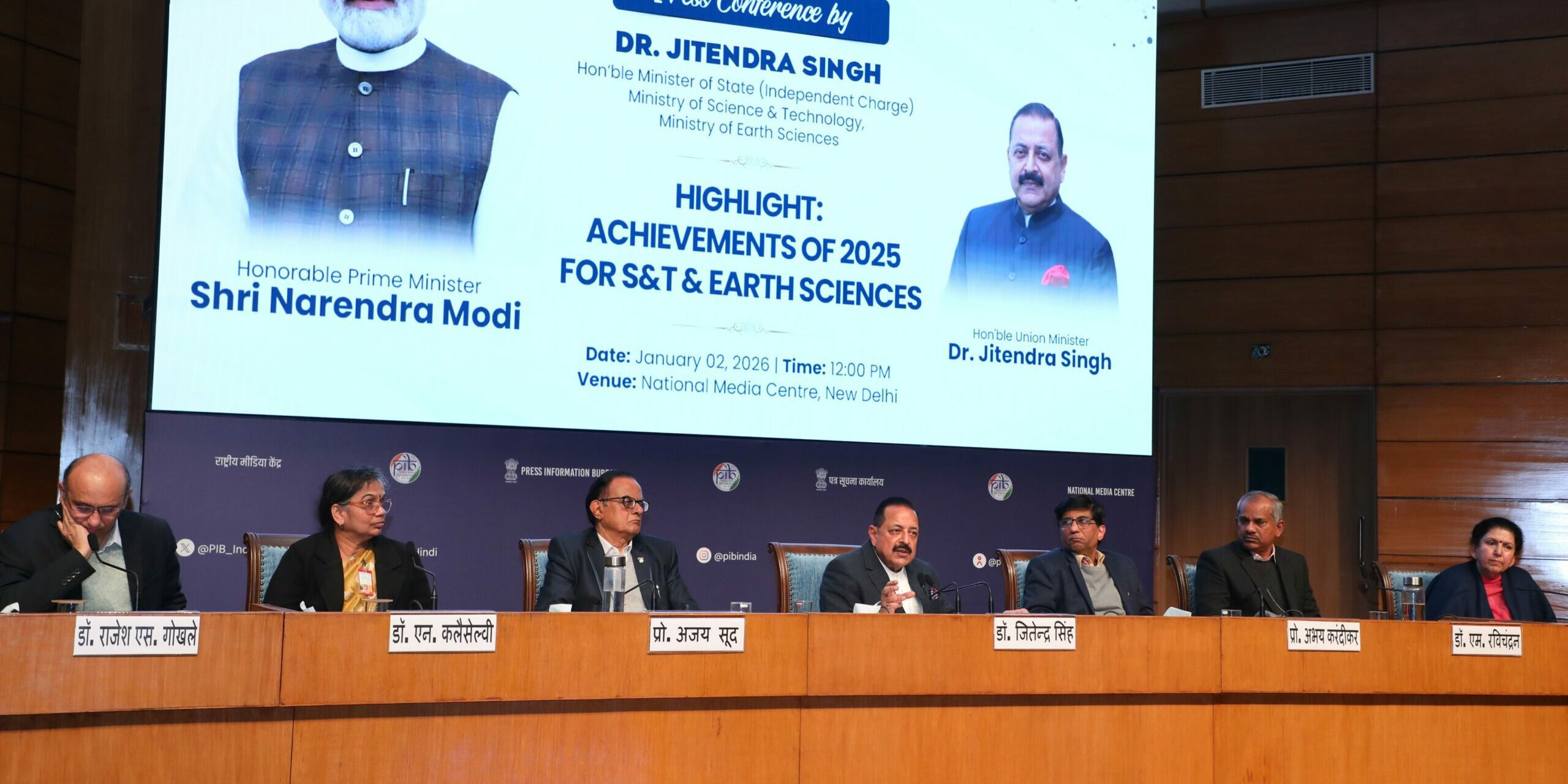
New Delhi | January 2, 2026- Union Minister of State (Independent Charge) for Science and Technology Dr. Jitendra Singh on Thursday said that India’s ongoing reform journey is being powered by science, technology, and innovation, with digital and scientific tools now embedded at the heart of governance and economic transformation.
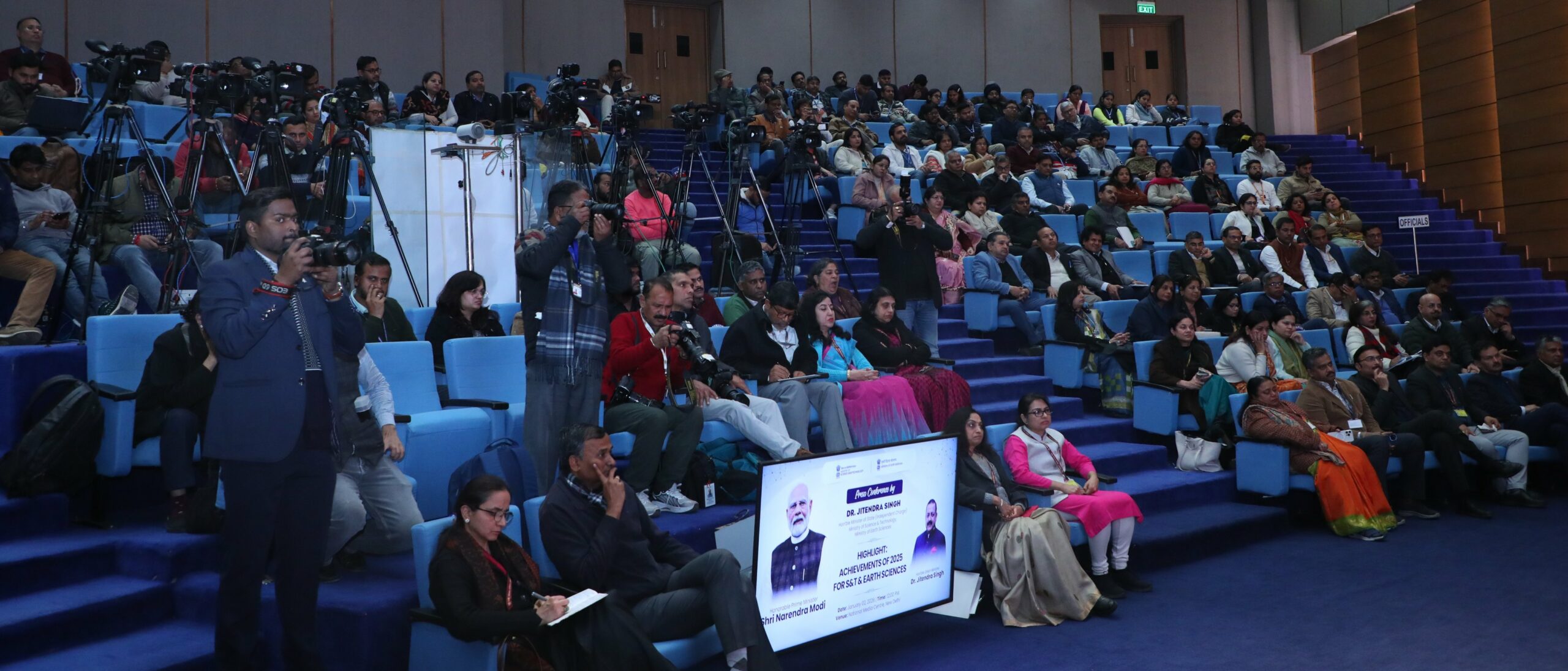
Addressing a year-end media briefing on the achievements of the Ministry of Science & Technology and the Ministry of Earth Sciences, the Minister said that innovation-led sectors will define India’s growth trajectory over the next two decades.
Dr. Singh highlighted India’s ambitious push into space exploration and deep-sea research, stating that flagship initiatives such as the Gaganyaan mission and the Deep Ocean Mission represent a historic dual leap.
He said India is preparing simultaneously for human spaceflight and human-occupied deep-sea exploration, with plans to send astronauts into orbit while also deploying a submersible capable of reaching depths of 6,000 metres. These milestones are expected to be achieved by 2027, placing India among a select group of technologically advanced nations.
Among the major policy highlights, the Minister pointed to the creation of the ₹1 lakh crore Research Development and Innovation (RDI) Fund, calling it an unprecedented move to directly support private-sector R&D.
He also spoke about the establishment of the Anusandhan National Research Foundation (ANRF), aimed at widening access to research funding beyond a few elite institutions. The ANRF, he said, will mobilise a significant share of resources from industry, philanthropy, and non-government sources, helping democratise India’s research ecosystem.
Dr. Singh outlined the impact of programmes such as NIDHI, PURSE, PRERNA, and VAIBHAV, which are focused on strengthening startups, upgrading university research infrastructure, and enhancing global scientific collaboration.
The VAIBHAV initiative, in particular, was cited for enabling structured engagement with the Indian scientific diaspora, helping bring global expertise into India’s research landscape.
Highlighting the role of the Council of Scientific and Industrial Research (CSIR), the Minister showcased innovations that are being translated into real-world applications. These include steel slag-based roads offering durable infrastructure solutions, indigenous pharmaceutical breakthroughs such as India’s first home-grown antibiotic Nafithromycin, and advances in sustainable food products based on millets.
He also referenced the HANSA-NG two-seater trainer aircraft, developed under a public-private partnership, as an example of Indian innovation finding acceptance beyond domestic markets.
Public engagement initiatives like ‘One Day as a Scientist’ were noted for bringing students and communities closer to scientific research.
On the Earth Sciences front, Dr. Singh said India has made notable progress in weather forecasting, particularly through the India Meteorological Department’s nowcasting systems, which enable accurate short-term predictions.
He also highlighted the Lakshadweep desalination plant as a model for sustainable freshwater generation using ocean resources, along with ongoing work in marine observation systems, ocean energy, and climate resilience planning.
Concluding the briefing, the Minister said India has transitioned from being a technology importer to an exporter in key areas such as vaccines, medical devices, and biotechnology. He added that India’s rapidly expanding bioeconomy is emerging as a major engine of growth.
“Science-led reforms will accelerate India’s rise as a global economic and innovation powerhouse well before 2047,” Dr. Singh said, expressing confidence that the country’s best phase of technological advancement lies ahead.
Senior officials including the Principal Scientific Adviser to the Government of India and heads of major science departments were present during the briefing.