This post was originally published on here
Scientists are raising concerns about free-living amoebae, resilient microbes that can survive in water systems and enable the spread of deadly infections.
Scientists specializing in environmental and public health are drawing attention to a group of pathogens that has received little public notice but is becoming increasingly dangerous: free living amoebae. In a recent perspective article published in Biocontaminant, the researchers explain that these microscopic organisms pose a rising global health concern.
They point to climate change, deteriorating water infrastructure, and limited systems for monitoring and detection as key factors allowing these pathogens to spread and persist.
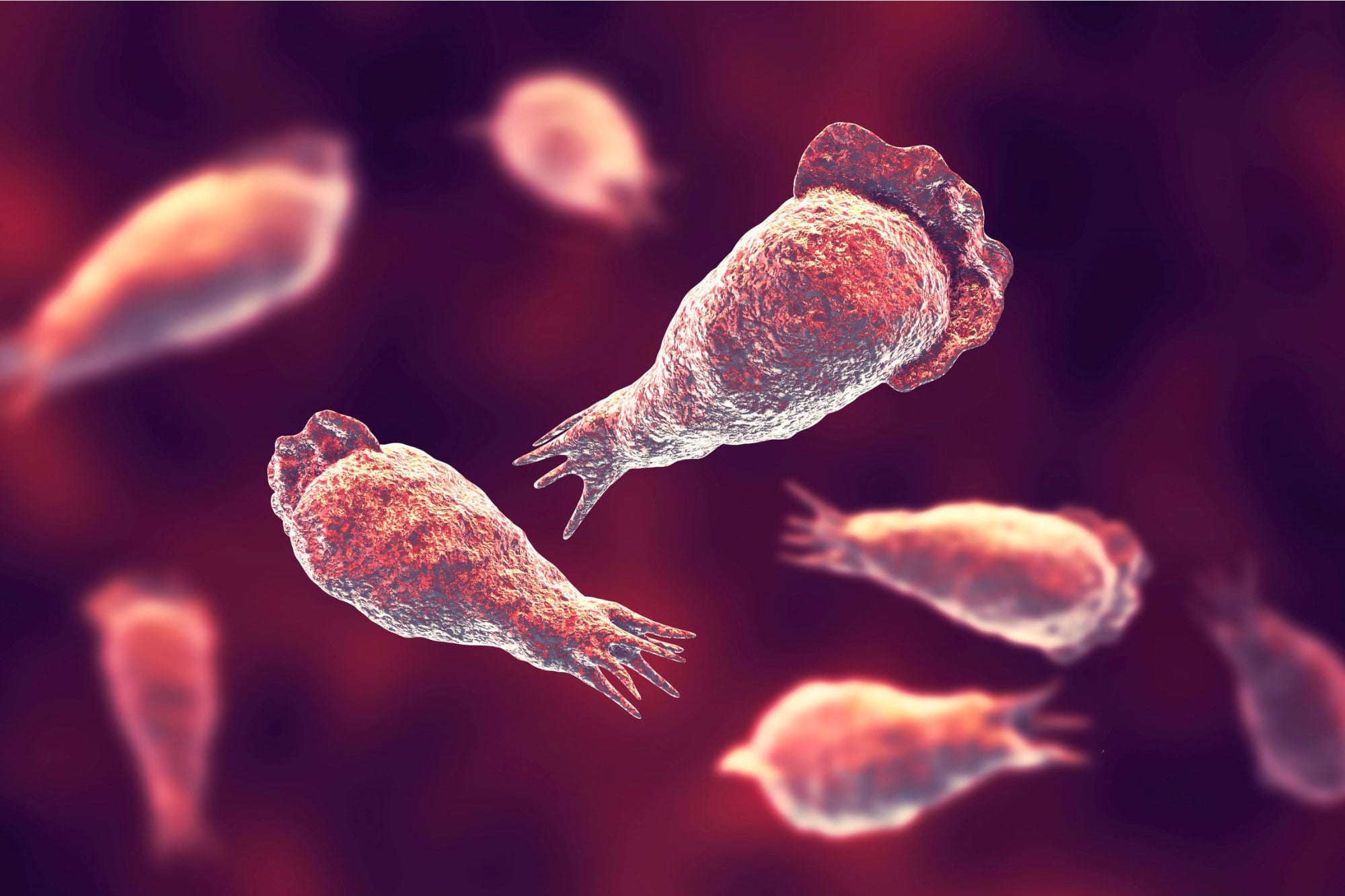
Amoebae are single-celled organisms that naturally live in soil and water. Most species do not cause harm, but a small number are capable of triggering severe disease. One of the most well-known examples is Naegleria fowleri, commonly called the brain-eating amoeba. This organism can cause a rare but nearly always fatal brain infection when contaminated water enters the nose, most often during activities such as swimming.
Extreme Survivors in Modern Water Systems
“What makes these organisms particularly dangerous is their ability to survive conditions that kill many other microbes,” said corresponding author Longfei Shu of Sun Yat sen University. “They can tolerate high temperatures, strong disinfectants like chlorine, and even live inside water distribution systems that people assume are safe.”
The authors also emphasize that amoebae act as hidden carriers for other harmful microbes. By sheltering bacteria and viruses inside their cells, amoebae can protect these pathogens from disinfection and help them persist and spread in drinking water systems. This so-called Trojan horse effect may also contribute to the spread of antibiotic resistance.
Climate Change Expands the Risk
Climate warming is expected to worsen the problem by expanding the geographic range of heat-loving amoebae into regions where they were previously rare. Recent outbreaks linked to recreational water use have already raised public concern in several countries.
The researchers call for a coordinated One Health approach that connects human health, environmental science, and water management. They urge stronger surveillance, improved diagnostic tools, and the adoption of advanced water treatment technologies to reduce risks before infections occur.
“Amoebae are not just a medical issue or an environmental issue,” Shu said. “They sit at the intersection of both, and addressing them requires integrated solutions that protect public health at its source.”
Reference: “The rising threat of amoebae: a global public health challenge” by Jianyi Zheng, Ruiwen Hu, Yijing Shi, Zhenzhen He and Longfei Shu, 5 December 2025, Biocontaminant.
DOI: 10.48130/biocontam-0025-0019
Never miss a breakthrough: Join the SciTechDaily newsletter.
Follow us on Google and Google News.