This post was originally published on here
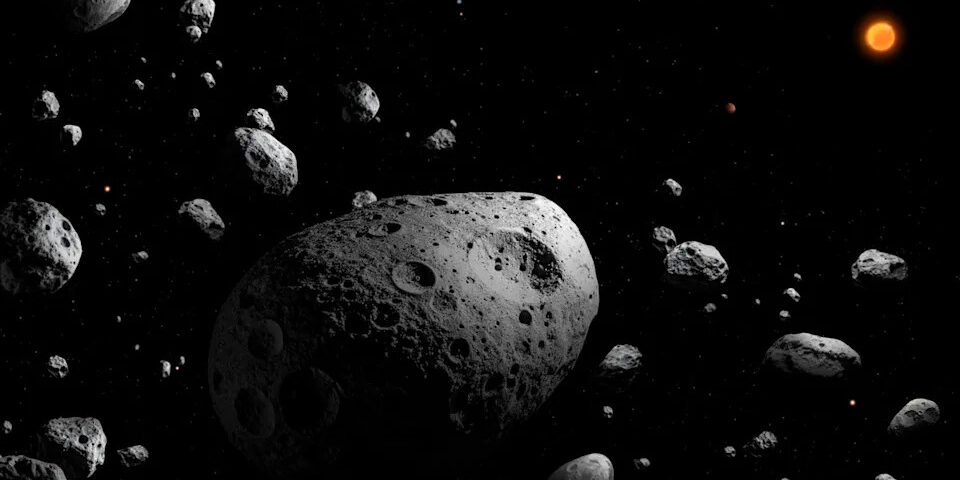
Scientists have discovered a “record-breaking” asteroid that is nearly the size of eight football fields.
The object, known as “2025 MN45,” is also remarkable for its speed, and is the fastest-spinning asteroid larger than 1,640 feet found to date.
Stretching some 2,329 feet wide, 2025 MN45 rotates every 1.88 minutes as it orbits the sun in our solar system’s main asteroid belt.
The main asteroid belt is located just under 300 million miles from Earth and contains millions of asteroids of varying sizes up to 329 miles wide.
Advertisement
Advertisement
All asteroids rotate or more clumsily tumble while in orbit — but some move faster than others due to various factors such as the heat of the sun, collisions with other asteroids and what the asteroids are made up of.
Scientists have discovered the fastest-spinning asteroid with a diameter over 1,640 feet thus far (NSF–DOE Vera C. Rubin Observatory/NOIRLab/SLAC/AURA/P. Marenfeld)
How fast 2025 MN45 spins revealed to astronomers that it must be made from a high-strength material that keeps it from breaking up, unlike most asteroids that have been formed from smaller pieces held together by gravity.
“For objects in the main asteroid belt, the fast-rotation limit to avoid being fragmented is 2.2 hours; asteroids spinning faster than this must be structurally strong to remain intact,” the group of agencies explained in a statement. “The faster an asteroid spins above this limit, and the larger its size, the stronger the material it must be made from.”
2025 MN45 was one of nearly 2,000 asteroids that were discovered using data from the National Science Foundation and the Department of Energy’s Vera C. Rubin Observatory in Chile, using data from the world’s largest camera.
Advertisement
Advertisement
The observations were taken over the course of seven days in April and May of last year, as a part of the observatory’s “First Look” event.
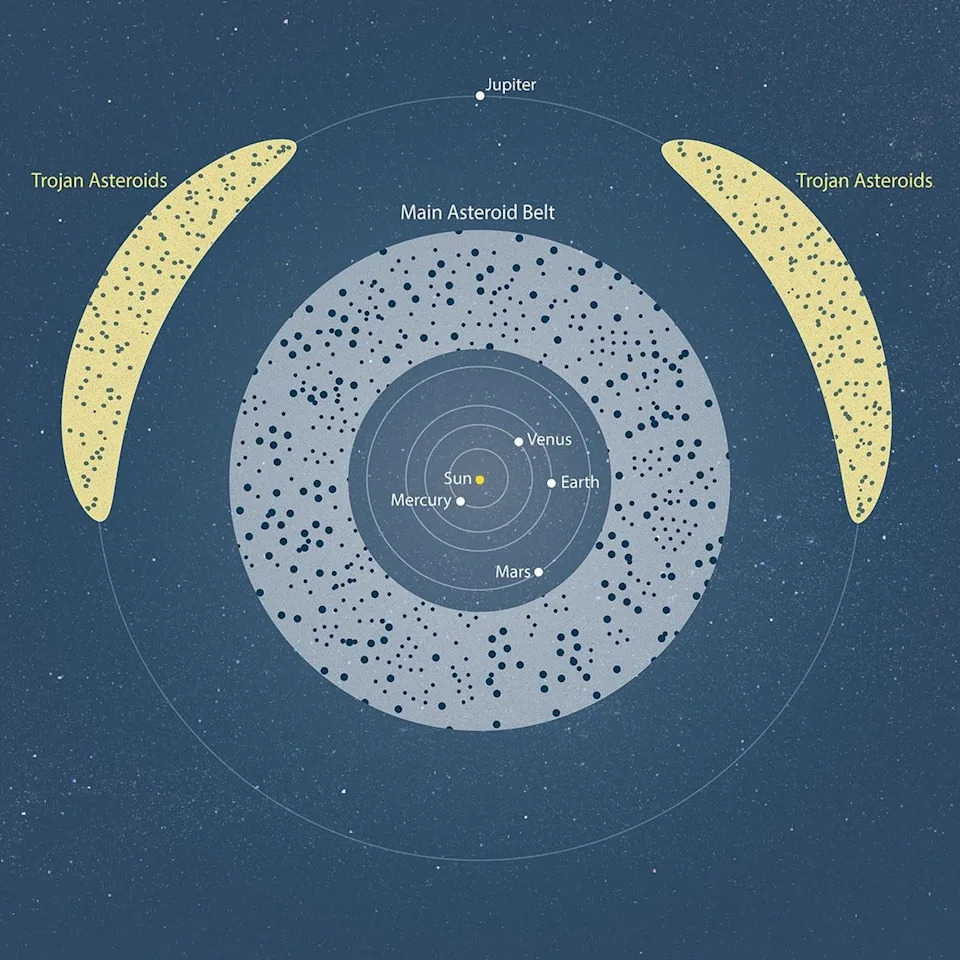
The main asteroid belt lies is shown on this illustration between between Mars and Jupiter, surrounding Earth, Mercury, Mars, Venus and the sun (NASA, ESA, Joseph Olmsted (STScI))
Within the 1,900 newly-discovered asteroids, they identified 16 super-fast rotating asteroids and three ultra-fast-rotating asteroids. Super-fast rotators complete their spin within between 13 minutes and 2.2 hours, and ultra-fast rotators do the same within fewer than five minutes, including 2025 MN45.
All 19 were longer than the length of a football field.
Most of the fast-rotators that have been found thus far are what are called near-Earth objects, which pass within 30 million miles of Earth’s orbit, or a third of the distance between the Earth and the Sun.
Advertisement
Advertisement
Anything within 4.6 miles of Earth’s orbit is considered to be potentially hazardous — although NASA says it is highly unlikely that an asteroid large enough to cause widespread damage will impact Earth for the next 100 years or more.
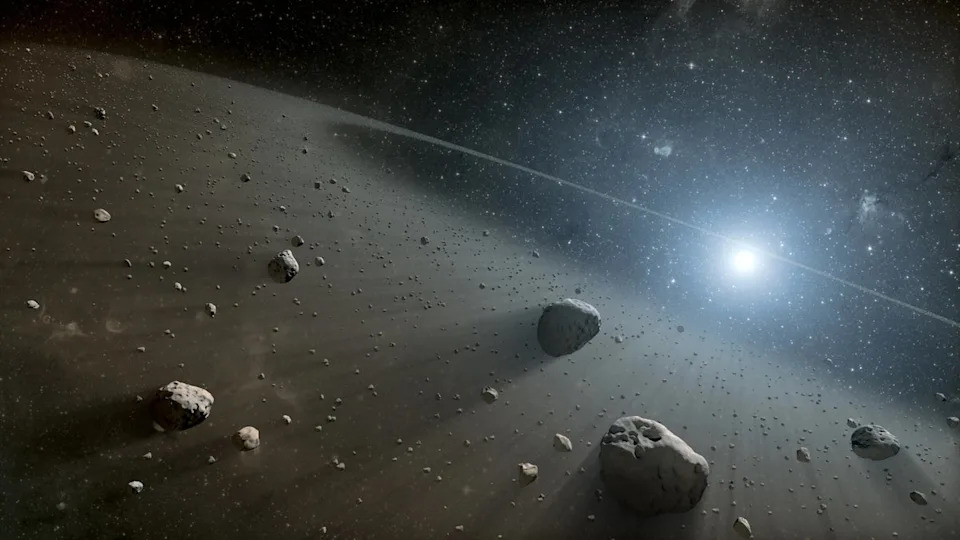
This NASA illustration shows the main asteroid belt orbiting the sun between Mars and Jupiter (NASA)
Scientists have found fewer fast-rotators in the main asteroid belt, orbiting the sun between Mars and Jupiter, because they are harder to see.
All but one of these asteroids were in the main asteroid belt, which NSF said showed how Rubin let scientists see the asteroids at farther distances than ever.
“As this study demonstrates, even in early commissioning, Rubin is successfully allowing us to study a population of relatively small, very-rapidly-rotating main-belt asteroids that hadn’t been reachable before,” Sarah Greenstreet, NSF NOIRLab assistant astronomer and lead of Rubin Observatory’s Solar System Science Collaboration’s Near-Earth Objects and Interstellar Objects working group, explained.
Advertisement
Advertisement
In the upcoming months, the observatory will begin its Legacy Survey of Space and Time, which is a mission to scan the Southern Hemisphere night sky over the course of a decade.
“NSF–DOE Rubin Observatory will find things that no one even knew to look for,” Luca Rizzi, an NSF program director for research infrastructure, said.