This post was originally published on here
Scientists discovered never-before-seen creature in Great Salt Lake

The new discovery changed the way scientists understands the Utah’s Salt Lake ecosystem
By The News Digital
January 11, 2026
Scientists has discovered a never-before-seen creature in great Salt Lake as ‘roundworm.’
The newly found worm species has been named ‘Diplolaimelloides woaabi.’
The research team, led by University of Utah biology professor Michael Werner, worked with the Northwestern Band of the Shoshone Nation suggested ‘Wo’aabi,’ an Indigenous word meaning “worm.”
According to researchers, the newly found worm species only exists in Salt Lake, marking them as the third known animal group able to survive the lake’s extreme salinity.
The other species include brine shrimp and brine flies, which are important food sources for millions of migratory birds that stop at the lake each year.
Research evaluates that the origin and how the species got there remain a mystery, with theories ranging from ancient oceans to birds transporting it across continents.
A newly discovered microscopic worm living in the Great Salt Lake has been identified as a never-before-seen species, named in honor of Indigenous heritage.
Scientists studying the Great Salt Lake have identified the species as completely new to science, with evidence suggesting there may be more.
The discovery could help scientists track the lake’s health as conditions rapidly change.
“It’s hard to tell distinguishing characteristics, but genetically we can see that there are at least two populations out there,” said the researchers.
Researchers from the University of Utah recently published a paper describing the tiny roundworm and formally naming it in a way that honors the Indigenous people whose ancestral lands include the lake.
Why Nematodes Matter?
The nematodes are potentially an important discovery for the lake to understand its ecosystem.
These nematodes are among the most widespread animals on Earth. They are found in nearly every environment imaginable, including polar ice, deep-sea hydrothermal vents, and ordinary backyard soil.
Most of them are smaller than a millimeter, which is why they often go unnoticed.
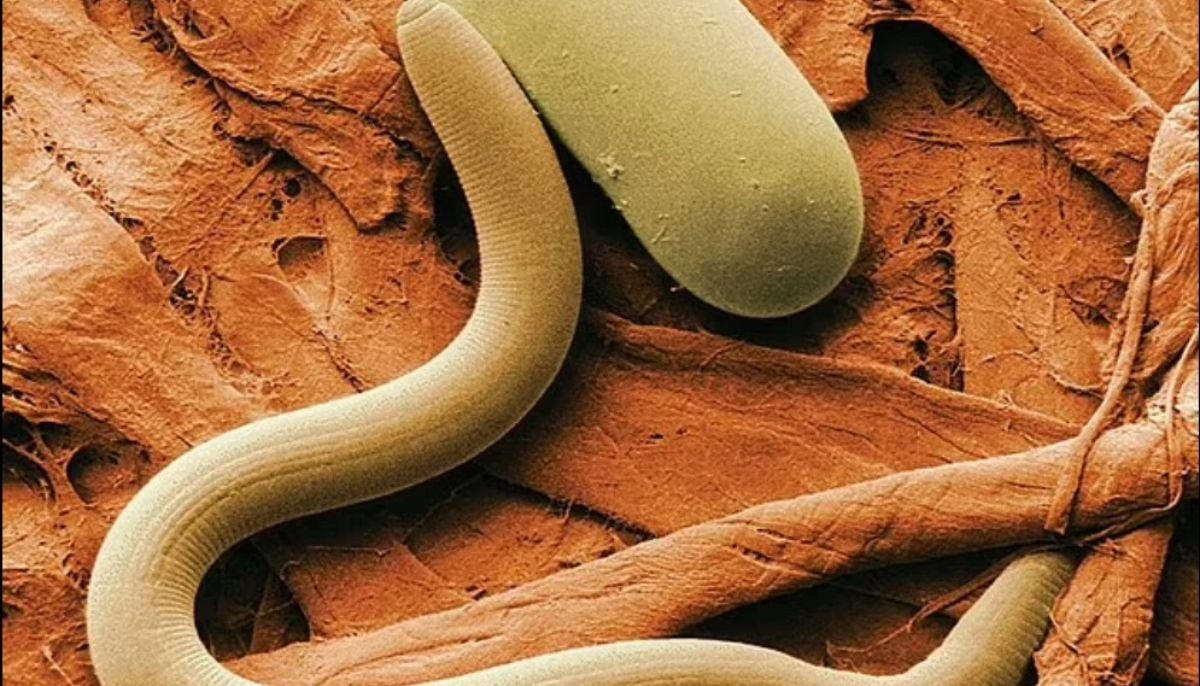
Despite their size, nematodes are extraordinarily abundant. Scientists have identified more than 250,000 species so far, making them the most numerous animal phylum in both land and water ecosystems.
Roughly, 80% of animal life in terrestrial soils and about 90% of animals living on the ocean floor are nematodes.
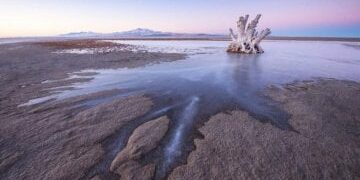
Field expeditions led by Julie Jung uncovered nematodes living in the lake’s ‘microbialites’ are hardened, mound-like structures formed by microbial communities on the lakebed.
The research appears in the November 2025 issue of the Journal of Nematology under the title, “Diplolaimelloides woaabi: A Novel Species of Free-Living Nematode from the Great Salt Lake, Utah.”
More From Science News