This post was originally published on here
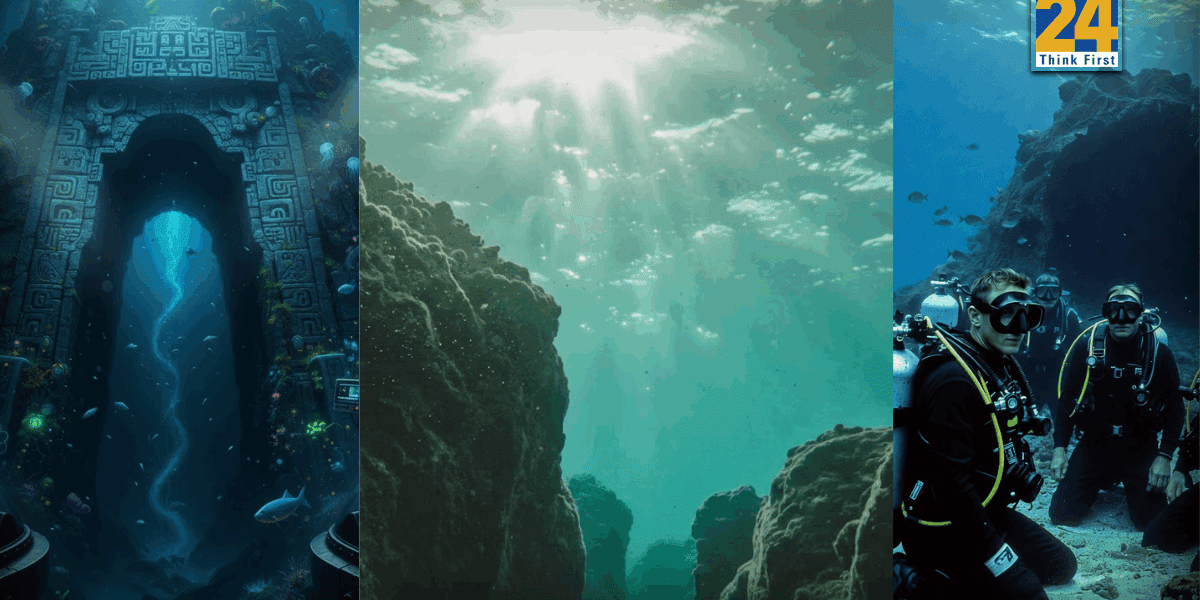
A routine scientific survey off the coast of Mexico has led to one of the most surprising ocean discoveries in recent years. What was once believed to be a deep but limited underwater pit has now turned into a mystery that continues to puzzle researchers. The massive underwater hole, named Tam Ja Blue Hole, has been confirmed to be far deeper than initially estimated, making it the deepest known blue hole on Earth.
A Discovery Deeper Than Expected
When scientists first began studying the Tam Ja Blue Hole, they estimated its depth at around 900 feet. However, a fresh and more detailed measurement changed everything. Advanced instruments revealed that the hole plunges to nearly 1,380 feet, overtaking China’s famous Dragon Hole, which previously held the record.
What shocked researchers even more was the fact that they still haven’t reached the bottom. At 1,380 feet, the measuring equipment ran out of cable, but the hole continued further down. This suggests that Tam Ja could be even deeper, with its true depth still unknown.
Strange Conditions Inside the Blue Hole
During the exploration, scientists noticed several unusual features inside the blue hole. Special underwater machines were sent down to record temperature, salinity, and pressure levels. Normally, as depth increases, water becomes colder and saltier. But at a depth of about 1,312 feet, researchers found something unexpected.
At this extreme depth, the water’s temperature and salt content were almost identical to the surrounding ocean. This goes against typical ocean behavior and has raised new questions. Scientists believe this could be due to an extensive network of underwater caves and tunnels hidden inside the blue hole, allowing seawater to flow in and out.
Hidden Caves and Tunnels Below the Sea
Based on the data collected, experts suspect that Tam Ja is not just a single vertical pit. Instead, it may be connected to other parts of the ocean through underground passages. These caves and tunnels could explain why the water deep inside behaves more like open seawater rather than trapped, stagnant water.
If confirmed, this would make Tam Ja one of the most complex underwater structures ever studied.
Known to Fishermen, Unknown to Science
Despite modern satellite mapping and ocean studies, Tam Ja remained unnoticed by scientists until 2021. Interestingly, local fishermen had known about the deep blue spot for years. It was their observations that eventually led researchers to investigate the area.
Even today, the deepest point of the hole remains unexplored, as current equipment has limitations.
What Is a Blue Hole?
Blue holes are large underwater sinkholes formed when the seabed collapses, similar to sinkholes on land. Because of their depth, they appear dark blue when seen from above, standing out against lighter surrounding waters. While visually stunning, blue holes are also extremely dangerous due to their depth, pressure, and unpredictable conditions.
The Tam Ja Blue Hole is now a powerful reminder of how much of Earth’s oceans remain unexplored—and how many secrets still lie beneath the surface.