This post was originally published on here
While many welcome plan to make Moral Science compulsory from upcoming academic year, some point to curriculum overload and question efficacy of learning values through classroom teaching
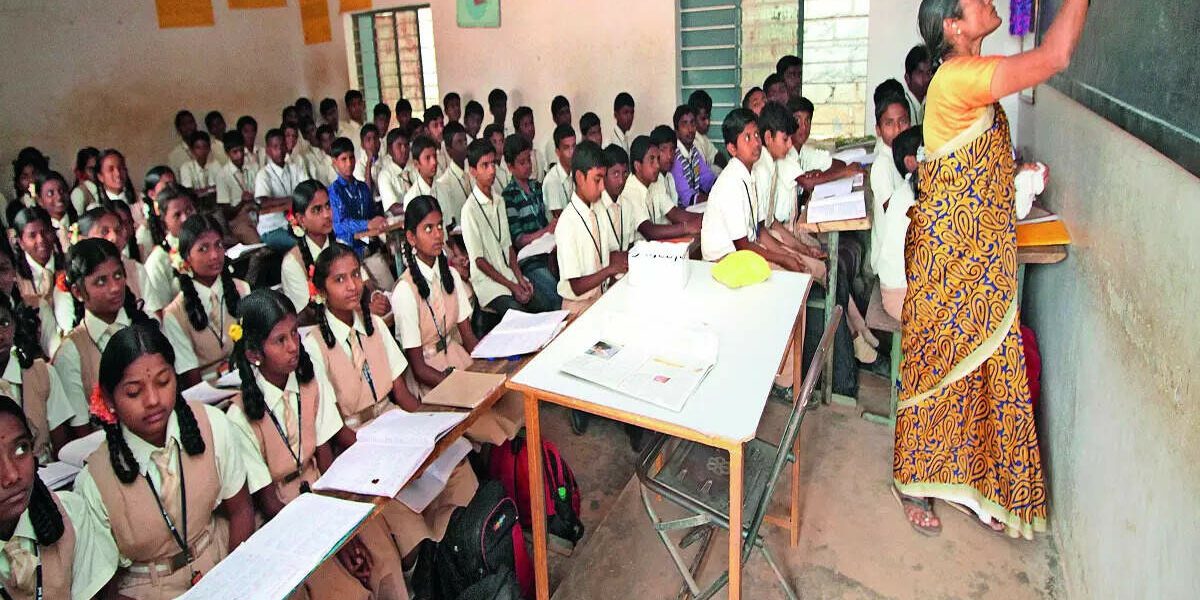
The State government’s decision to reintroduce Moral Science as a compulsory subject from the next academic year has triggered a wider debate among educators, parents and students. Announcing the move, Minister for School Education and Literacy Madhu Bangarappa said the subject would focus on strengthening human values, civic responsibility, health awareness, environmental sensitivity and ethical living among students.
Government view
Speaking about the rationale, Bangarappa said schools play a crucial role beyond academic learning. “Education is not only about marks and competitive exams. It is also about shaping responsible citizens. Moral Science will help children understand values such as empathy, honesty, respect and social duty from a young age,” he said. Officials added that the curriculum would be age-appropriate and activity-based, with a focus on real-life situations rather than rote learning.
Support grows
Many teachers have welcomed the move, saying it fills a long-standing gap in the school syllabus. “Students today are under immense academic and social pressure. A structured subject that talks about mental health, ethics and social behaviour can help them cope better,” said Geetha S, a government school teacher. She added that classroom discussions under Moral Science could encourage students to express themselves and learn conflict resolution.
Parents, too, have expressed support. “Children are spending more time on screens and social media. Schools should actively teach values like kindness, discipline and responsibility,” said Ramesh Kumar, a parent of a Class 6 student. He said Moral Science could help reinforce lessons that families try to teach at home but struggle to sustain consistently.
Student voices
Some students see the subject as a positive addition. “If it is taught through stories, discussions and activities, it will be interesting. We already study many theoretical subjects. This can be more practical,” said Ananya, a Class 9 student from a private school. She added that topics such as mental well-being and social awareness are rarely discussed openly in classrooms.
Concerns raised
However, the decision has also drawn criticism. A section of educators is worried about curriculum overload. “Students already have a heavy syllabus. Adding another compulsory subject could increase pressure unless something else is reduced,” said Suresh Naik, a high school teacher. He stressed that implementation would be key and warned against turning Moral Science into an exam-oriented subject. Some parents have questioned whether values can be taught formally. “Moral values come from family, society and lived experiences. Making it a compulsory subject may not automatically change behaviour,” said Lakshmi Devi, parent of a Class 8 student. She added that poorly designed lessons could become repetitive or ineffective. Students, too, have mixed views. “If it becomes just another subject with tests and exams, students may not take it seriously or may find it boring,” said Rahul, a Class 10 student. He suggested project work and open discussions instead of written assessments.
Education experts say the success of Moral Science will depend on how it is taught. “The intent is good, but the approach must be sensitive and inclusive. Teachers will need proper training to handle discussions on ethics, social behaviour and mental health,” said an education policy analyst.